

1. Under such circumstances, what should motor vehicle drivers do?
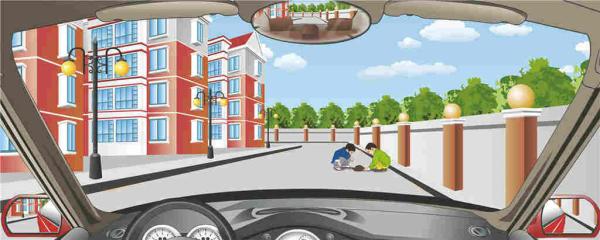
A. Continuously sound the horn
B. Pass quickly
C. Pass at a lower speed
D. Bypass from either side
Answer: C
2. The sign on the right indicates left turn only at the intersection ahead.
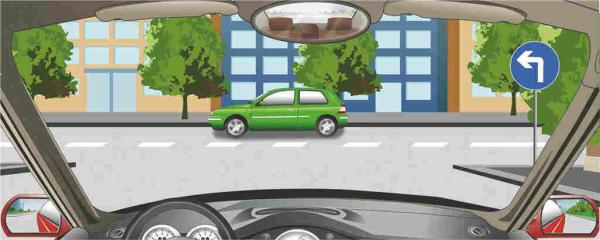
A. Right
B. Wrong
Answer: A
3. Mr. Zhao (with an A2 driving license) drove a large sleeper coach on the No. 219 National Road in Yecheng County. When passing a curve at the spot of 226 kilometers mark by 215 meters on the road, the coach fell into the ravine on one side, killing16 people and injuring 26. What is the main illegal act committed by Mr. Zhao?
A. Carrying more passengers than permitted
B. Driving a motor vehicle having failed to accept inspection in time
C. Driving an unpermitted vehicle type
D. Fatigued driving
Answer: C
4. Mr. He drove his large bus with 53 passengers (permitted carrying capacity 47) to 454 km mark by 100m along the Yining-hefei Expressway in Nanjing jurisdiction, where he was tailgated by a heavy-type semitrailer tractor. The bus left the road, breaking through the guardrail and catching fire. 17 people were killed and 27 injured. Which of the following law-breaking acts did Mr. He commit?
A. Speeding
B. Exceeding the carrying capacity of the motor bus
C. Driving a motor vehicle overdue for annual inspection
D. Improper operation
Answer: B
5. A driver should speed up when passing through road sections with this traffic marking.

A. Right
B. Wrong
Answer: B
6. When temporarily parking on a raining day, what kind of lamp should the driver turn on?
A. Front and back fog lamps
B. Hazard warning lamp
C. Headlamp
D. Reversing lamp
Answer: B
7. Drivers may temporarily cross these central solid double yellow lines when overtaking.
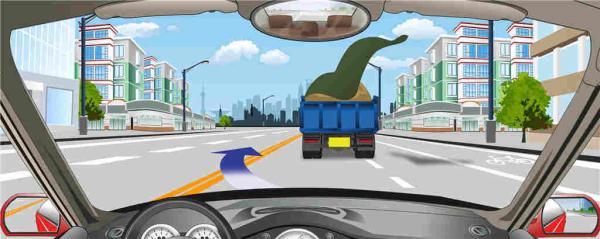
A. Right
B. Wrong
Answer: B
8. When entering an expressway ramp, which of the following statements is correct?
A. Drivers are allowed to overtake other vehicles
B. Drivers are prohibited from making U-turns
C. Drivers are allowed to stop
D. Drivers are allowed to reverse
Answer: B
9. The sign on the left indicates no U-turn at the intersection ahead.

A. Right
B. Wrong
Answer: A
10. The sign in front indicates a one-way lane after turning right.
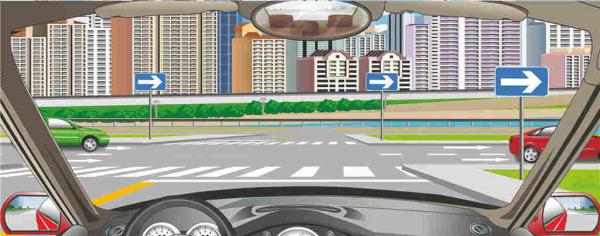
A. Right
B. Wrong
Answer: A
11. Before making a U-turn at the intersection ahead, motor vehicle drivers should drive to the lane for turning left and going straight.
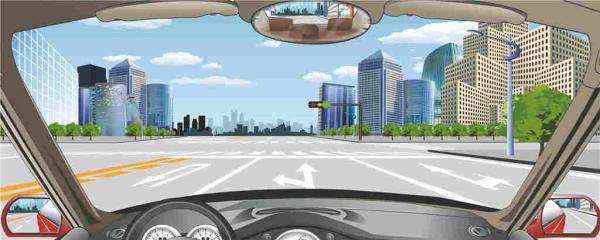
A. Right
B. Wrong
Answer: B
12. What is the most frequent problem for driving on a muddy road?
A. High resistance force
B. Sideways slide
C. The motor vehicle bumps
D. Steering failure
Answer: B
13. When encountering a school bus which stops at the right roadside and students are embarking or disembarking, and there are three motor vehicle lanes in each direction, motor vehicle drivers on the left lane behind the bus should stop and wait.
A. Right
B. Wrong
Answer: B
14. The circle in the center of the intersection indicates that drivers should drive along the inner side when making a small left turn.
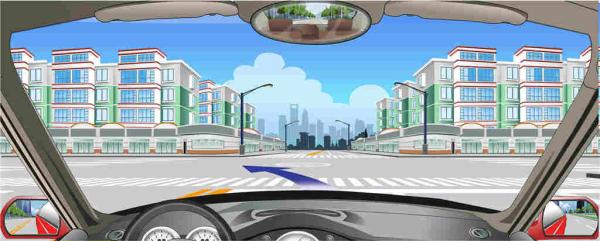
A. Right
B. Wrong
Answer: A
15. Which one of the following ways to pass this intersection is correct?
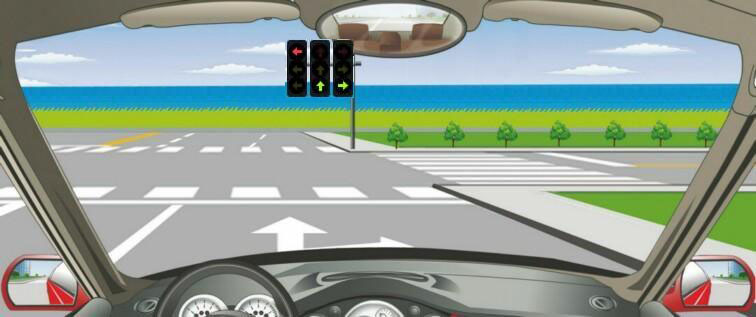
A. Turn left or right
B. Drive straight or turn left
C. Turn left
D. Drive straight or turn right
Answer: D
16. Under such circumstances, motor vehicle drivers should stop and yield
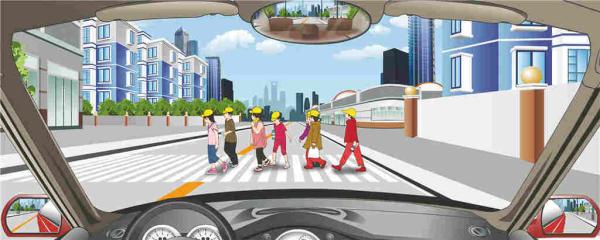
A. Right
B. Wrong
Answer: A
17. What should the driver do upon seeing this sign?
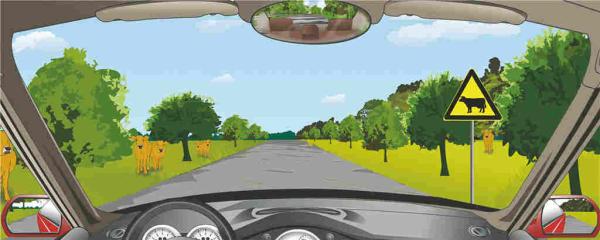
A. Slow down, look and pass slowly
B. Sound the horn to drive them away
C. Go through from the spaces between animals
D. Drive slowly and drive them away from the motor vehicle
Answer: A
18. When a vehicle encounters a strong side wind, the driver should firmly hold the steering wheel and press the brake urgently if he feels the vehicle deviates horizontally from the normal direction.
A. Right
B. Wrong
Answer: B
19. What should the driver do if he wants to turn right at this intersection?
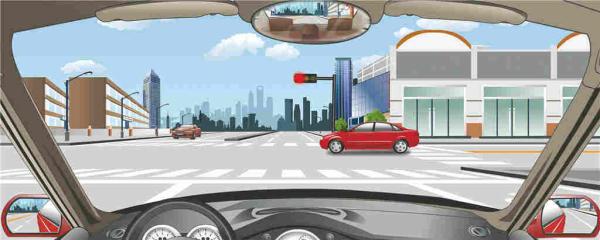
A. Turn right along the straight-going lane
B. Wait behind the stop line
C. Turn right along the right lane
D. Borrow the non-motor vehicle lane and turn right
Answer: C
20. The sign on the right warns of an abrupt slope section ahead.
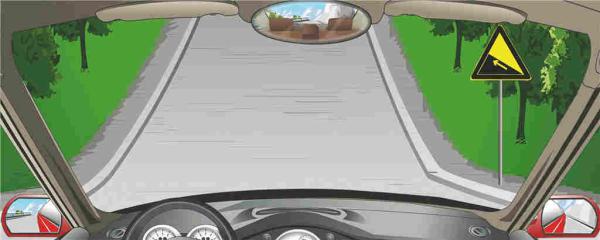
A. Right
B. Wrong
Answer: A