

1. When a motorcycle passing through an interchange discovers it has chosen a wrong route, it should immediately make a U turn from where it is or reverse to change route.
A. Right
B. Wrong
Answer: B
2. Traffic markings are divided into indication, warning and prohibition.
A. Right
B. Wrong
Answer: A
3. Traffic Signs and traffic markings are not traffic signals.
A. Right
B. Wrong
Answer: B
4. You may not use the turn signal when you change to the right lane.
A. Right
B. Wrong
Answer: B
5. Which is subject to a 6-point penalty?
A. violate the traffic lights
B. drive school bus without qualification
C. drive the vehicle which permission is different
D. drive after drink
Answer: A
6. In which situation the traffic police may detain the vehicle?
A. no lable of inspection
B. no ID card
C. no lable of environmental protection
D. no vehicle registration papers
Answer: A
7. Turn on the right-turn signal and return immediately to the original lane after overtaking.
A. Right
B. Wrong
Answer: B
8. When the tire pressure is too low, what will happen if the tire changes its shape in waves and increases in temperature due to fast movement?
A. Unstable tire pressure
B. Even lower tire pressure
C. Driving resistance increases
D. Tire burst
Answer: D
9. How to use lights when overtaking at night?
A. turn off the high beam light
B. turn on high beam lights
C. use fog lights
D. using the high and low beam lights alternately
Answer: D
10. If a person who has caused a major traffic accident and if his act constitutes a crime, he should be held for _________.
A. criminal liability
B. civil liability
C. direct liability
D. economic liability
Answer: A
11. While driving a motorcycle, nothing is permitted to hang on the handlebars.
A. Right
B. Wrong
Answer: A
12. What is the meaning of this sign?
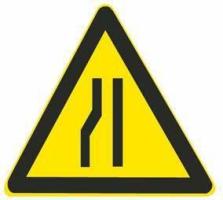
A. Road narrows on both sides
B. Road narrows on the right side
C. Road narrows on the left side
D. Bridge narrows
Answer: C
13. If a motorized vehicle driver has caused a major accident in violation of the traffic regulations which has caused heavy loss to public or private property, the driver is subject to________.
A. a prison term of more than 3 years
B. a prison term of less than 3 years or a criminal detention
C. a prison term of 3 ~ 7 years
D. a prison term of more than 5 years
Answer: B
14. What is the meaning of this sign?
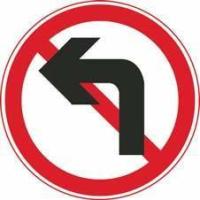
A. no U turn
B. no changing to left lane
C. no turning left
D. no entering the left lane
Answer: C
15. A person whose driving license has been destroyed cannot drive a motorized vehicle.
A. Right
B. Wrong
Answer: A
16. When finding a tire burst on the road, the driver should gently depress the brake pedal, reduce speed and stop the vehicle slowly.
A. Right
B. Wrong
Answer: A
17. What is the meaning of this sign?
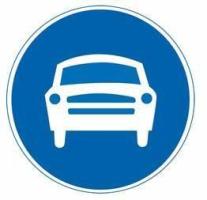
A. no passing for small vehicle
B. passing for small vehicle only
C. passing for motorized vehicle
D. no passing for small vehicle
Answer: C
18. When a tire blowout on the road, the driver should swiftly depress the brake pedal to reduce speed, do all his can to control the steering wheel and stop the vehicle as soon as possible.
A. Right
B. Wrong
Answer: B
19. When passing a sharp curve, motor vehicle drivers may overtake if there are few other vehicles on the road.
A. Right
B. Wrong
Answer: B
20. The main impact of muddy roads on safe driving is that the wheels may easily spin and skid
A. Right
B. Wrong
Answer: A