

1. When extinguishing a fire, the driver should refrain from breathing through mouth or crying loudly Otherwise, the fire and smoke will scorch the upper respiratory tract.
A. Right
B. Wrong
Answer: A
2. The sign on the right indicates an inspection station 100 meters ahead.
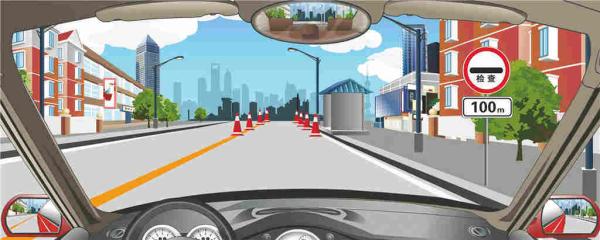
A. Right
B. Wrong
Answer: A
3. Which of the following measures is correct for rescuing a person sustaining full-body burns?
A. Cover the fire with sandy soil
B. Spray cool water to his body
C. Put out the fire by extinguisher
D. Help to remove the burning clothes
Answer: B
4. What should the driver do when he encounters an oncoming ambulance in the same lane?
A. Keep to the side and reduce speed or stop to yield
B. Drive ahead by occupying another lane
C. Yield by speeding up and changing lanes
D. Drive ahead in the original lane
Answer: A
5. When braking failure happens to a fast-moving motor vehicle, what should be done by the driver to brake?
A. Continuously depressing the brake pedal
B. Immediately changing to a low gear to reduce speed and using the handbrake
C. Swiftly depressing the clutch pedal
D. Swiftly pulling up the handbrake
Answer: B
6. The sign in front indicates a 2-kilometer distance from the destination of the highway ahead.
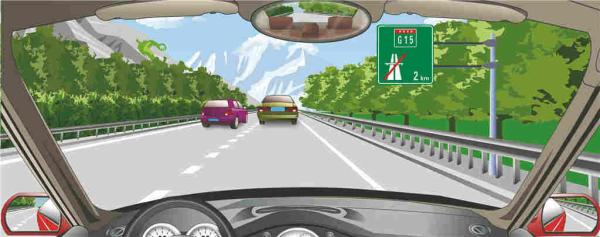
A. Right
B. Wrong
Answer: A
7. The driver should drive on the left in this kind of tunnel.
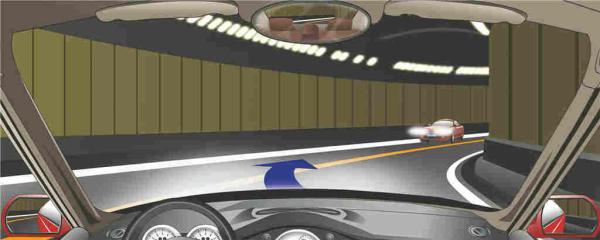
A. Right
B. Wrong
Answer: B
8. How to ensure motor vehicles have sufficient power when driving uphill?
A. Downshift before reducing speed
B. Downshift after reducing speed
C. Downshift when the speed is excessively low
D. Downshift to the fullest extent
Answer: A
9. Drivers may turn left when traffic police give these hand signals.
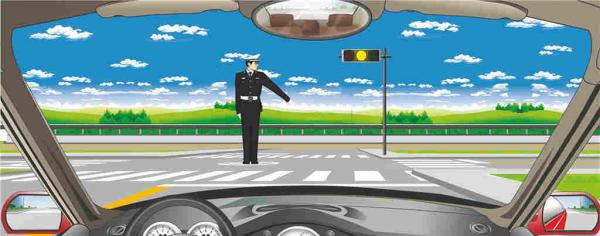
A. Right
B. Wrong
Answer: B
10. When overtaking on a rainy day, drivers should turn on headlamps and sound a long horn.
A. Right
B. Wrong
Answer: B
11. When a wounded person is beneath the wheel or cargo, we should help him out immediately by pulling the limbs of the wounded.
A. Right
B. Wrong
Answer: B
12. A motor vehicle should slow down and stop at this level crossing.
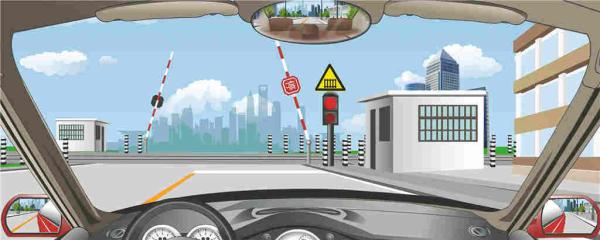
A. Right
B. Wrong
Answer: A
13. The sign on the right warns of a guarded railway crossing 100 meters ahead.
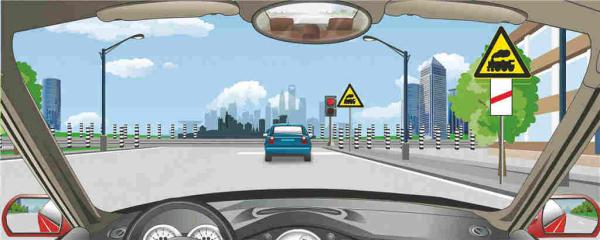
A. Right
B. Wrong
Answer: B
14. What action is important on this kind of mountain road?
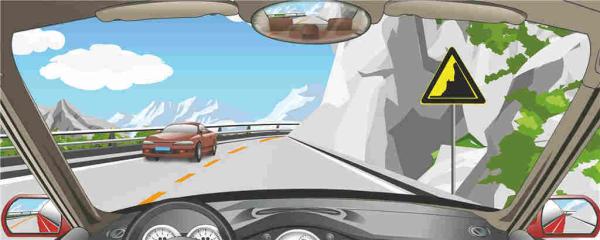
A. Take care of the dangerous hillside road on the left
B. Drive on the left
C. Drive along the central line of the road
D. Drive on the right side and pass slowly
Answer: D
15. When finding a tire burst on the road, the driver should use emergency braking while controlling the direction of the vehicle at the same time to stop the vehicle quickly.
A. Right
B. Wrong
Answer: B
16. The sign on the right warns for children on the section ahead.
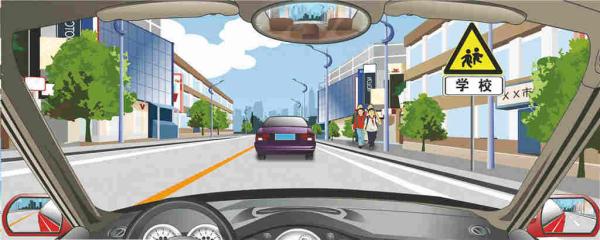
A. Right
B. Wrong
Answer: A
17. The sign on the right warns of a widened right-hand road ahead.
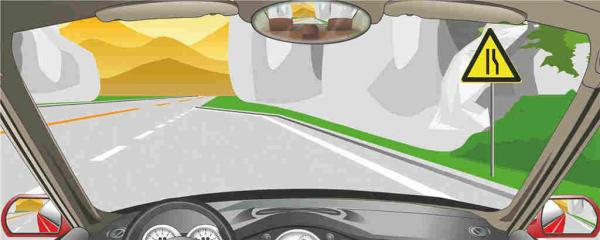
A. Right
B. Wrong
Answer: B
18. What should the driver do in this condition?

A. Go through normally on the right side
B. Sound the horn and speed up to go through the tunnel
C. Stop and yield to the oncoming vehicle
D. Turn on the headlamp to warn the oncoming vehicle to yield
Answer: C
19. Which one of the following measures is correct when a motor vehicle intends to overtake but the vehicle in front refuses to yield?
A. Use a long-sounding horn
B. Follow the vehicle in front while turning high-beam
C. Wait for it to yield while keeping a safe distance
D. Use high-beam and low-beam alternatively
Answer: C
20. Drivers may turn left when seeing these hand signals.
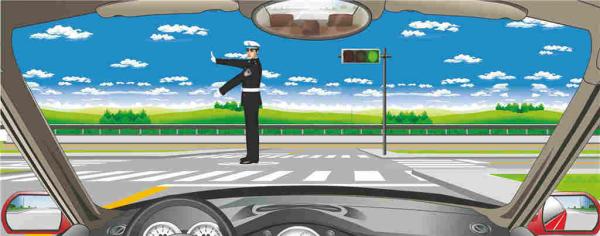
A. Right
B. Wrong
Answer: A