

1. When the driver discovers a tire is leaking and steers the vehicle off the main driving lane, he/she should refrain from applying emergency braking so as to avoid a vehicle turnover or a rear-end collision arising from the late braking of the vehicle behind.
A. Right
B. Wrong
Answer: A
2. When passing an intersection, vehicle motor drivers are not allowed to overtake.
A. Right
B. Wrong
Answer: A
3. When a front tire bursts, after controlling the driving direction, what should be done by the driver in order to slow down and stop?
A. Immediately change to a high gear
B. Immediately change to a low gear
C. Immediately change to the neutral gear
D. Apply emergency braking
Answer: B
4. When a bicycle occupies the motor vehicle lane and obstructs the traffic, the driver should sound the horn continuously and speed up to bypass on the left of the bicycle.
A. Right
B. Wrong
Answer: B
5. The sign on the right warns of a ferry crossing 100 meters after turning right at the intersection ahead.

A. Right
B. Wrong
Answer: A
6. Before a motor vehicle enters a tunnel, the driver should adjust the speed in accordance with the indication of the traffic sign at the entrance of the tunnel.

A. Right
B. Wrong
Answer: A
7. It is not safe for a female driver to wear high heels to drive a vehicle.
A. Right
B. Wrong
Answer: A
8. Mr. He drove his large bus with 53 passengers (permitted carrying capacity 47) to 454 km mark by 100m along the Yining-hefei Expressway in Nanjing jurisdiction, where he was tailgated by a heavy-type semitrailer tractor. The bus left the road, breaking through the guardrail and catching fire. 17 people were killed and 27 injured. Which of the following law-breaking acts did Mr. He commit?
A. Speeding
B. Exceeding the carrying capacity of the motor bus
C. Driving a motor vehicle overdue for annual inspection
D. Improper operation
Answer: B
9. The right-front sign indicates a time-regulated pedestrian area.
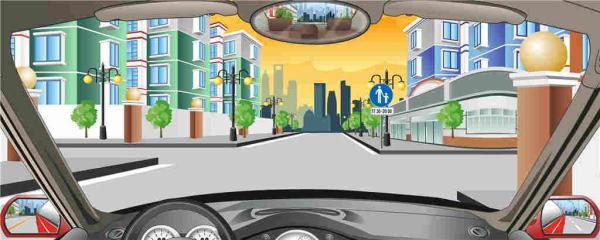
A. Right
B. Wrong
Answer: A
10. When a motor vehicle slides sideways on a road covered by ice and snow, the driver should violently turn the steering wheel to adjust the direction.
A. Right
B. Wrong
Answer: B
11. When driving on an expressway, what should the driver do if he has missed an exit but the next exit is far away?
A. Reverse along the road shoulder
B. Continue on
C. Stop immediately
D. Make a U-turn at the current location
Answer: B
12. The sign on the left indicates the destinations of two highway directions
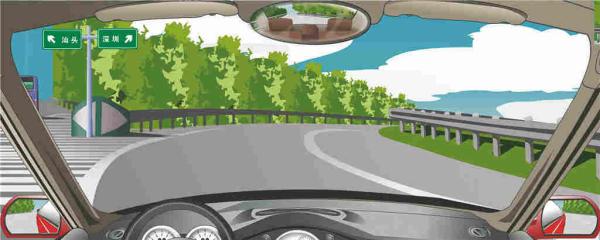
A. Right
B. Wrong
Answer: A
13. The broken yellow line in the center of the road indicates that bypassing by crossing the line is prohibited in any condition.
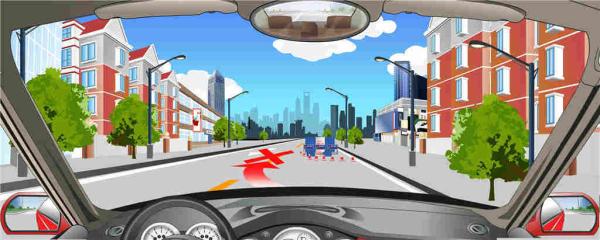
A. Right
B. Wrong
Answer: B
14. When a motor vehicle reaches a muddy or burst-and-muddy section of the road, the driver should stop, observe and select a level and solid section or a section with vehicle tracks.
A. Right
B. Wrong
Answer: A
15. When driving on a long downhill road, which is the best way to control driving speed?
A. Coast in neutral gear
B. Depress the clutch and coast
C. Use the engine to brake
D. Depress the brake pedal continuously
Answer: C
16. Motor vehicle drivers don?ˉt need to fasten their seatbelt
A. Right
B. Wrong
Answer: B
17. Motor vehicles are prohibited from driving straight or turning left in this situation.
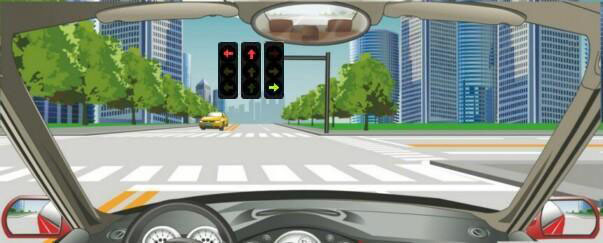
A. Right
B. Wrong
Answer: A
18. The guide arrow on the road surface of this lane indicates that there is an intersection on the right side of the road.
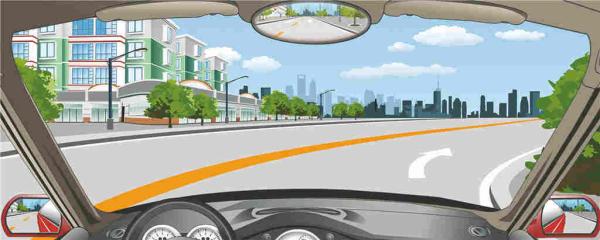
A. Right
B. Wrong
Answer: B
19. The sign on the right warns of three or more winding roads ahead.
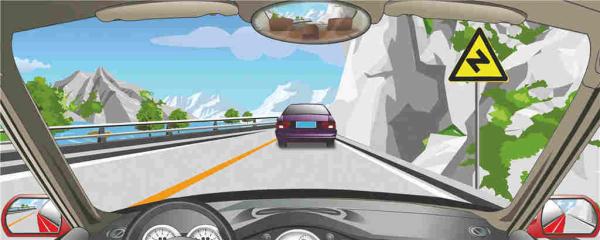
A. Right
B. Wrong
Answer: B
20. What should the driver do when seeing these hand signals?

A. Go straight and pass through the intersection
B. Stop in front of the stop-line and wait
C. Turn left at the intersection
D. Drive at a lower speed at the intersection
Answer: C