

1. A motorized vehicle is not allowed to stop in the section 50 meters to the narrow road less than 4 meters width.
A. Right
B. Wrong
Answer: A
2. When a motorcycle is making a turn in a high speed, the driver should avoid using the brake or use the brake less to prevent sideslip.
A. Right
B. Wrong
Answer: A
3. Which of the following is a basic requirement for rescuing the injured at the scene of a traffic accident?
A. Treat wounds first and safe life later
B. Save life first and treat wounds later
C. Help lightly wounded persons first
D. Help seriously wounded persons later
Answer: B
4. If a person has caused a traffic accident and run away, and constitutes a crime, his driving license should be revoked and he is banned for lifetime from re-obtaining a driving license.
A. Right
B. Wrong
Answer: A
5. Which is correct when riding a motorcycle
A. Both hands can temporarily leave the steering handle bar
B. Voluntarily operate the steering handle bar
C. It is prohibited to simultaneously move two hands from the steering handle bar
D. It is able to statically turn the steering handle bar
Answer: C
6. If a motorized vehicle driver allows his vehicle to be driven by a person whose driving license has been detained, the traffic police will serve an oral warning.
A. Right
B. Wrong
Answer: B
7. What is the meaning of this sign?

A. more vehicles section
B. passing slowly
C. jammed section
D. construction section
Answer: B
8. If a motorized vehicle driver causes a traffic accident and runs away but his conduct does not constitute a crime, he is subject to a 12-point penalty.
A. Right
B. Wrong
Answer: A
9. If a driving license is obtained by deception, bribery or other illegal means, the driving license should be revoked and the applicant is not allowed to re-apply for it _____ .
A. within 3 years
B. the whole life
C. within 1 year
D. within 5 years
Answer: A
10. What is the meaning of this sign?
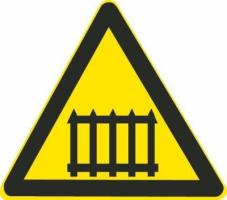
A. a manned level crossing
B. multi-crossing of railway and road
C. grade separation level crossing
D. an unmanned level crossing
Answer: A
11. When a motorcycle goes down a long slope, it should run at a lower gear and fully use the engine to brake.
A. Right
B. Wrong
Answer: A
12. What is the meaning of this sign?
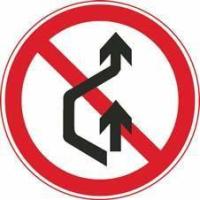
A. no borrowing lane
B. no changing lane
C. no overtaking
D. no U turn
Answer: C
13. What is the meaning of this sign?
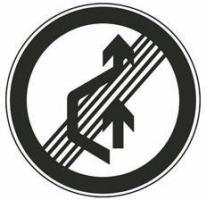
A. overtaking ban is lifted
B. changing lane is allowed
C. changing lane ban is lifted
D. borrowing lane ban is lifted
Answer: A
14. When driving in a heavy rain, drivers should contro their speed to prevent their vehicles from sliding.
A. Right
B. Wrong
Answer: A
15. What is the meaning of this sign?

A. U turn
B. reversing
C. left turn
D. bypassing
Answer: A
16. Violent wind can cause a sideways swerve to a running vehicle.
A. Right
B. Wrong
Answer: A
17. When driving in icy and snowy weather, because of the reduction of the stability, it is easy for the wheels to race or slip when rapidly speeding up.
A. Right
B. Wrong
Answer: A
18. When running on the road having maximum speed limit signs, the motorized vehicle is not allowed to exceed the marked maximum speed.
A. Right
B. Wrong
Answer: A
19. When encountering stopping and waiting in turn or slow-moving vehicles in front, the motorized vehicle may _________.
A. borrow road to overtake
B. occupy the opposite lane
C. follow the vehicles in front
D. cut in the waiting vehicles
Answer: C
20. When driving on a road covered with ice and snow, the motor vehicle may spin or slide when increasing the speed urgently, due to the loss of vehicle stability.
A. Right
B. Wrong
Answer: A