

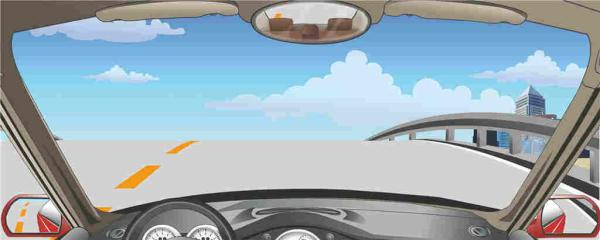
1. Motor vehicle drivers should rush to the top of the slope in this situation.
A. Right
B. Wrong
Answer: B
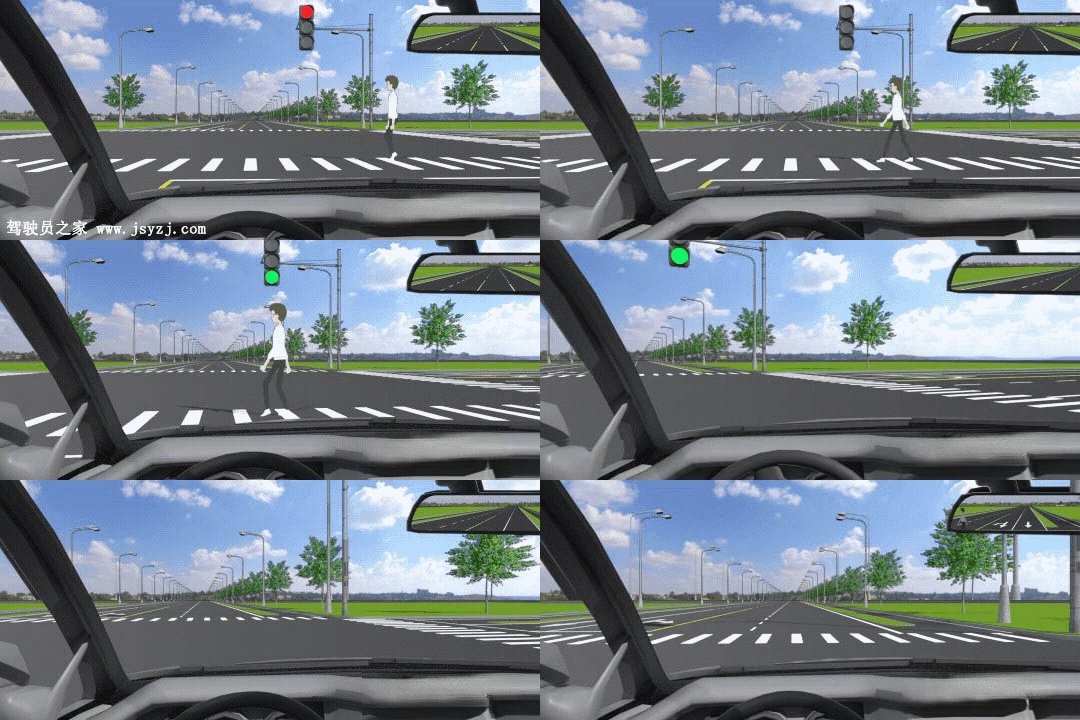
2. As shown in the flash, the driver?ˉs act is correct.
A. Right
B. Wrong
Answer: B
3. How should lamps be used when motor vehicle drivers pass through a two-way tunnel?
A. Turn on the hazard lamps
B. Turn on the high-beam
C. Turn on the fog lamp
D. Turn on the low-beam
Answer: D
4. Mr. Tong drove a large bus (capacity 55 people and carrying 54) to Taiyuan City. When he drove on a muddy road at the speed of 45 kilometers per hour, the bus skidded into a deep ditch, killing 14 people dead and badly injuring 40 What is the main illegal act committed by Mr. Tong?
A. Overloaded
B. Speeding
C. Driving after drinking
D. Fatigued driving
Answer: B
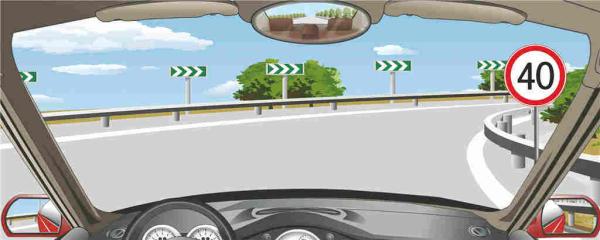
5. The driver should speed up to 40 kilometers per hour when he sees this traffic sign.
A. Right
B. Wrong
Answer: B
6. What does this sign on the fly-over junction indicate?
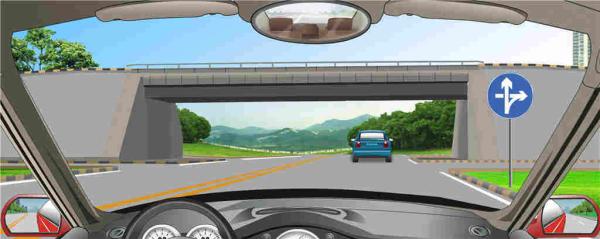
A. Turn right
B. Drive straight or turn left
C. Drive straight or turn right
D. Take a U-turn under bridge
Answer: C
7. When evading an emergency, except for being calm, what principle should be held by drivers?
A. Evading people first and then objects
B. Evading objects first and then vehicles
C. Evading vehicles first and then people
D. Evading objects first and then people
Answer: A
8. If a motor vehicle has an accident on a foggy day and stops on an expressway, which of the following acts is dangerous?
A. Leaving the motor vehicle as soon as possible
B. Standing outside the guardrail as much as possible
C. Turning on the hazard lamp and fog lamp
D. Placing a warning sign behind the vehicle in the oncoming direction
Answer: D
9. How should motor vehicle drivers make a U-turn at the intersection ahead?
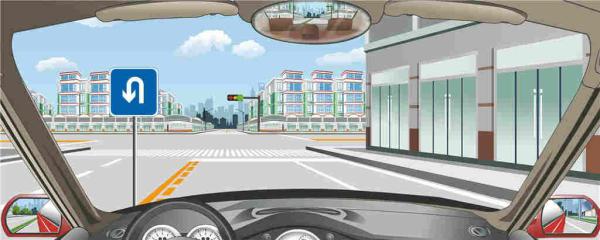
A. Make a U-turn in the waiting area for turning left
B. Make a U-turn at the broken line area of the Intersection
C. Wait until the left-turn indicator is on
D. Wait until the straight-going signal is on
Answer: B
10. Motor vehicles are permitted to follow the guidance of the arrow in this picture and enter the lane of an expressway.
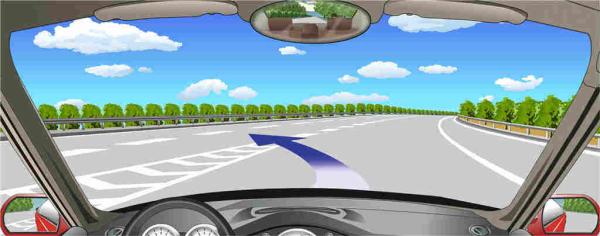
A. Right
B. Wrong
Answer: B
11. When the rear wheels of a motor vehicle skid sideways on a muddy road, the driver should turn the steering wheel in the opposite direction of the side skid.
A. Right
B. Wrong
Answer: B
12. When braking failure happens to a fast-moving motor vehicle, what should be done by the driver to brake?
A. Continuously depressing the brake pedal
B. Immediately changing to a low gear to reduce speed and using the handbrake
C. Swiftly depressing the clutch pedal
D. Swiftly pulling up the handbrake
Answer: B
13. Under such circumstances, what should be done by the motor vehicle driver?

A. Overtaking the vehicle in front on its left
B. Overtaking by occupying the opposite lane
C. Overtaking the vehicle in front on its right
D. Following the vehicle in front
Answer: D
14. What is the meaning of the sign on the right?
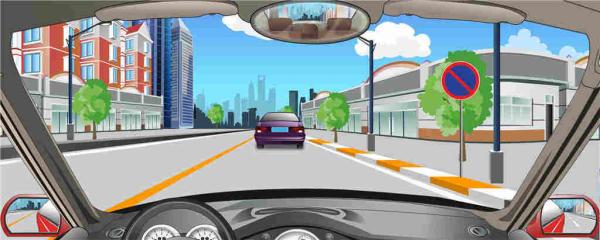
A. Long-time parking permitted
B. Temporary parking permitted
C. Long waiting for passengers permitted
D. No parking
Answer: B
15. For a temporary stop on a foggy day, the driver should only turn on the fog lamp and the low-beam
A. Right
B. Wrong
Answer: B
16. Motor vehicles can turn right when driving into an intersection with this traffic signal.
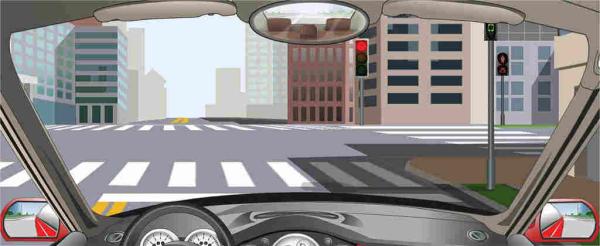
A. Right
B. Wrong
Answer: A
17. Under such circumstances, motor vehicle drivers should reduce speed by the right side swiftly and yield.
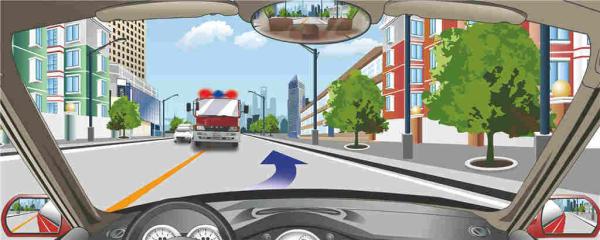
A. Right
B. Wrong
Answer: A
18. In such circumstances, which one of the following statements is the safest measure for a motor vehicle driver to take?
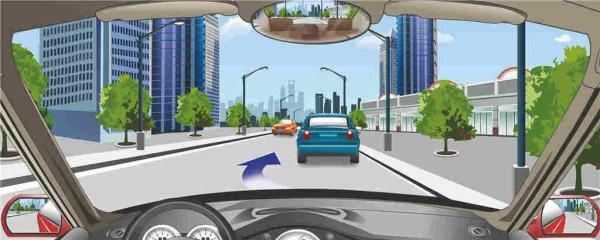
A. Accelerate to overtake the vehicle in front as soon as possible
B. Voluntarily reduce speed and refrain from overtaking
C. Sound the horn to warn the vehicle in front to yield
D. Turn on the headlamp to warn the oncoming vehicle to yield
Answer: B
19. When parking temporarily on a snowy day, drivers should turn on the headlamp and fog lamp.
A. Right
B. Wrong
Answer: B
20. When driving a motor vehicle equipped with power steering, the driver should firmly hold the steering wheel and drive slowly if he suddenly finds that steering is difficult.
A. Right
B. Wrong
Answer: B