

1. When the motor vehicle stops on a downhill section how should the driver use the foot brake?
A. Earlier than on a level road
B. Later than on a level road
C. As timely as on a level road
D. Gently depress the foot brake pedal
Answer: A
2. The sign on the right warns for livestock on the road ahead.

A. Right
B. Wrong
Answer: B
3. Which is the correct way to use a fire extinguisher?
A. Stand on the leeward side
B. Direct the fire extinguisher at the source of fire
C. Try to approach the source of fire as close as possible
D. Direct the fire extinguisher at the flames
Answer: B
4. When a motor vehicle passes over an inundated road drivers should change to a high gear and pass rapidly.
A. Right
B. Wrong
Answer: B
5. When the engine suddenly stalls on the road, what should the driver do?
A. Stop the vehicle and overhaul it immediately
B. Immediately turn on the hazard lamps
C. Move the vehicle to a place where it will not obstruct the traffic flow
D. Set up a breakdown warning sign
Answer: BCD
6. What should the driver do upon finding that one of the left tires is leaking while driving?
A. Brake slowly to slow down
B. Brake swiftly to slow down
C. Turn to the right side swiftly
D. Apply emergency braking
Answer: A
7. What should be taken note of by drivers in this situation?
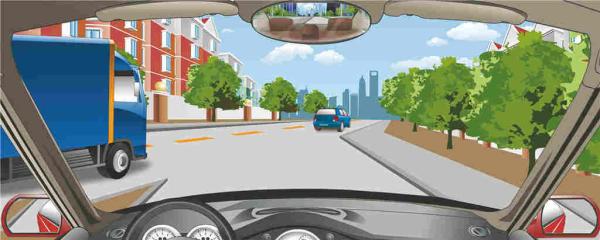
A. The motor vehicles on the left side
B. The motor vehicles on the right side
C. The motor vehicles behind
D. The motor vehicles in front
Answer: A
8. What should the driver do if he encounters pedestrians in this situation at an intersection?
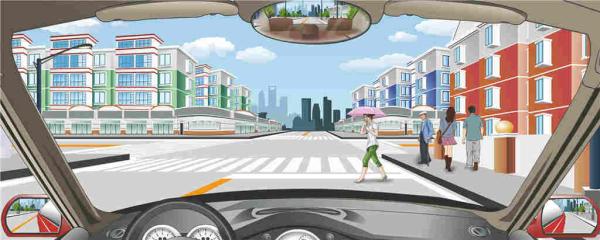
A. Slow down promptly and stop to yield
B. Sound the horn to warn the pedestrians to yield
C. Speed up and pass in front of the pedestrians
D. Turn on the headlamps to warn the pedestrians to yield
Answer: A
9. The sign on the left indicates the destinations of two highway directions
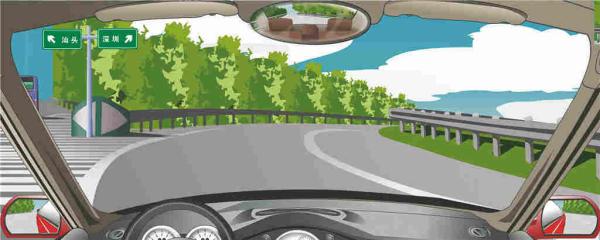
A. Right
B. Wrong
Answer: A
10. When there is a braking failure on a downhill road, the driver should immediately try to find and drive to an emergency lane; after stopping the vehicle on the emergency lane, the driver should pull up the stopping brake so as to prevent a second danger arising from the vehicle sliding.
A. Right
B. Wrong
Answer: A
11. Mr. Wu drove a large bus with 33 passengers (capacity 22 people). At the spot of 7 kilometers mark by 300 meters on the No 163 County Road, the bus lost control and fell into a ravine. As a result of the accident, 10 people were killed and 21 injured. In accordance with the alcohol test after the accident the blood alcohol content of Mr. Wu was 26 milligram per milliliter. What is the main illegal act committed by Mr. Wu?
A. Speeding
B. Carrying more passengers than permitted
C. Fatigued driving
D. Driving after drinking
Answer: BD
12. The sign on the right warns of a narrowed road on both sides ahead.
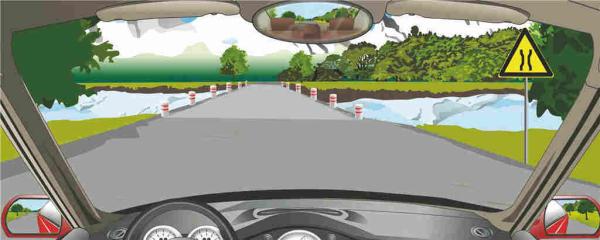
A. Right
B. Wrong
Answer: B
13. When fixing the unexposed bones in position, it is necessary to exceed the upper and lower joints of the wounded body part.
A. Right
B. Wrong
Answer: A
14. The sign in front indicates a one-way lane after turning right.
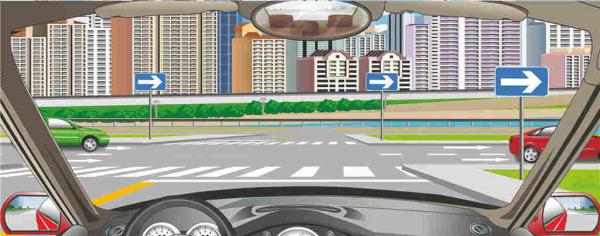
A. Right
B. Wrong
Answer: A
15. Which lamp should be turned on when motor vehicles pass through a road section at night where the street light condition is good?
A. Front and rear fog lamps
B. Low-beam
C. High-beam
D. Hazard lamp
Answer: B
16. When encountering an obstacle on one side of the road, what should vehicles do as they approach each other?
A. The vehicle not encountering an obstacle should Yield to the other vehicle
B. The slower vehicle should yield to the faster
C. The vehicle encountering an obstacle should yield to the other vehicle
D. The faster vehicle should yield to the slower
Answer: C
17. When the tire pressure is too low, what can happen when driving at a high speed?
A. Tire pressure will be unstable
B. Tire pressure will increase
C. Driving resistance will decrease
D. The tire will burst
Answer: D
18. If a fast-moving motor vehicle has a steering failure, using emergency braking will not cause an overturn.
A. Right
B. Wrong
Answer: B
19. When the fuel of a motor vehicle catches fire, which of the following things cannot be used to put out the fire?
A. Sandy soil on the roadside
B. Cotton-padded clothes
C. Overalls
D. Water
Answer: D
20. When passing an intersection, vehicle motor drivers are not allowed to overtake.
A. Right
B. Wrong
Answer: A