

1. Under such circumstances, what should motor vehicle drivers do?
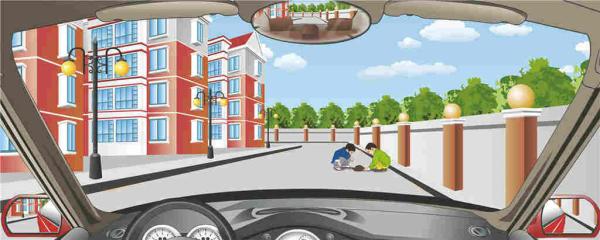
A. Continuously sound the horn
B. Pass quickly
C. Pass at a lower speed
D. Bypass from either side
Answer: C
2. The broken yellow line in the center of the road indicates that bypassing by crossing the line is prohibited in any condition.
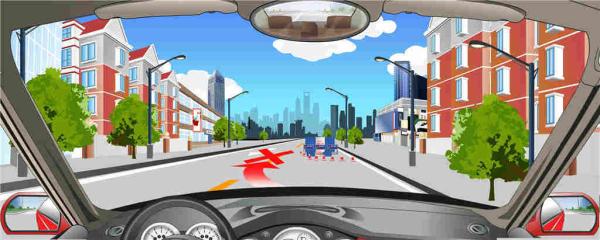
A. Right
B. Wrong
Answer: B
3. If a motor vehicle experiences a water sliding phenomenon when running on an expressway in rain, what should the driver do?
A. Slow down by suddenly depressing the brake pedal
B. Slow down by slowly releasing the accelerator pedal
C. Turn the steering wheel immediately to adjust the direction
D. Speed up to increase the displacement of the wheels
Answer: B
4. What is the function of ABS during emergency braking?
A. Shortening the braking distance
B. Keeping steering capacity of the motor vehicle
C. Relief the braking inertia
D. Controlling directions automatically
Answer: B
5. When driving on the highway in foggy, rainy, or snowy weather with a range of visibility between 100 meters and 200 meters, what should motor vehicle drivers do?
A. Turn on the fog lamp, low-beam, clearance lamp and front and rear position lamp
B. Drive at a speed of no more than 60 km/hour
C. Keep a breaking distance of more than 100 meters from the vehicle in front in the same lane
D. Leave the highway from the nearest exit as soon as possible
Answer: ABC
6. When encountering a road like this, motor vehicle drivers should downshift in advance to maintain the dynamic of the motor vehicle.
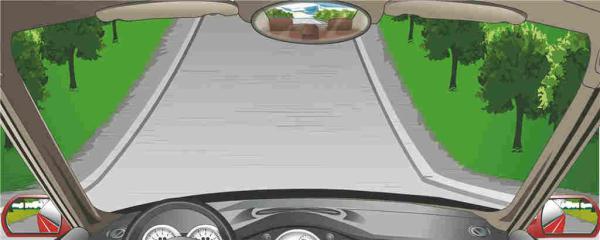
A. Right
B. Wrong
Answer: A
7. What should the driver do when the motor vehicle encounters this situation in front of a school?
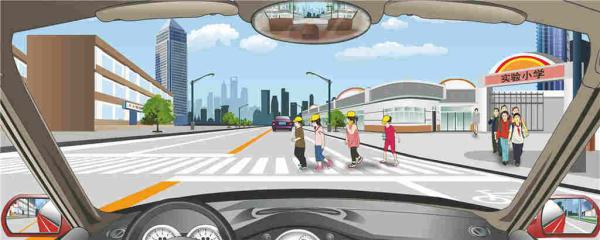
A. Bypass before the queue
B. Slow down and pass slowly
C. Stop promptly and yield
D. Go through in the spaces between the queues
Answer: C
8. What should motor vehicle drivers do when approaching an oncoming vehicle on a frozen road?
A. Cut speed as approaching each other
B. Pass each other by speeding up properly
C. Pass each other slowly by cutting speed in advance
D. Pass each other along the central line to the best
Answer: C
9. How to pass the intersection when running straight
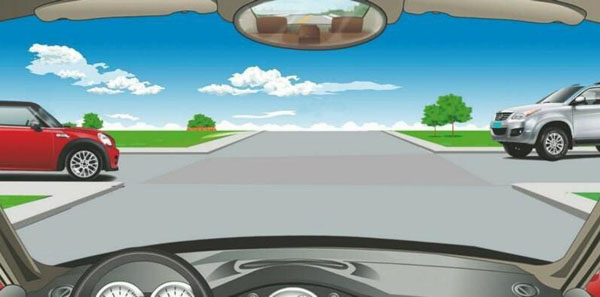
A. turn on the hazard lights and pass
B. directly speed up and pass straight
C. yield to the vehicle from the right road
D. yield to the vehicle from the left road
Answer: C
10. Drivers may turn right at the intersection when traffic police give these hand signals.
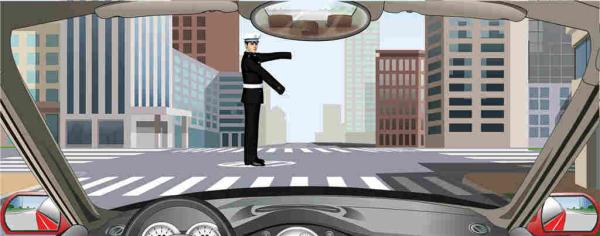
A. Right
B. Wrong
Answer: A
11. When there is a sudden braking failure on a downhill road, in which ones of the following ways can drivers reduce speed?
A. Driving onto the emergency lane and reduce speed and stop there
B. Rubbing the vehicle body against the rocks or trees on roadside
C. Pulling up the handbrake first
D. Immediately changing to a low gear
Answer: ABD
12. When removing a wounded person suffering spinal fracture, the rescuer should never help the wounded person to walk. He may be carried away with a soft stretcher.
A. Right
B. Wrong
Answer: B
13. When finding a tire burst on the road, the driver should use emergency braking while controlling the direction of the vehicle at the same time to stop the vehicle quickly.
A. Right
B. Wrong
Answer: B
14. Which of the following is a safe way for motor vehicles to pass the intersection marked with this sign?
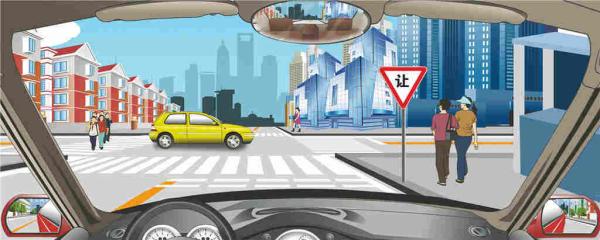
A. Stop and observe the traffic situation around the intersection
B. Approach the intersection by speeding up
C. Observe the traffic situation on the left rear side
D. Approach the intersection at a reduced speed
Answer: D
15. vehicles may stop temporarily in this area.
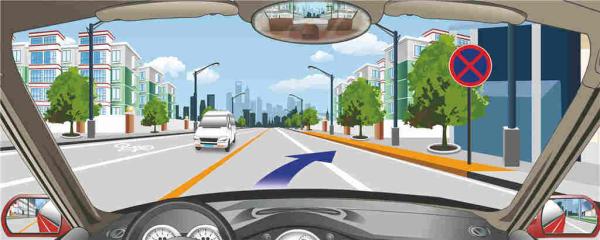
A. Right
B. Wrong
Answer: B
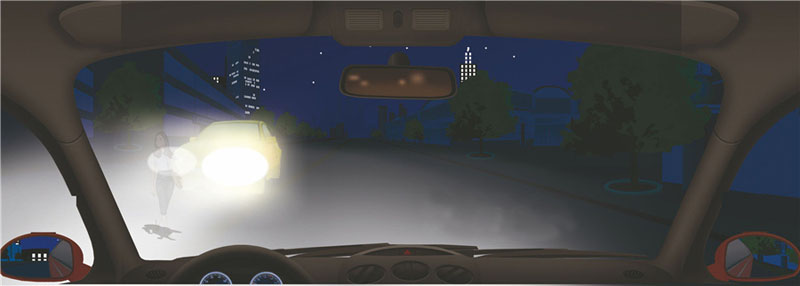
16. When approaching each other at night in this situation, drivers should watch for the danger where the two motor vehicles headlamps meet (the sight dead zone).
A. Right
B. Wrong
Answer: A
17. How many kinds of law-breaking acts are displayed in flash 8?

A. One
B. Two
C. Three
D. Four
Answer: B
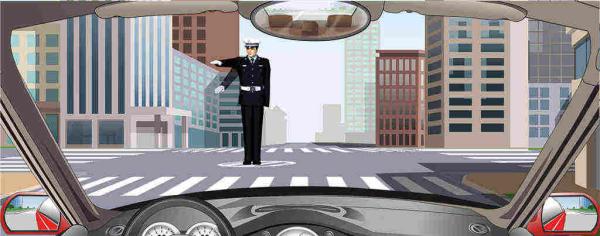
18. Drivers should drive at a lower speed when traffic police give these hand signals.
A. Right
B. Wrong
Answer: A
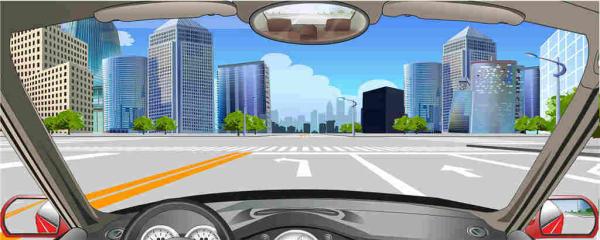
19. The guide arrow on the road surface of this lane indicates that only left turns are permitted at the intersection ahead.
A. Right
B. Wrong
Answer: A
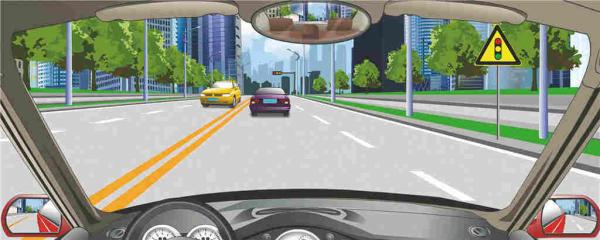
20. The sign on the right warns of traffic signals ahead.
A. Right
B. Wrong
Answer: A