

1. In rain, the most effective way to avoid the danger arising from water slide is to drive at high speed
A. Right
B. Wrong
Answer: B
2. The distance-ascertaining section of an expressway is used for the drivers to ascertain the safety distance when the speed is 100 kilometers per hour.
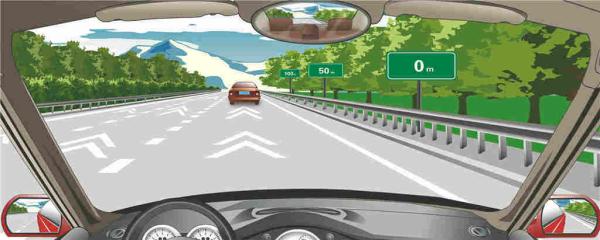
A. Right
B. Wrong
Answer: A
3. In this driving condition, drivers should turn on the high-beam when setting off.
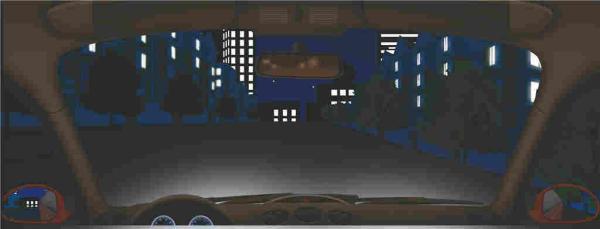
A. Right
B. Wrong
Answer: B
4. If the road condition behind is good, motor vehicle drivers should reverse rapidly.
A. Right
B. Wrong
Answer: B
5. What should the driver do when the motor vehicle encounters this situation?
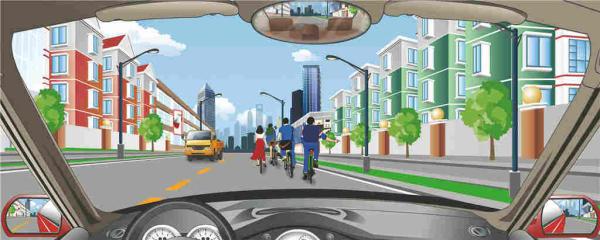
A. Overtake immediately
B. Sound the horn continuously to warn
C. Maintain safety distance and overtake
D. Sound horn and speed up to overtake
Answer: C
6. What matters need attention when driving on a rainy day?
A. Avoid using the emergency brake or making sharp turns
B. Keep a safe enough distance
C. Observe the traffic situation of non-motor vehicles and surrounding pedestrians
D. Drive at a safe speed
Answer: ABCD
7. It is illegal to change lanes without turning on indicators.
A. Right
B. Wrong
Answer: A
8. The white solid line on the right side of the road indicates the boundary of a driving lane and crosswalk.
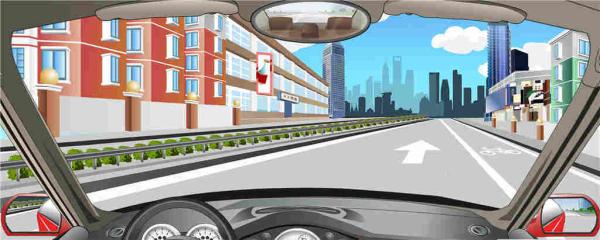
A. Right
B. Wrong
Answer: B
9. When a motor vehicle passes over an inundated road drivers should change to a high gear and pass rapidly.
A. Right
B. Wrong
Answer: B
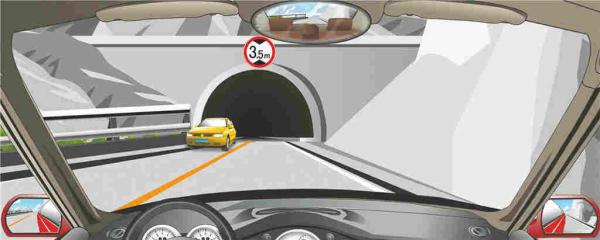
10. The sign above the tunnel indicates a height limit of 3.5 meters on the road ahead.
A. Right
B. Wrong
Answer: A
11. When driving a motor vehicle into a traffic flow, drivers should not hold up other vehicles.
A. Right
B. Wrong
Answer: A
12. When encountering children in this condition, what should motor vehicle drivers do?

A. Go ahead by following the children closely
B. Speed up and overtake from the left side of the children
C. Sound the horn to alert the children
D. Reduce speed or stop to yield
Answer: D
13. Having driven his vehicle at 110km/hour on an urban road, Mr. Lin is trying to leave the scene after a rear-end collision but is held back by bystanders. The alcohol concentration in his blood, tested in an alcohol test by the traffic police, is 135.8mg per hundred milliliters. Which of the following law-breaking acts did Mr. Lin commit?
A. Drunk driving
B. Speeding
C. Fatigued driving
D. Hit-and-run driving
Answer: ABD
14. What should the driver do when the motor vehicle passes a flyover?
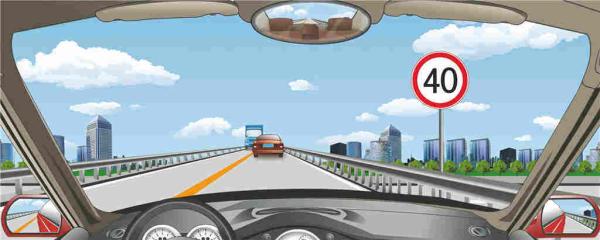
A. Speed up and pass rapidly
B. Keep the speed under 15 km/hour
C. Drive at the speed indicated by the traffic sign
D. Drive close to the central line of the flyover
Answer: C
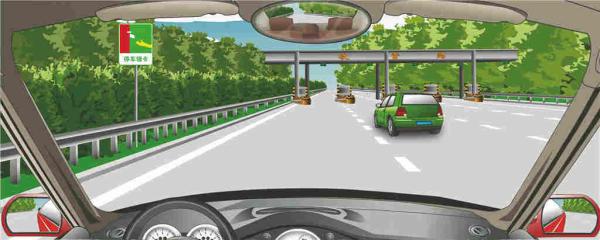
15. The sign on the left indicates that drivers should stop to take a pass card at the toll station ahead.
A. Right
B. Wrong
Answer: A
16. The guide arrow on the road surface of this lane indicates that U-turns and left turns are permitted at the intersection ahead.

A. Right
B. Wrong
Answer: A
17. When a motor vehicle catches fire, the driver should manage to park the vehicle in an open place far away from urban areas, buildings, trees, other motor vehicles and flammable materials.
A. Right
B. Wrong
Answer: A
18. When the motor vehicle stops on an uphill section, how should the driver use the foot brake?
A. Earlier than on a level road
B. Later than on a level road
C. As timely as on a level road
D. Strongly depress the foot brake pedal
Answer: B
19. At 13: 10 pm, Mr. Luo set out in his medium bus from 0 km mark on the highway, and by 14: 10 had passed the 125km mark by 200 meters, he caused a rear-end collision with a motor vehicle that ran into the side slope on the southwest side, killing 11 people and injuring 2. Which of the following law-breaking acts did Mr. Luo commit?
A. Speeding
B. Driving not in accordance with traffic markings
C. Exceeding carrying capacity
D. Fatigued driving
Answer: A
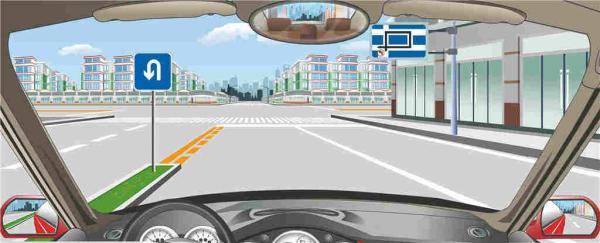
20. The sign on the right indicates a left-turn bypass route at the intersection ahead.
A. Right
B. Wrong
Answer: A