

1. When leaving an expressway, drivers should enter the ramp after slowing down in the deceleration lane.
A. Right
B. Wrong
Answer: A
2. When driving on a damp and slippery road, drivers should avoid using the emergency brake to his best ability.
A. Right
B. Wrong
Answer: A
3. The sign in front indicates a temporary parking lot on the right side of the highway.
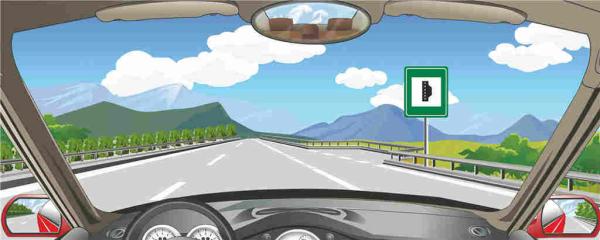
A. Right
B. Wrong
Answer: B
4. How should the driver use vehicle lights when the motor vehicle leaves a roundabout?
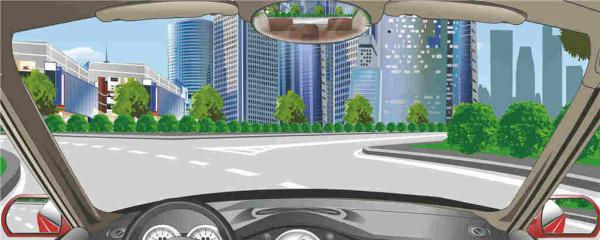
A. Turn on the left-turn indicator
B. Turn on the hazard lamps
C. No need to turn on any indicators
D. Turn on the right-turn indicator
Answer: D
5. What should the driver do to follow other motor vehicles on a mountain road?
A. Closely follow the vehicle in front
B. Increase the safety distance
C. Reduce the vertical distance between vehicles
D. Try to overtake the vehicle in front as soon as possible
Answer: B
6. What should the driver do when seeing these hand signals?
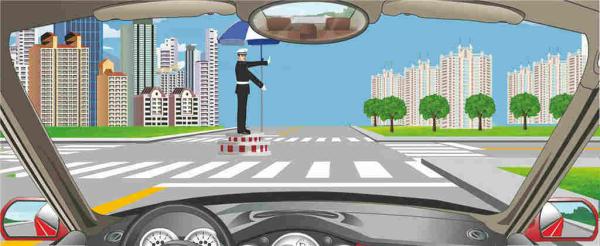
A. Go straight and pass through the intersection
B. Pull over
C. Drive to the waiting area for turning left
D. Turn right at the intersection
Answer: D
7. How should lamps be used when setting off in this situation?
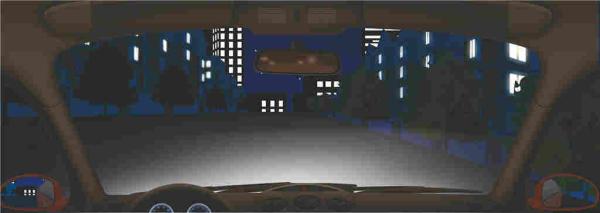
A. Turn on the high-beam
B. Turn on the left indicator only
C. Turn on the left indicator and low-beam
D. Turn on hazard lamp
Answer: C
8. Once inflammable gas causes a fire disaster, it should be put out with water in good time.
A. Right
B. Wrong
Answer: B
9. The driver should drive on the left in this kind of tunnel.
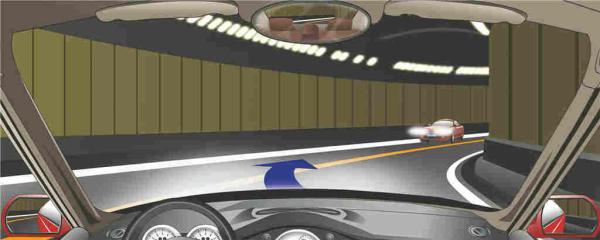
A. Right
B. Wrong
Answer: B
10. When a motor vehicle slides sideways, how should the driver adjust the direction?
A. If the front wheels skid sideways, turn the steering wheel in the direction of the skid
B. If the front wheels skid sideways, turn the steering wheel in the opposite direction of the skid
C. If the rear wheels skid sideways, turn the steering wheel in the direction of the skid
D. If the rear wheels skid sideways, turn the steering wheel in the opposite direction of the skid
Answer: BC
11. Motor vehicles should stop and yield rapidly when encountering this situation at a bus station.
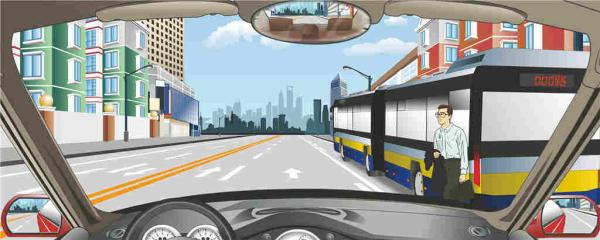
A. Right
B. Wrong
Answer: A
12. When rescuing a person sustaining full-body burns the rescue personnel may spray cool water to his body to put out the fire.
A. Right
B. Wrong
Answer: A
13. If a motor vehicle encounters a strong side wind when it leaves the opening of an expressway tunnel, what will happen?
A. A feeling of deceleration
B. A feeling of acceleration
C. A feeling of pressure
D. Deviation in direction
Answer: D
14. A motor vehicle may stop and yield if it encounters any problem when changing to the driving lane from an acceleration lane.
A. Right
B. Wrong
Answer: B
15. This sign indicates the traffic broadcast and radio television channel of highway.
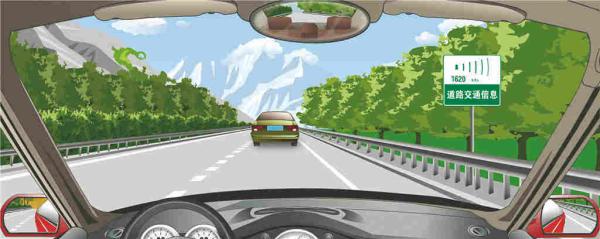
A. Right
B. Wrong
Answer: B
16. Which of the following is a bad driving habit?
A. Using lights in accordance with relevant rules
B. Carrying both vehicle and driving license
C. Discarding rubbish from the side window
D. Follow the guidance of the traffic signals
Answer: C
17. The sign on the right indicates notice by sounding the horn.
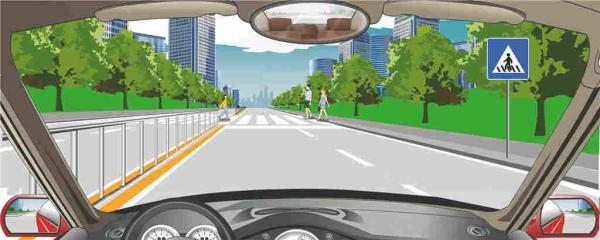
A. Right
B. Wrong
Answer: B
18. When driving in rain or snow, the driver should turn left to stabilize the vehicle if the motor vehicle slides to the right side.
A. Right
B. Wrong
Answer: B
19. Mr. Yang drove an adapted minibus (capacity 9 people and carrying 64 passengers, including 62 kindergarten pupils). When driving in Ma Caogou Village of Yu Linzi County, the bus used the lane for oncoming traffic and had a head-on colision with a heavy dump truck. As a result of this accident, 22 people were killed and 44 injured. What are the main illegal acts in this case?
A. The truck exceeded the speed limit
B. Illegal adaptation of a motor vehicle
C. The minibus carried more passengers than capacity
D. Driving in the opposite direction lane
Answer: BCD
20. The red car is allowed to drive on this lane.
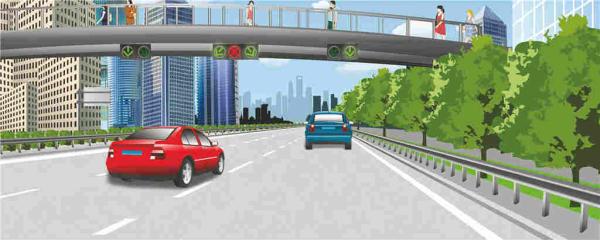
A. Right
B. Wrong
Answer: B