

1. The sign on the right warns of a bumpy road ahead.
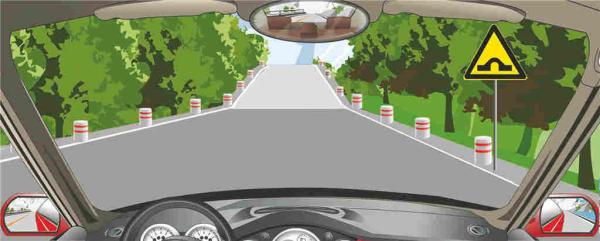
A. Right
B. Wrong
Answer: B
2. What should the driver do when the motor vehicle passes a flyover?
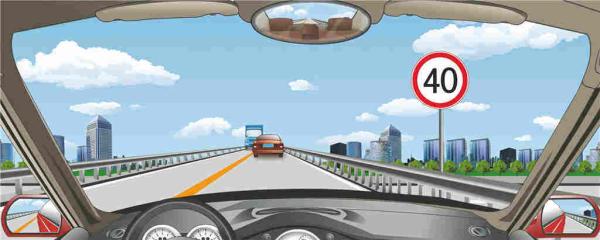
A. Speed up and pass rapidly
B. Keep the speed under 15 km/hour
C. Drive at the speed indicated by the traffic sign
D. Drive close to the central line of the flyover
Answer: C
3. Mr. Tao drove a midsize bus with 33 passengers. At the spot of 163 kilometers on the South Xuping Expressway, the bus clashed at a speed of 120 kilometers per hour with Mr. Ans minibus parked without any warning signs on the inside lane, due to breakdown after an accident. The midsize bus overturned after collided with the guardrail on the right-hand side. As a result of the accident, 16 people were killed and 15 injured. What are the main illegal acts of the two drivers?
A. Mr. Tao carried more passengers than permitted
B. Mr. Tao exceeded speed limit
C. Mr. An failed to place any warning signs in accordance with relevant stipulations
D. Mr. An was illegally parked
Answer: ABC
4. The guide arrow on the road surface of this lane indicates that only right turns are permitted at the intersection ahead.
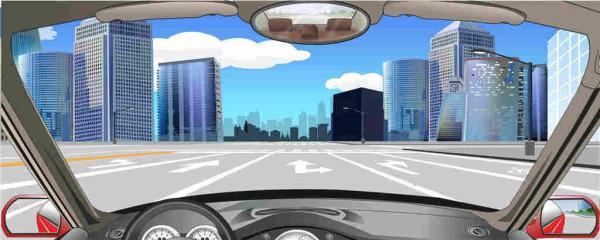
A. Right
B. Wrong
Answer: B
5. When driving on a snowy day, drivers should follow the tracks on the road before them.
A. Right
B. Wrong
Answer: A
6. When a motor vehicle accidentally hits the guardrail of a highway, an effective protective measure is to turn dramatically in the opposite direction.
A. Right
B. Wrong
Answer: B
7. What should the driver do when the motor vehicle encounters this situation?
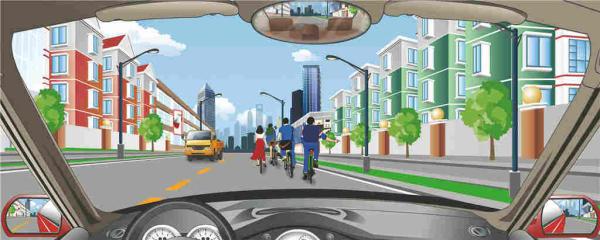
A. Overtake immediately
B. Sound the horn continuously to warn
C. Maintain safety distance and overtake
D. Sound horn and speed up to overtake
Answer: C
8. When a motor vehicle turns at an excessively high speed, it can easily slide sideways.
A. Right
B. Wrong
Answer: A
9. Under such circumstances, motor vehicle drivers should stop and yield
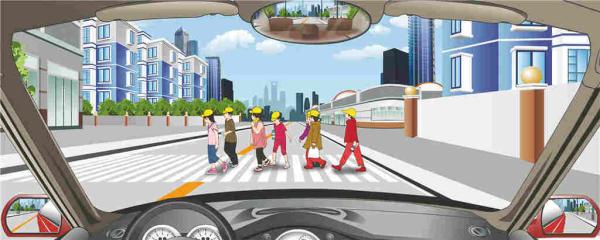
A. Right
B. Wrong
Answer: A
10. How should motor vehicle drivers make a U-turn at the intersection ahead?
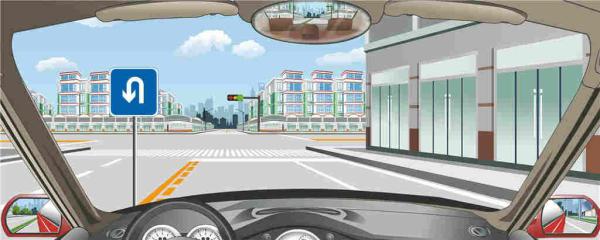
A. Make a U-turn in the waiting area for turning left
B. Make a U-turn at the broken line area of the Intersection
C. Wait until the left-turn indicator is on
D. Wait until the straight-going signal is on
Answer: B
11. It is safest for a motor vehicle driver to overtake the vehicle in front from its righthand on this kind of road.
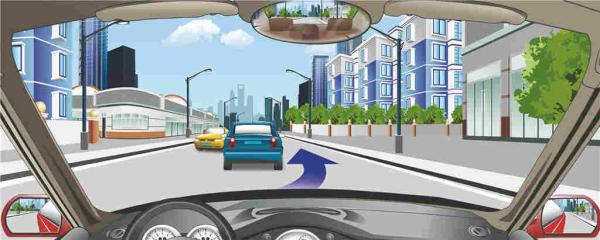
A. Right
B. Wrong
Answer: B
12. The right-front sign indicates a time-regulated pedestrian area.
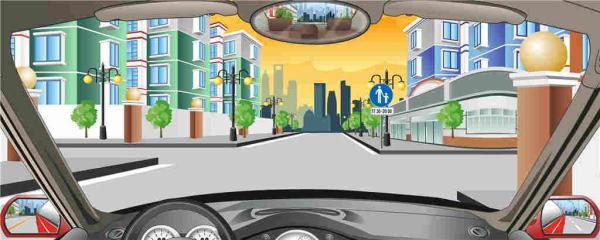
A. Right
B. Wrong
Answer: A
13. When a motor vehicle breaks down on a mountain road, what should the driver do?
A. Park on a downhill section
B. Park on an uphill section
C. Park on a gentle section of the mountain road
D. Park on the crest of a slope
Answer: C
14. How should the driver use vehicle lights when the motor vehicle leaves a roundabout?
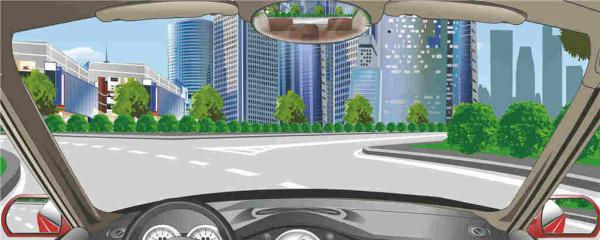
A. Turn on the left-turn indicator
B. Turn on the hazard lamps
C. No need to turn on any indicators
D. Turn on the right-turn indicator
Answer: D
15. Gun powder, explosives and detonating powder belong to which of the following dangerous chemicals?
A. Oxidizing materials
B. Inflammable solid materials
C. Explosives
D. Self-igniting articles
Answer: C
16. When a tire suddenly bursts on the road, what should not be done by the driver?
A. Keep calm and release the accelerator pedal slowly
B. Hold the steering wheel firmly to ensure the vehicle goes straight
C. Apply emergency braking and stop the vehicle in the shortest possible time
D. Gently depress the brake pedal after the vehicle slows down
Answer: C
17. Which of the following acts are prohibited when passing through a tunnel?
A. Overtaking
B. Stopping
C. Making a U-turn
D. Reversing
Answer: ABCD
18. Rescue personnel should check the breath of the unconscious person before applying any other emergency treatment.
A. Right
B. Wrong
Answer: A
19. What should the driver do when a motor vehicle encounters this situation on a mountain road?
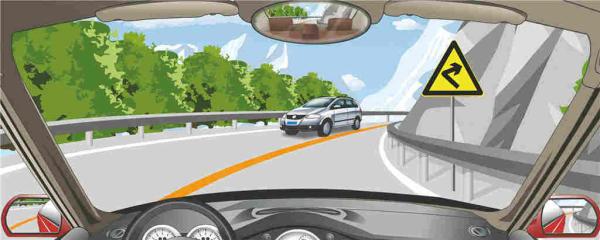
A. Stick to respective lanes and speed up to approach each other
B. Drive close to the central line of the road
C. Retain the normal speed
D. Slow down
Answer: D
20. Motor vehicle drivers may make a U-turn in the broken line area as long as it will not affect the normal traffic flow.
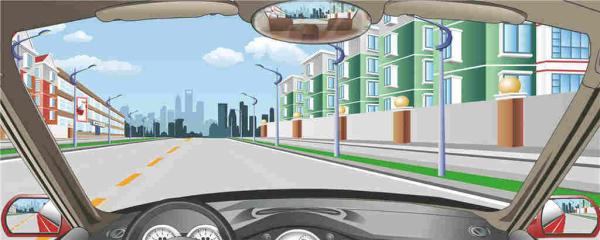
A. Right
B. Wrong
Answer: A