

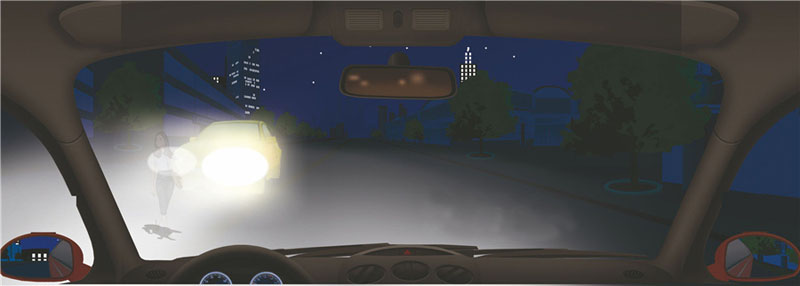
1. When approaching each other at night in this situation, drivers should watch for the danger where the two motor vehicles headlamps meet (the sight dead zone).
A. Right
B. Wrong
Answer: A
2. When encountering a school bus which stops at the right roadside and students are embarking or disembarking, and there are three motor vehicle lanes in each direction, motor vehicle drivers on the left lane behind the bus should stop and wait.
A. Right
B. Wrong
Answer: B
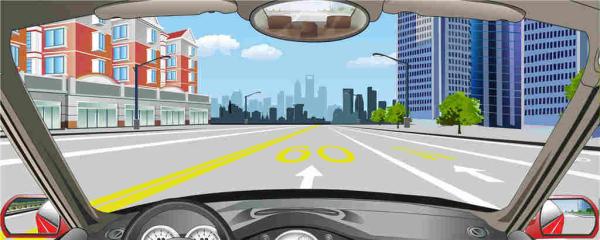
3. This road marker indicates that the minimum speed for this road section is 60 km/hour.
A. Right
B. Wrong
Answer: B
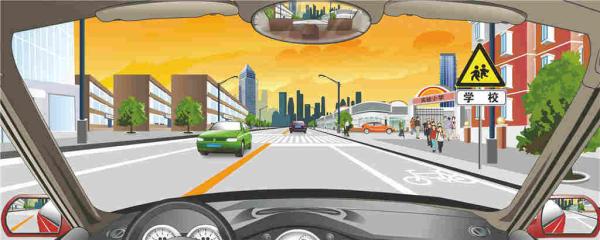
4. When encountering this situation at the gate of a school, the driver should prepare to stop.
A. Right
B. Wrong
Answer: A
5. When evading an emergency, except for being calm, what principle should be held by drivers?
A. Evading people first and then objects
B. Evading objects first and then vehicles
C. Evading vehicles first and then people
D. Evading objects first and then people
Answer: A
6. When following a vehicle on the road, the distance from the vehicle in front is not important. As long as the driver goes forward at the same speed as the vehicle in front does, he can avoid a rear-end collision.
A. Right
B. Wrong
Answer: B
7. When following other vehicles on a foggy day, what should the driver do?
A. Maintain a large safety distance
B. Turn on the high-beam
C. Turn on the low-beam
D. Sound the horn in due time
Answer: A
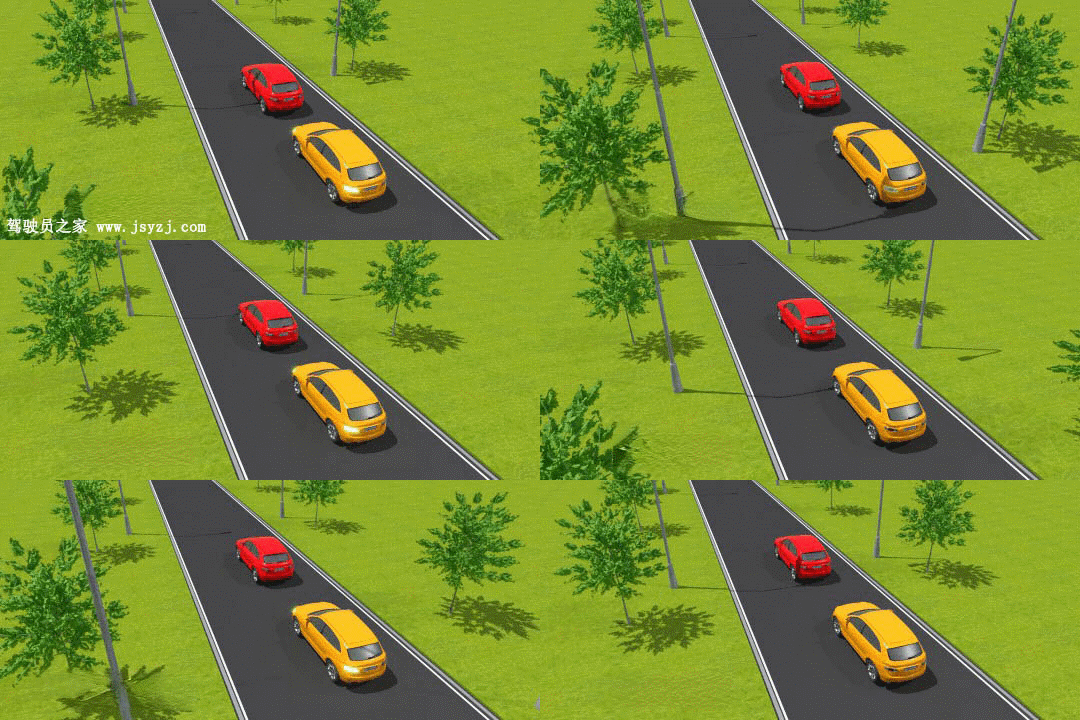
8. Under the circumstances shown in the flash, what should be done by the vehicle in front?
A. Reduce speed swiftly or apply emergency brake
B. Drive at a higher speed after giving a proper space
C. Reduce speed and yield by the right side of the road
D. Drive at a higher speed by the right side of the road
Answer: C
9. Once inflammable gas causes a fire disaster, it should be put out with water in good time.
A. Right
B. Wrong
Answer: B
10. Where is the proper parking place for motor vehicles driving on an expressway?
A. On the expressway ramp
B. In the acceleration lane
C. In the deceleration lane
D. In a service area
Answer: D
11. How should a motor vehicle follow the other vehicle In front when driving on a road covered with ice and snow?
A. Keep a long safe distance
B. Turn on hazard lamp
C. Change between high-and-low beam alternatively
D. Sound the horn in due time to give a notice to the vehicle in front
Answer: A
12. Under such circumstances, motor vehicles are allowed to cross the central solid line to overtake.
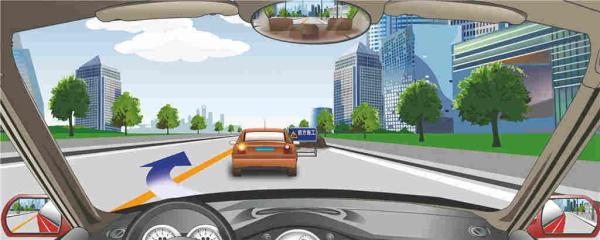
A. Right
B. Wrong
Answer: B
13. After speeding up to more than 60 km/hour, a motor vehicle driver may drive onto the driving lane directly.
A. Right
B. Wrong
Answer: B
14. The sign on the right indicates a one-kilometer distance from ETC toll station ahead.
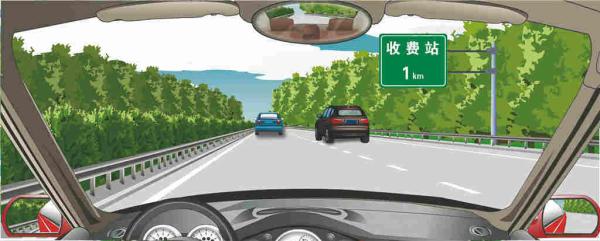
A. Right
B. Wrong
Answer: B
15. After a motor vehicle falls into water, the driver should immediately close the windows to prevent water from flowing into the compartment and to keep the air from flowing out. At the same time, he/she should make calls to tell the rescue personnel the place of the accident and wait for their arrival.
A. Right
B. Wrong
Answer: B
16. The sign in front indicates that vehicles except public buses are not allowed to drive in this lane.
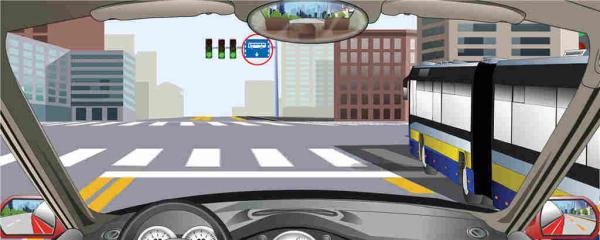
A. Right
B. Wrong
Answer: A
17. The sign on the right warns of an unguarded railway crossing 150 meters ahead.
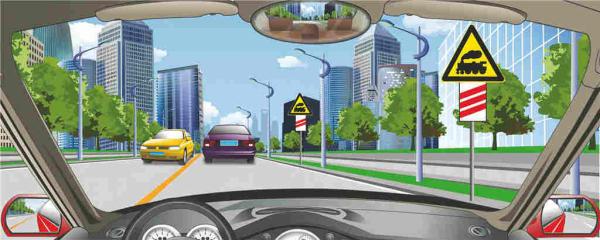
A. Right
B. Wrong
Answer: A
18. When there is a sudden braking failure on a downhill road, what should be done by the driver?
A. Driving to an emergency lane and reducing speed to stop
B. Dropping the gear by two positions
C. Changing to the reverse gear to force the vehicle to stop
D. Reducing speed by pulling up the handbrake
Answer: A
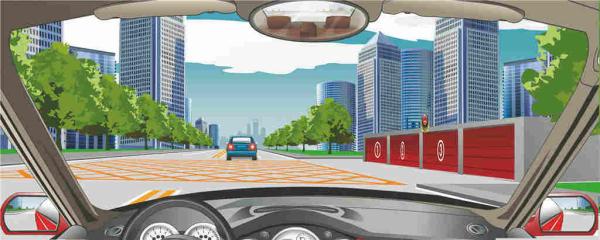
19. The cross-hatched marking indicates an area where vehicle drivers are not allowed to stop.
A. Right
B. Wrong
Answer: A
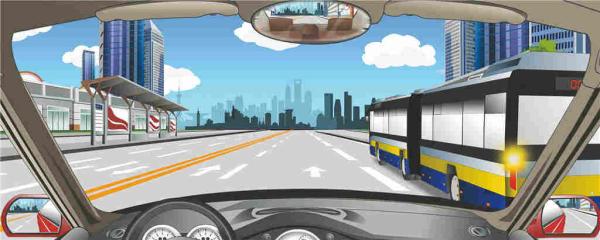
20. What should the driver do in case the public bus suddenly pulls out from this bus station?
A. Stop behind the public bus
B. Overtake the public bus rapidly
C. Slow down and overtake the public bus slowly
D. Sound the horn continuously to warn the public bus
Answer: C