

1. Whats the meaning of this sign?
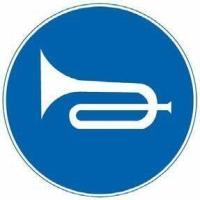
A. no honking the tweeter
B. no honking the woofer
C. should honk
D. no honking
Answer: C
2. A person who has not obtained driving license drives a motorized vehicle, he will be held for legal liability.
A. Right
B. Wrong
Answer: A
3. Violating the law and regulations on road traffic safety is the act of violation of the law.
A. Right
B. Wrong
Answer: A
4. Whats the meaning of this sign?
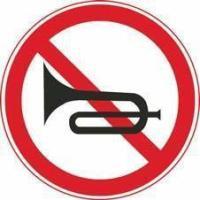
A. no long time honking
B. honk discontinuously
C. reduce speed and honk
D. no honking
Answer: D
5. Whats the meaning of this sign?
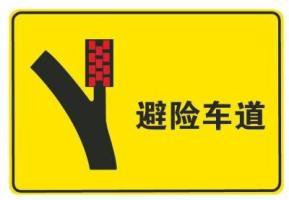
A. danger-avoiding lane
B. emergency lane
C. road shoulder
D. sharp curve
Answer: A
6. Nobody is allowed to drive a motorized vehicle that has safety hazards.
A. Right
B. Wrong
Answer: A
7. Whats the meaning of this sign?
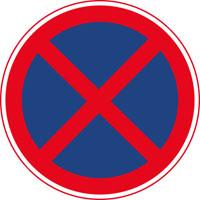
A. stopping temporarily is allowed
B. long stopping is allowed
C. no long stopping
D. no stopping
Answer: D
8. When a vehicle wades across the water, the driver should maintain a low speed, and _____ the brake pedal so as to restore the braking efficiency.
A. Continuously and strongly depress
B. Intermittently and strongly depress
C. Continuously and gently depress
D. Intermittently and gently depress
Answer: D
9. If the applicant commits bribery or cheating in the course of a test, his eligibility for this test will be cancelled and the results of other tests he has passed will be invalid.
A. Right
B. Wrong
Answer: A
10. Before the motorized vehicle runs on the road, the driver should check the safety and technical performance of the vehicle.
A. Right
B. Wrong
Answer: A
11. The method of this small passenger vehicle to leave the expressway lane is correct.
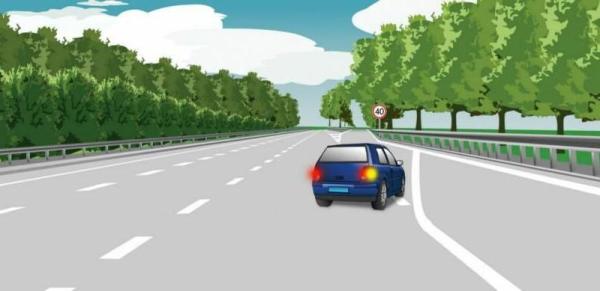
A. Right
B. Wrong
Answer: A
12. A motorized vehicle driver who uses falsified or altered driving license is subject to a 12-point penalty.
A. Right
B. Wrong
Answer: A
13. Whats the meaning of this sign?
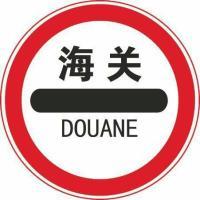
A. national boundaries
B. border defense
C. boundaries
D. customs
Answer: D
14. May directly turn left in front of the vehicle coming opposite when encountering this traffic light.
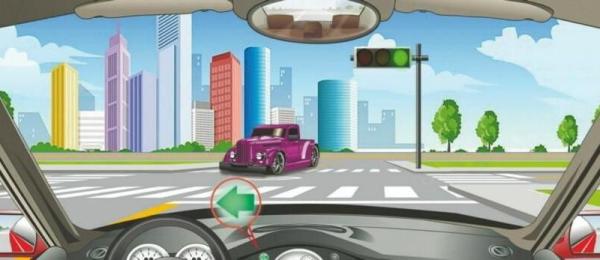
A. Right
B. Wrong
Answer: B
15. When discovering a road congestion ahead, the correct way to deal with this situation is to _______.
A. Continue to weave through
B. Find space and overtake one vehicle after another
C. Honk to indicate the vehicle in front to speed up
D. Stop and wait in line
Answer: D
16. Which kind of sign is it?
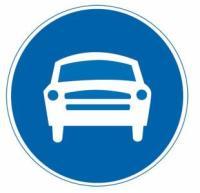
A. warning sign
B. prohibitive sign
C. indicative sign
D. directional sign
Answer: C
17. It lights continuously to indicate that engine control system failed.
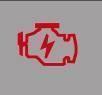
A. Right
B. Wrong
Answer: A
18. Whats the meaning of this sign?
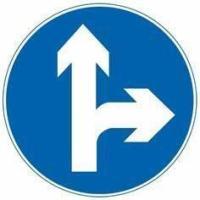
A. going straight and left turn
B. going straight and right turn
C. no going straight and no right turn
D. left turn and right turn only
Answer: B
19. When following a vehicle, the following vehicle may use the high beam light.
A. Right
B. Wrong
Answer: B
20. Whats the meaning of this sign?

A. Road traffic flow monitoring
B. Deceleration photographed area
C. Full section snapshot
D. Traffic monitoring equipment
Answer: D