

1. If a motor vehicle encounters a strong side wind when it leaves the opening of an expressway tunnel, what will happen?
A. A feeling of deceleration
B. A feeling of acceleration
C. A feeling of pressure
D. Deviation in direction
Answer: D
2. The sign on the right warns of low-lying road ahead.

A. Right
B. Wrong
Answer: A
3. When a motor vehicle stops temporarily in a rainy day,which lamp should be turned on?
A. Front and rear fog lamps
B. Hazard lamps
C. Headlamps
D. Reverse lamps
Answer: B
4. The sign on the right warns of a non-motor vehicle lane.
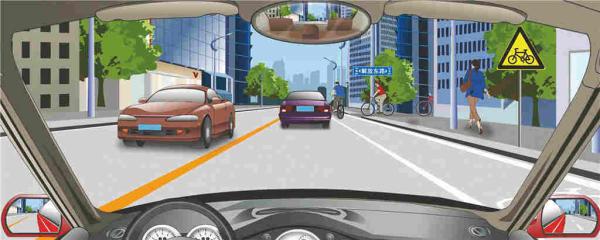
A. Right
B. Wrong
Answer: B
5. What is the meaning of the sign on the right?

A. Parking prohibited
B. Temporary parking permitted
C. Picking up or dropping off passengers permitted
D. Stopping to unload permitted
Answer: A
6. The driver should speed up to 40 kilometers per hour when he sees this traffic sign.
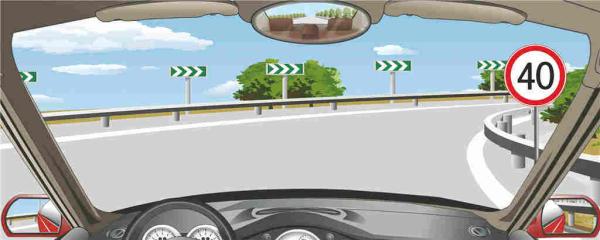
A. Right
B. Wrong
Answer: B
7. The driver should turn on the left-turn indicator after entering the acceleration lane on an expressway.
A. Right
B. Wrong
Answer: B
8. When seeing this sign, the driver should slow down promptly.
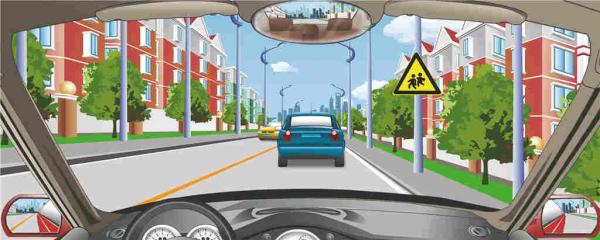
A. Right
B. Wrong
Answer: A
9. Under such circumstances, the motor vehicle driver should voluntarily reduce speed and let the vehicle behind overtake.
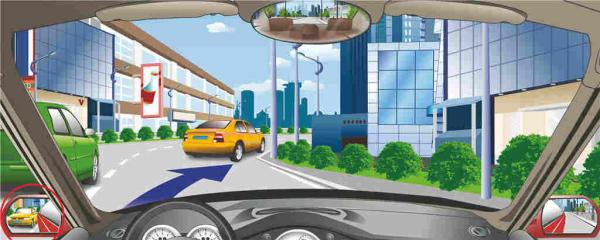
A. Right
B. Wrong
Answer: A
10. The sign on the right side warns of a sharp right turn ahead.
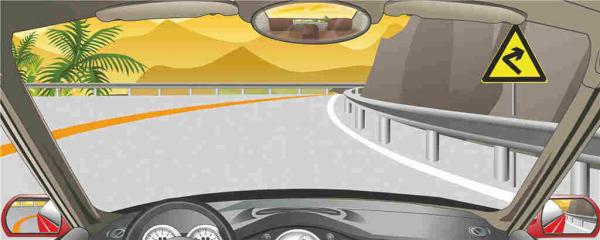
A. Right
B. Wrong
Answer: A
11. Under such circumstances, motor vehicles are allowed to cross the central solid line to overtake.
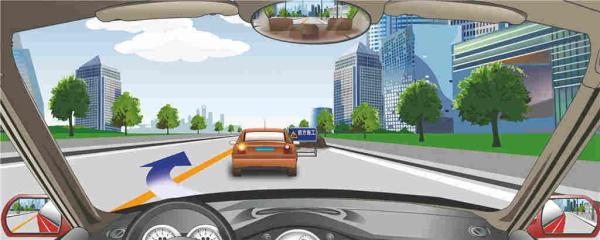
A. Right
B. Wrong
Answer: B
12. The guide arrow on the road surface of this lane indicates that the lanes ahead will merge to the left side.
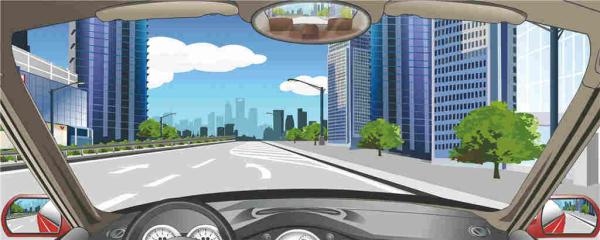
A. Right
B. Wrong
Answer: A
13. A motor vehicle may stop and yield if it encounters any problem when changing to the driving lane from an acceleration lane.
A. Right
B. Wrong
Answer: B
14. After a motor vehicle falls into water, the driver won?ˉt be able to open the side doors or windows to escape until water nearly fills up the compartment.
A. Right
B. Wrong
Answer: A
15. This road marker indicates that the minimum speed for this road section is 60 km/hour.
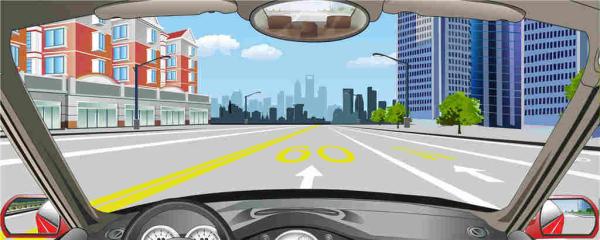
A. Right
B. Wrong
Answer: B
16. What should motor vehicle drivers do when going straight and passing through the intersection ahead?
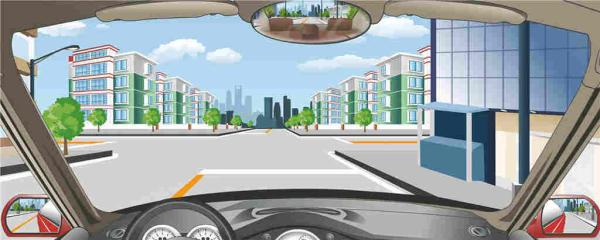
A. Reduce speed when approaching the intersection
B. Reduce speed after entering the intersection
C. May pass through the intersection without speed reduction
D. Accelerate in advance to pass through the intersection
Answer: A
17. The guide arrow on the road surface of this lane indicates that only right turns are permitted at the intersection ahead.
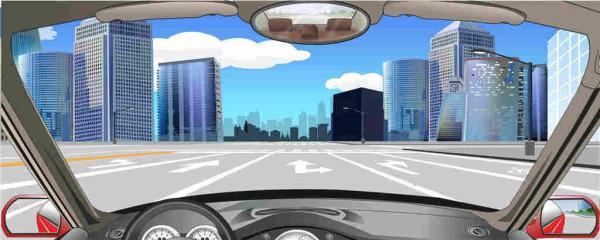
A. Right
B. Wrong
Answer: B
18. Which of the following method is correct to rescue an unconscious person?
A. Apply cardio-pulmonaryresuscitation immediately
B. Press the philtrum of the wounded person with force
C. Continuously slap the face of the wounded person
D. Check the breath of the wounded person before other emergency treatments
Answer: D
19. When encountering an obstacle on one side of the road, what should vehicles do as they approach each other?
A. The vehicle not encountering an obstacle should Yield to the other vehicle
B. The slower vehicle should yield to the faster
C. The vehicle encountering an obstacle should yield to the other vehicle
D. The faster vehicle should yield to the slower
Answer: C
20. The sign on the right warns of traffic signals ahead.
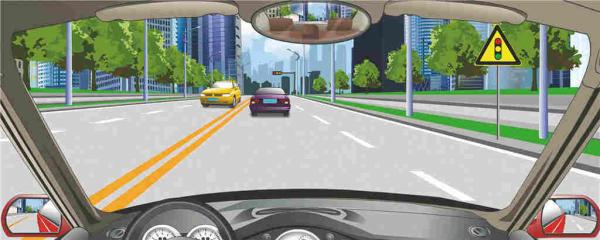
A. Right
B. Wrong
Answer: A