

1. When driving in a strong wind, drivers should abruptly turn the steering wheel to return to the original direction if they feel the vehicle deviates horizontally due to a strong gale.
A. Right
B. Wrong
Answer: B
2. The white zig-zag line on the highway serves as a reference for the speed of a driver.
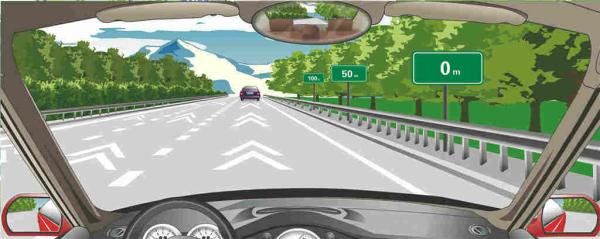
A. Right
B. Wrong
Answer: B
3. What should be done by drivers in order to safely pass through the curve in this condition?

A. Reduce speed and drive on the right side
B. Drive on the central line of the road
C. Drive on the outer side of the curve
D. Drive by borrowing the opposite lane
Answer: A
4. The sign on the right warns drivers to yield for oncoming motor vehicles.
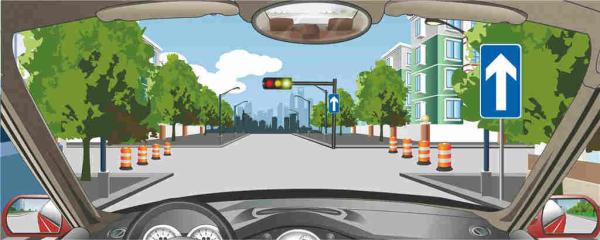
A. Right
B. Wrong
Answer: B
5. What should the driver do upon finding that one of the right tires is leaking while driving?
A. Brake swiftly to slow down
B. Brake slowly to slow down
C. Turn to the left side swiftly
D. Apply emergency braking
Answer: B
6. After a motor vehicle falls into water, the driver should immediately close the windows to prevent water from flowing into the compartment and to keep the air from flowing out. At the same time, he/she should make calls to tell the rescue personnel the place of the accident and wait for their arrival.
A. Right
B. Wrong
Answer: B
7. The sign in front indicates a 2-kilometer distance from the destination of the highway ahead.
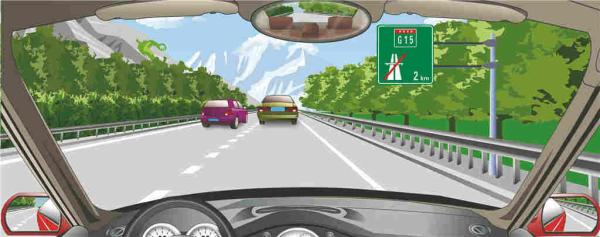
A. Right
B. Wrong
Answer: A
8. When driving on a muddy road, what should drivers do to pass at an even speed without stopping?
A. Use the handbrake
B. Press the clutch pedal
C. Press the brake pedal
D. Use the accelerator pedal
Answer: D
9. What should the driver do when the motor vehicle encounters this situation?
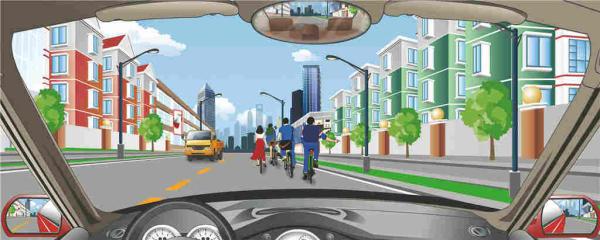
A. Overtake immediately
B. Sound the horn continuously to warn
C. Maintain safety distance and overtake
D. Sound horn and speed up to overtake
Answer: C
10. Mr. Zou drove a large sleeper coach (capacity 35 people and carrying 47 passengers). At the spot of 938 kilometers of the Jinggang ao Expressway, large amounts of dangerous chemicals in the coach blew up, killing 41 people and injuring 6. What are the main illegal acts in this case?
A. Carrying more passengers than permitted
B. Passengers carried flammable and explosive substances
C. Speeding
D. Illegal parking
Answer: AB
11. How many kinds of law-breaking acts are displayed in flash 8?
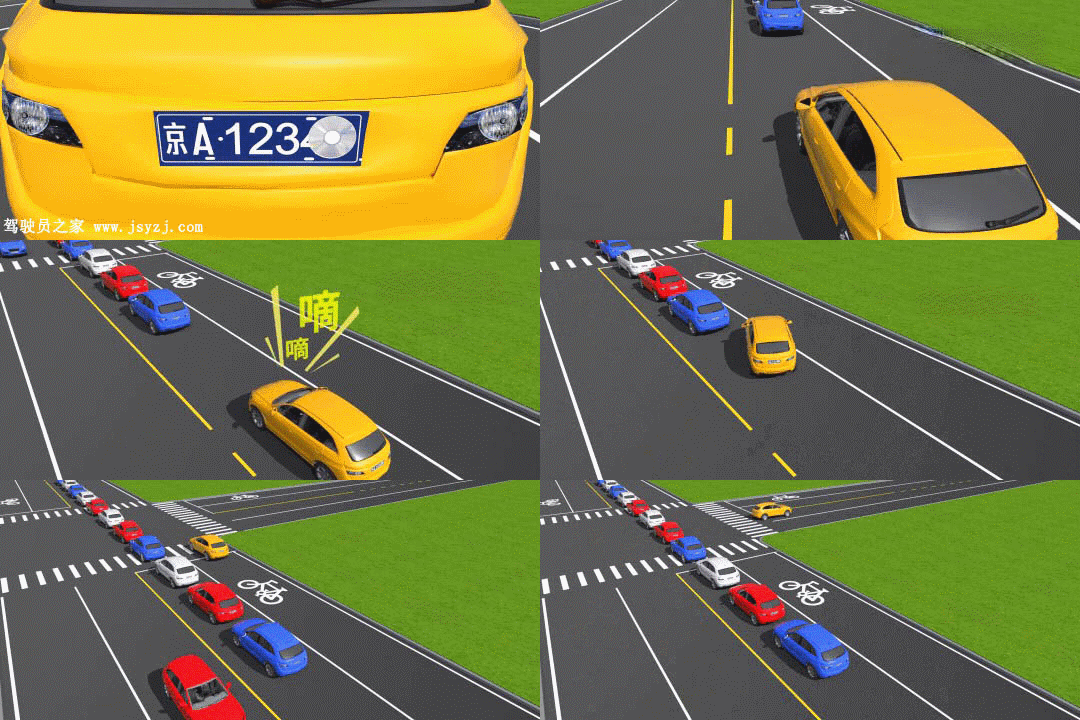
A. One
B. Two
C. Three
D. Four
Answer: B
12. What should motor vehicle drivers do under such circumstances at night?
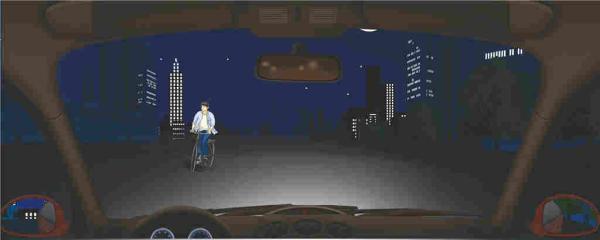
A. Turn off the headlamp when approaching
B. Use low-beam
C. Use high-beam
D. Turn off all lamps in advance
Answer: B
13. When encountering this situation in a residential area the driver should sound the horn continuously.
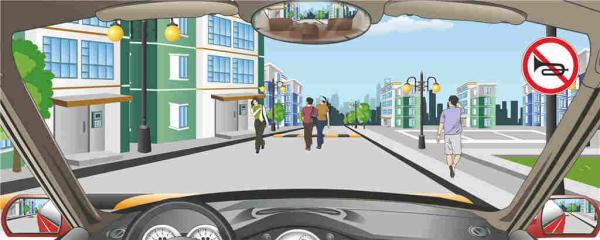
A. Right
B. Wrong
Answer: B
14. When reversing in this condition, in which of the following ways can motor vehicle drivers keep safe?

A. Reverse at a lower speed
B. Voluntarily stop and yield
C. Continuously sound the horn to alert
D. Reverse in a clockwise direction
Answer: B
15. The sign on the right warns of a bumpy road ahead.
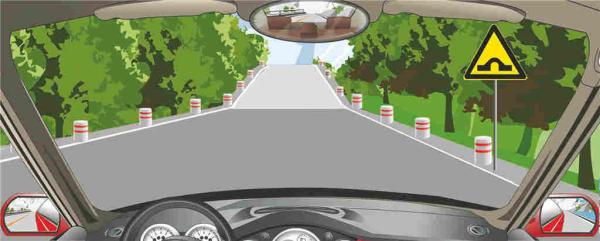
A. Right
B. Wrong
Answer: B
16. The guide arrow on the road surface of this lane indicates that U-turns and left turns are permitted at the intersection ahead.

A. Right
B. Wrong
Answer: A
17. Which one of the following is the safest way to pass the oncoming vehicle on this road?
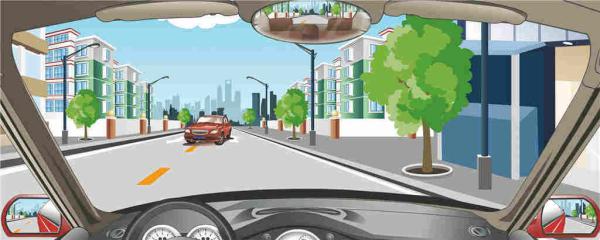
A. Driving along the central line
B. Driving with headlamp on
C. Yielding by the right side of the road
D. Yielding by the left side of the oncoming vehicle
Answer: C
18. The cross-hatched marking indicates an area where vehicle drivers are not allowed to stop.
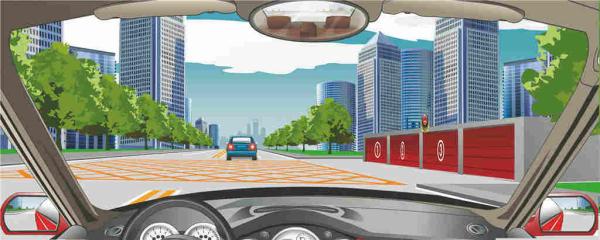
A. Right
B. Wrong
Answer: A
19. The sign in front indicates the name and number of the highway.
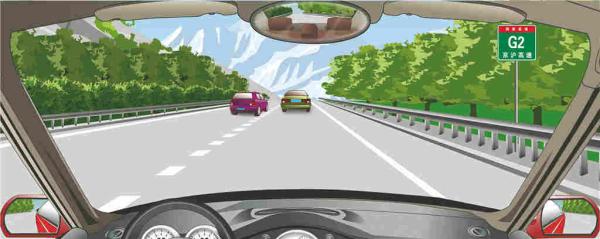
A. Right
B. Wrong
Answer: A
20. When the rear wheels of a motor vehicle skid sideways on a muddy road, the driver should turn the steering wheel in the opposite direction of the side skid.
A. Right
B. Wrong
Answer: B