

1. Which one of the following statements is correct in this situation?
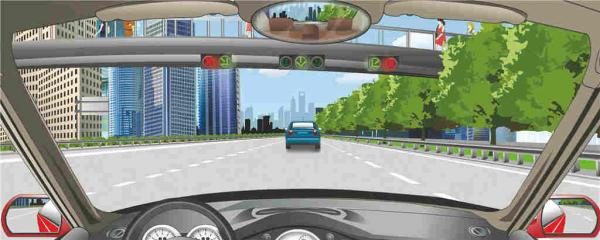
A. Vehicles are prohibited from passing in the lanes on either side
B. Move into the lane on either side at a reduced speed
C. Move into the lane on the right side
D. Move into the lane on either side at an increased speed
Answer: A
2. The guide arrow on the road surface of this lane indicates that only left turns are permitted at the intersection ahead.
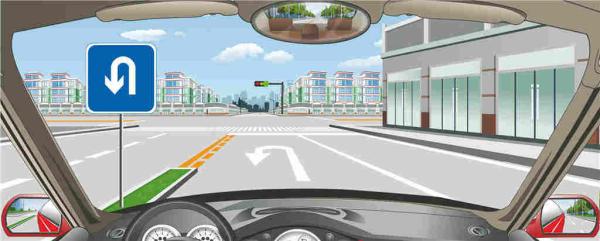
A. Right
B. Wrong
Answer: B
3. When the tire pressure is too low, what will happen if the tire changes its shape in waves and increases in temperature due to fast movement?
A. Unstable tire pressure
B. Even lower tire pressure
C. Driving resistance increases
D. Tire burst
Answer: D
4. When there is a braking failure on a downhill road, what should not be done by the driver?
A. Steering the motor vehicle to the uphill direction
B. Stopping the vehicle by rubbing the vehicle body against the rocks or trees on roadside
C. Driving to the emergency lane and stop the vehicle there
D. Pulling up the stopping brake or change the gear to two positions lower
Answer: D
5. Under such circumstances, what should the motor vehicle driver do?
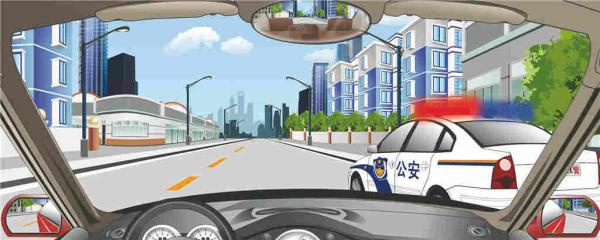
A. Reduce speed and yield by the left side
B. Reduce speed and yield by the right side
C. Speed up and yield by the left side
D. Go ahead along the original route
Answer: A
6. Drivers may cross these central solid and broken yellow lines when overtaking.
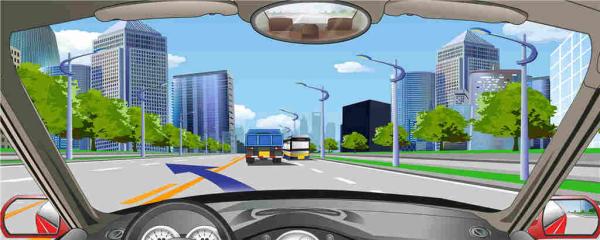
A. Right
B. Wrong
Answer: B
7. When driving in a strong wind, what should the driver do if he feels the steering wheel is suddenly out of control due to the frequent changes in speed and direction of the wind?
A. Turn the steering wheel against the wind
B. Turn the steering wheel with the wind
C. Use emergency brake
D. Firmly hold the steering wheel with both hands
Answer: D
8. Which one of following ways is the safest when driving a motor vehicle on this road?
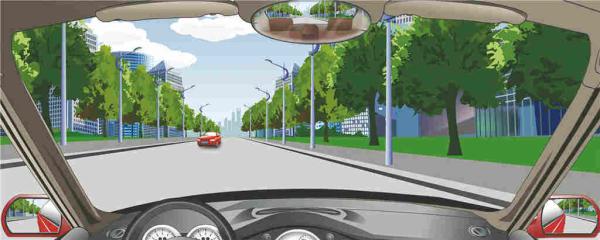
A. Driving along the central line of the road
B. Driving along the right side of the road
C. Driving at the middle of the road
D. Driving along the left side of the road
Answer: B
9. When a motor vehicle has deviated from the straight moving direction and an accident is unavoidable, the driver should decisively and continuously depress the brake pedal so as to shorten the stopping distance and reduce the impact of vehicle collision.
A. Right
B. Wrong
Answer: A
10. When there is a sudden braking failure on a downhill road, what should be done by the driver?
A. Driving to an emergency lane and reducing speed to stop
B. Dropping the gear by two positions
C. Changing to the reverse gear to force the vehicle to stop
D. Reducing speed by pulling up the handbrake
Answer: A
11. What should the driver do when he sees this sign on the road?
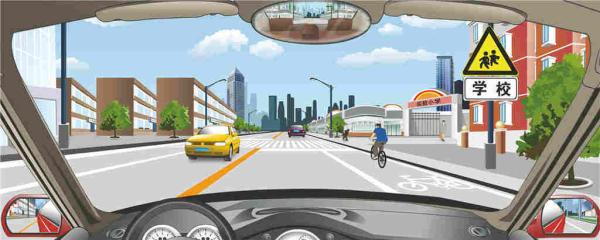
A. Use emergency braking
B. Slow down and take a look
C. Sound the horn intermittently
D. Prepare to bypass
Answer: B
12. If a motor vehicle encounters a strong side wind when it leaves the opening of an expressway tunnel, what will happen?
A. A feeling of deceleration
B. A feeling of acceleration
C. A feeling of pressure
D. Deviation in direction
Answer: D
13. How many kinds of law-breaking acts are displayed in flash 8?
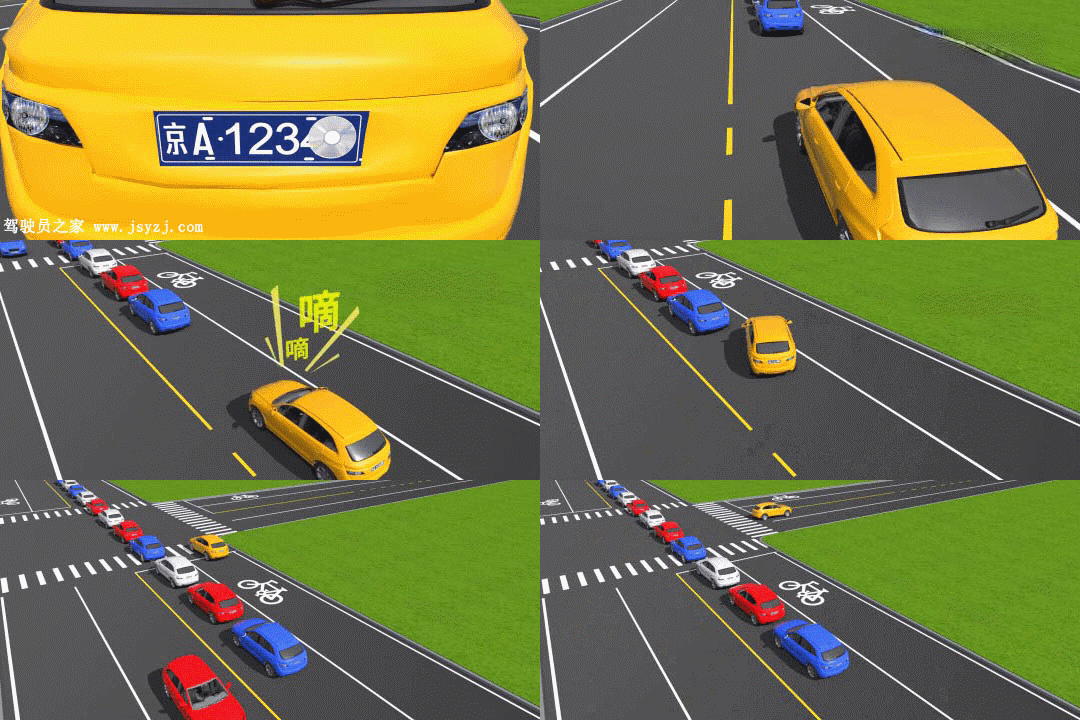
A. One
B. Two
C. Three
D. Four
Answer: B
14. This sign indicates the traffic broadcast and radio television channel of highway.
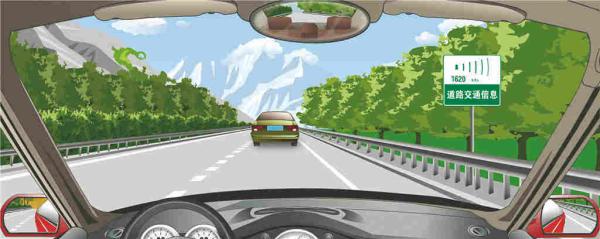
A. Right
B. Wrong
Answer: B
15. What is the most frequent problem for driving on a muddy road?
A. High resistance force
B. Sideways slide
C. The motor vehicle bumps
D. Steering failure
Answer: B
16. If a motor vehicle misses an exit on the expressway, the driver may reverse along the road shoulder.
A. Right
B. Wrong
Answer: B
17. When steering failure happens suddenly, if the road condition permits straight movement, drivers should not apply emergency braking.
A. Right
B. Wrong
Answer: A
18. When a motor vehicle equipped with ABS makes an emergency brake, the driver can tread the brake pedal heavily.
A. Right
B. Wrong
Answer: A
19. When a motor vehicle skids sideways on a muddy road, the driver should turn the steering wheel in the direction of the rear wheel skidding to properly adjust the direction.
A. Right
B. Wrong
Answer: A
20. Motor vehicle drivers don?ˉt need to fasten their seatbelt
A. Right
B. Wrong
Answer: B