

1. When carrying a wounded person in a coma, rescue personnel should try to let the unconscious person remain in the supine position.
A. Right
B. Wrong
Answer: B
2. The sign in front is an advance announcement of the directions led by the interchange.
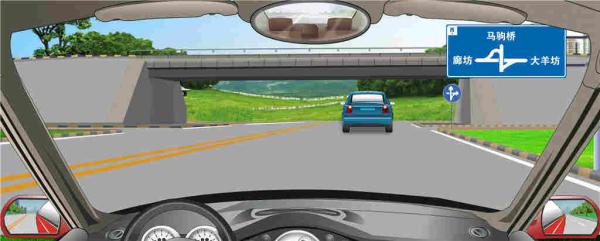
A. Right
B. Wrong
Answer: A
3. When making a turn on a mountainous road, drivers should cut speed, sound the horn and drive along the right side.
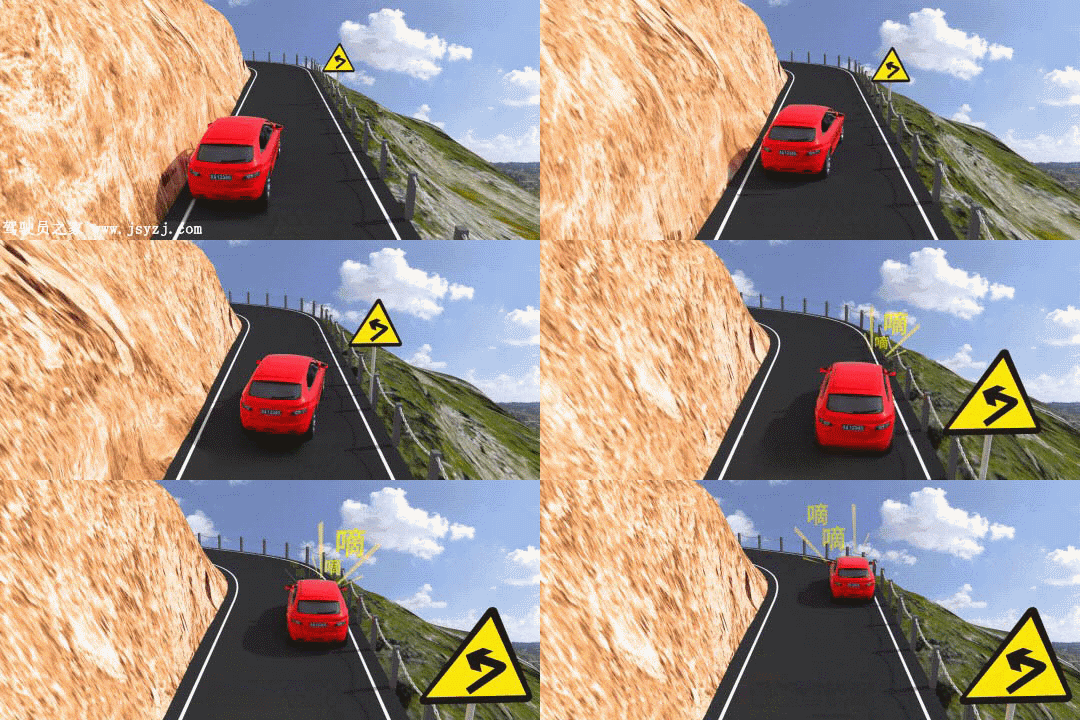
A. Right
B. Wrong
Answer: A
4. The sign on the left indicates vehicles are allowed to drive on the section ahead.
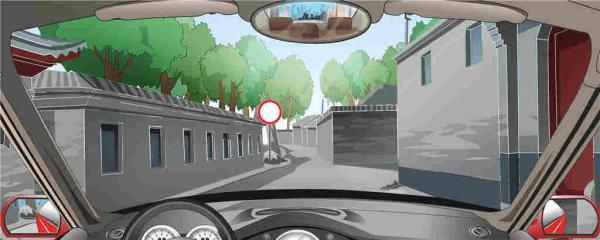
A. Right
B. Wrong
Answer: B
5. Matches, sulfur and red phosphorus belong to which of the following dangerous chemicals?
A. Explosives
B. Oxidizing materials
C. Self-igniting articles
D. Inflammable solid materials
Answer: D
6. The guide arrow on the road surface of this lane indicates that drivers are only permitted to continue straight at the intersection ahead.
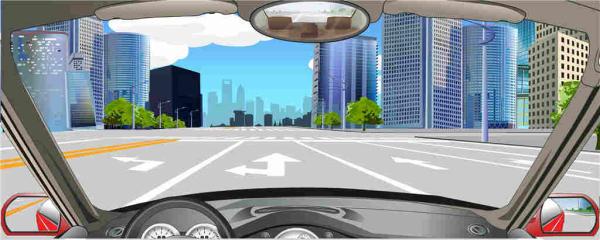
A. Right
B. Wrong
Answer: B
7. When a motor vehicle has deviated from the straight moving direction and an accident is unavoidable, the driver should decisively and continuously depress the brake pedal so as to shorten the stopping distance and reduce the impact of vehicle collision.
A. Right
B. Wrong
Answer: A
8. If a motor vehicle has an accident on a foggy day and stops on an expressway, which of the following acts is dangerous?
A. Leaving the motor vehicle as soon as possible
B. Standing outside the guardrail as much as possible
C. Turning on the hazard lamp and fog lamp
D. Placing a warning sign behind the vehicle in the oncoming direction
Answer: D
9. This sign warns to bypass from the right side to avoid the roadblock.
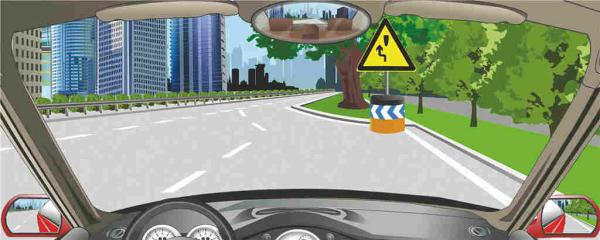
A. Right
B. Wrong
Answer: B
10. The sign on the right indicates a one-kilometer distance from ETC toll station ahead.
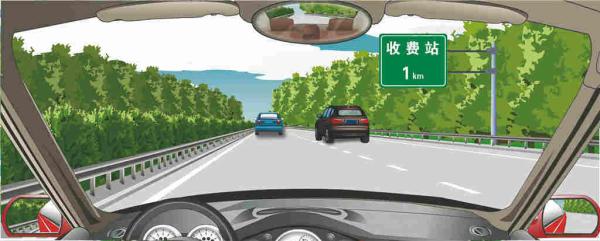
A. Right
B. Wrong
Answer: B
11. What should be given attention when setting off in this weather?
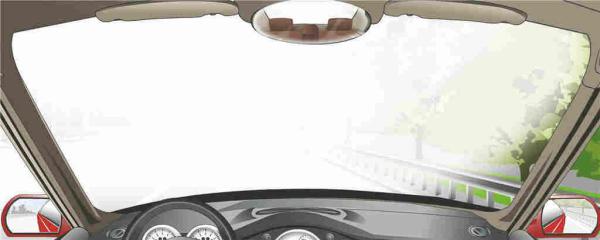
A. Turning on the high-beam
B. Turning on the front and rear fog lamps
C. Turning on the left indicator only
D. Continuously sounding the horn
Answer: B
12. The sign on the right indicates a 200-meter distance from the gas station ahead.
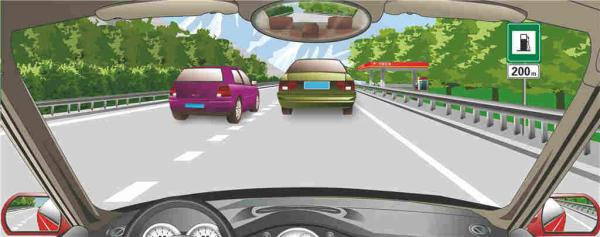
A. Right
B. Wrong
Answer: A
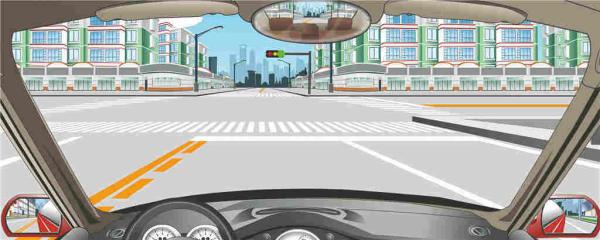
13. When driving onto the left lane, motor vehicle drivers are allowed to make a U-turn.
A. Right
B. Wrong
Answer: A
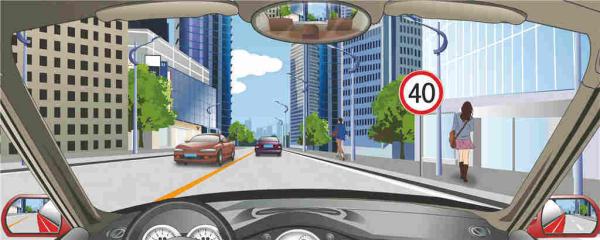
14. The sign on the right indicates that the speed limit of 40km/hour is lifted on the road ahead.
A. Right
B. Wrong
Answer: B
15. When finding a tire burst on the road, the driver should gently depress the brake pedal, reduce speed and stop the vehicle slowly.
A. Right
B. Wrong
Answer: A
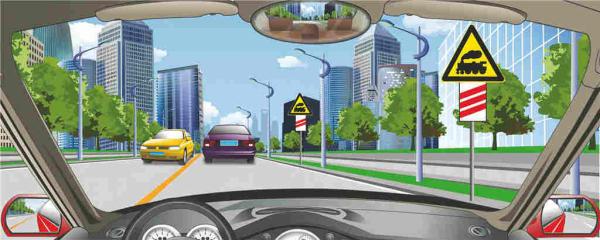
16. The sign on the right warns of an unguarded railway crossing 150 meters ahead.
A. Right
B. Wrong
Answer: A
17. When a motor vehicle needs to stop for inspection after having an accident on an expressway, where should the driver park?
A. On the far outer lane
B. On the inner lane
C. On the emergency lane
D. In the triangle area on the ramp
Answer: C
18. Sounding the horn on a foggy day can arouse the attention of the opposite side. After hearing the horn from the opposite side, the driver should also sound their own horn to respond.
A. Right
B. Wrong
Answer: A
19. Motor vehicle drivers don?ˉt need to fasten their seatbelt
A. Right
B. Wrong
Answer: B
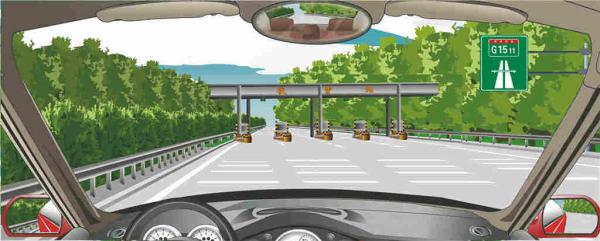
20. The sign on the right is an advance announcement of the highway destination.
A. Right
B. Wrong
Answer: B