

1. This sign reminds the lane or the road narrows on the left side ahead.
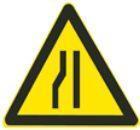
A. Right
B. Wrong
Answer: A
2. These signs warn the driver danger ahead and passing with care.
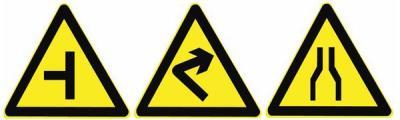
A. Right
B. Wrong
Answer: A
3. When encountering a vehicle coming in the opposite direction on a mountain road, the driver should ______ when crossing each other.
A. Not reduce speed
B. Stick to the center of the road
C. Speed up
D. Reduce speed or stop to yield
Answer: D
4. Opening the doors of a motorized vehicle should not obstruct the flow of other vehicles and pedestrians.
A. Right
B. Wrong
Answer: A
5. When driving slowly in a congested road, the driver should ________ if another vehicle forcefully cuts in.
A. Honk to warn it against cutting in
B. Speed up to closely follow the vehicle in front and refuse to allow it to cut in
C. Squeeze the cutting-in vehicle to force it to leave
D. Voluntarily yield to ensure safe driving
Answer: D
6. Reduce speed or stop to look before the stop line when encountering this traffic light at the intersection.
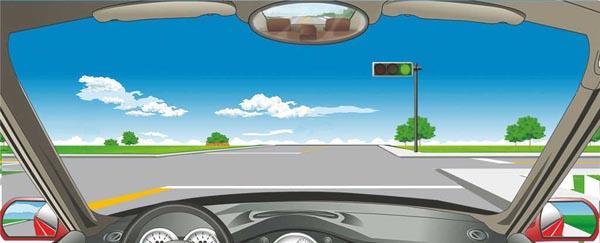
A. Right
B. Wrong
Answer: B
7. The continuously flashing yellow light is to warn that the driver should look and make sure it is safe to pass.
A. Right
B. Wrong
Answer: A
8. Causing a traffic accident due to violating the law and regulations on road traffic safety is the rule-breaking act.
A. Right
B. Wrong
Answer: B
9. An unregistered motorized vehicle should have _________ if it has to run on the road temporarily.
A. certificate of legal origin
B. license plate for temporary moving
C. borrowed license plate
D. certificate of legal unit
Answer: B
10. When a vehicle has increased its speed to more than 60 kilometers per hour on the ramp of an expressway, it may directly enter the carriageway.
A. Right
B. Wrong
Answer: B
11. Whats the meaning of this mark on the road?
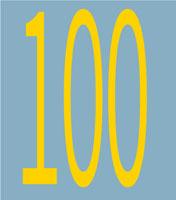
A. average speed is 100km/hr
B. minimum speed limit is 100km/hr
C. 100km/hr speed limit ban is lifted
D. maximum speed limit is 100km/hr
Answer: D
12. When a vehicle goes downhill on a mountain road, it is not allowed to overtake.
A. Right
B. Wrong
Answer: A
13. If a motorized vehicle driver drives on the road after getting drunk is subject to a prison term of more than 3 years.
A. Right
B. Wrong
Answer: B
14. When encountering children on the road, the driver should _________.
A. Reduce speed and go slowly, or stop to yield when necessary
B. Continuously honk to urge
C. Swiftly bypass from one side
D. Speed up and bypass
Answer: A
15. When a vehicles turns, it should do so on the right side and refrain from occupying the lane of the other party. The left turn should be gentle and the right turn should be sharp.
A. Right
B. Wrong
Answer: A
16. As the braking distance increases on a wet road in a rainy day, the driver should use the emergency brake as much as possible to reduce speed.
A. Right
B. Wrong
Answer: B
17. Which is subject to a 12-point penalty?
A. driving a motorized vehicle when driving license is temporarily detained
B. applying for reissuing the driving license by concealment or deception
C. not yielding to the school bus according to regulations
D. running with the license plate deliberately stained
Answer: D
18. Whats the meaning of this sign?
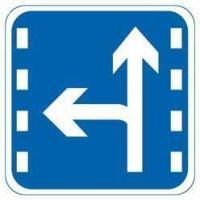
A. lane for both going straight and U turn
B. lane for both going straight and left turn
C. lane for going straight and right turn
D. lanes for going in different directions
Answer: B
19. What is this traffic sign?
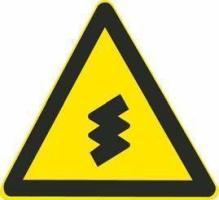
A. slippery section
B. sharp curve
C. inverse curve
D. continuous curves
Answer: D
20. Whats the meaning of this sign?
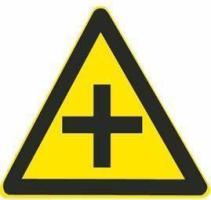
A. intersection
B. ring intersection
C. T-shaped intersection
D. Y-shaped intersection
Answer: A