

1. What is the meaning of the sign on the right?
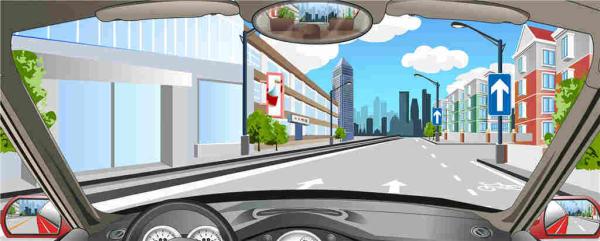
A. Drive on the right side of the road ahead
B. No entry ahead
C. One-way road ahead
D. Watch for the right-hand intersection ahead
Answer: C
2. The sign on the right warns of a wet road surface ahead.
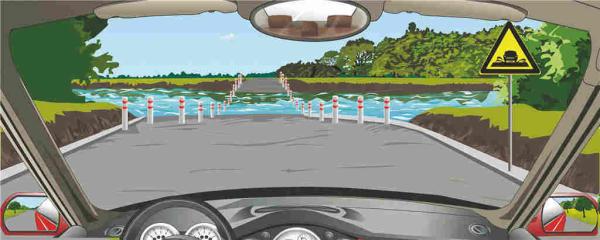
A. Right
B. Wrong
Answer: A
3. What should the driver do when seeing these hand signals?
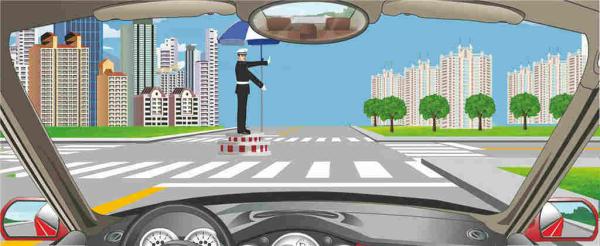
A. Go straight and pass through the intersection
B. Pull over
C. Drive to the waiting area for turning left
D. Turn right at the intersection
Answer: D
4. When the vehicle engine catches fire, what should the driver do first?
A. Turn off the engine as soon as possible
B. Extinguish the fire with water
C. Open the hood to extinguish the fire
D. Extinguish the fire from the leeward direction
Answer: A
5. When rescuing a person sustaining full-body burns the rescue personnel may spray cool water to his body to put out the fire.
A. Right
B. Wrong
Answer: A
6. What should motor vehicle drivers do under the circumstance shown in the flash?
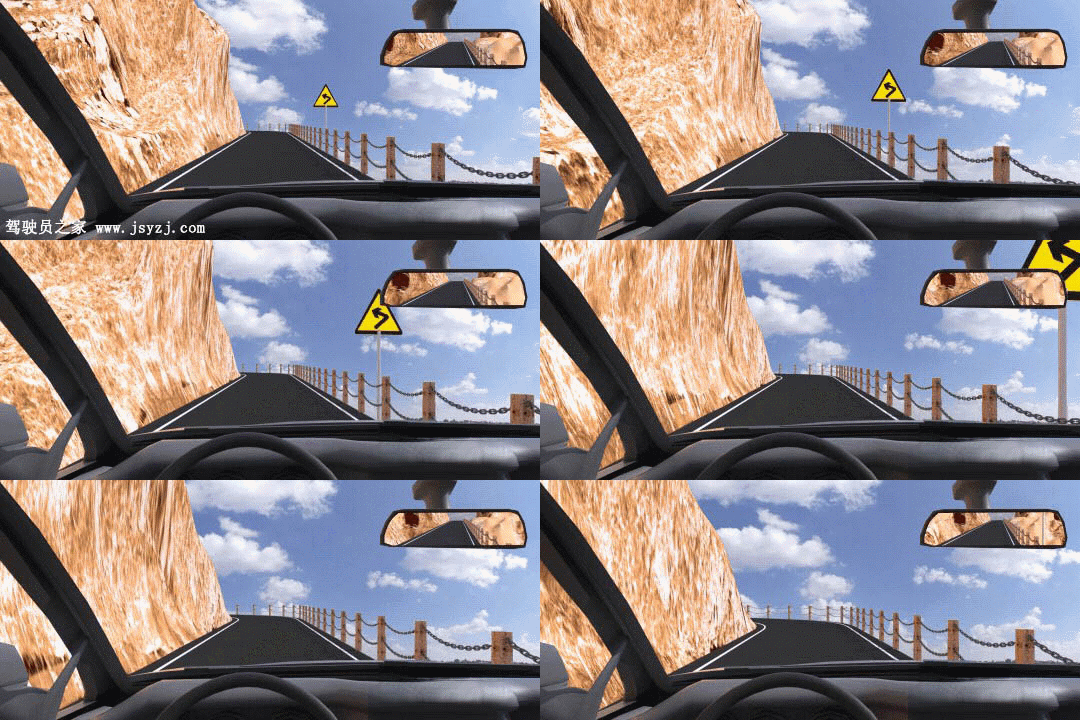
A. Drive by borrowing the opposite lane
B. Brake suddenly and pass through at a lower speed
C. Drive by the outer side of the curve
D. Reduce speed fully and drive by the right side
Answer: D
7. The guide arrow on the road surface of this lane indicates that only left turns are permitted at the intersection ahead.

A. Right
B. Wrong
Answer: A
8. The crosswalk of the intersection warns that pedestrians have priority.

A. Right
B. Wrong
Answer: A
9. The driver may not change lanes when the motor vehicle turns right at this intersection.
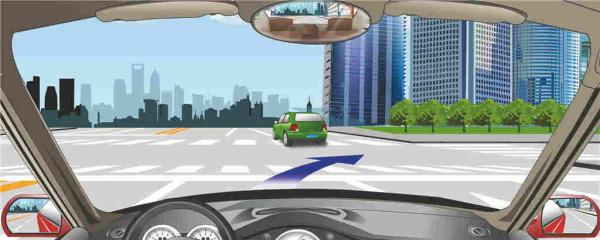
A. Right
B. Wrong
Answer: B
10. The sign on the right indicates a bypass flow intersection ahead.
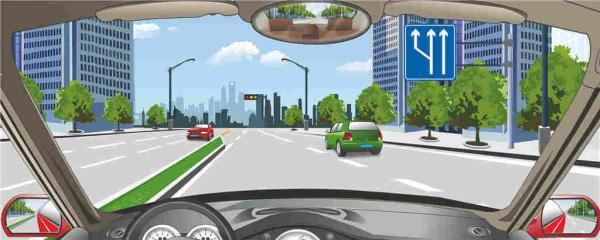
A. Right
B. Wrong
Answer: B
11. When driving on an expressway, what should the driver do if he has missed an exit but the next exit is far away?
A. Reverse along the road shoulder
B. Continue on
C. Stop immediately
D. Make a U-turn at the current location
Answer: B
12. When a motor vehicle turns left at this intersection the driver should change to the left lane in advance by the guide arrow.
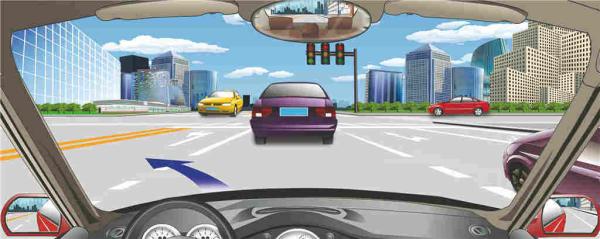
A. Right
B. Wrong
Answer: A
13. The sign on the right indicates right-hand turn only.
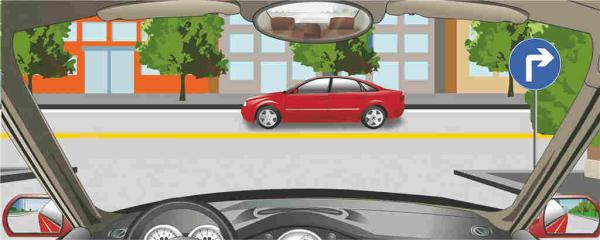
A. Right
B. Wrong
Answer: A
14. When encountering this situation around a school, the driver should speed up and pass as quickly as possible.

A. Right
B. Wrong
Answer: B
15. Where is the proper parking place for breakdown motor vehicles stopping for examination?
A. In the far outer lane
B. In the inner lane
C. In the emergency lane
D. Entrance area of the ramp
Answer: C
16. The motor vehicle should speed up and pass rapidly under this situation.
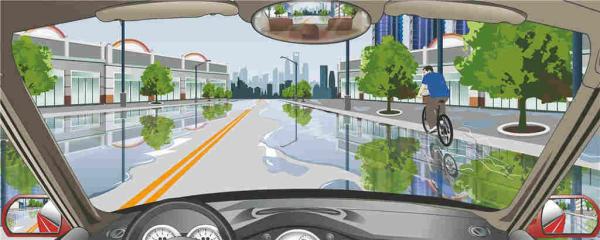
A. Right
B. Wrong
Answer: B
17. Which of the following materials should not be used to stop bleeding?
A. Bandage
B. Sling
C. Tourniquet
D. Hemp rope
Answer: D
18. Under such circumstances, motor vehicle drivers should follow the vehicle in front and drive into the Intersection to wait.
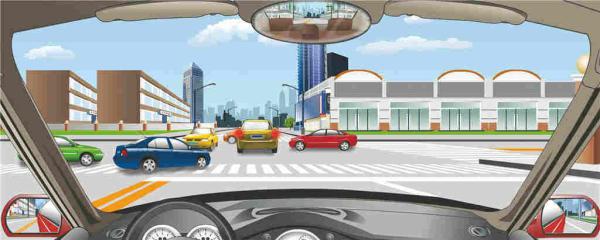
A. Right
B. Wrong
Answer: B
19. When there is a braking failure on a downhill road the driver should change the gear to one position or two positions lower, and control the speed by taking advantage of the braking role of the engine.
A. Right
B. Wrong
Answer: A
20. Which one of the following is the safest way when driving a motor vehicle on this road?
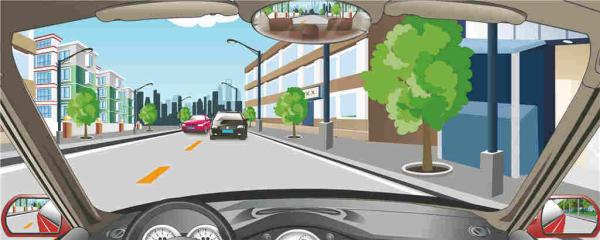
A. Cutting speed or stopping to yield
B. Driving along the center of the road
C. Keeping a normal speed
D. Approaching vehicles by taking the opposite lane
Answer: A