

1. Motor vehicles are not allowed to reverse in a tunnel.
A. Right
B. Wrong
Answer: A
2. Motor vehicles are prohibited from stopping on the ramp of an expressway.
A. Right
B. Wrong
Answer: A
3. The sign on the right warns that there are vehicles converging into the intersection on the right.
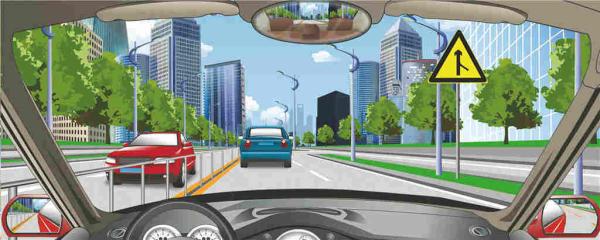
A. Right
B. Wrong
Answer: A
4. When there is no bandage for rescuing a wounded person, towels, handkerchiefs, bed sheets and stockings can all be used for dressing.
A. Right
B. Wrong
Answer: A
5. When following other vehicles on the uphill section of a mountain road, what should the driver do if the vehicle in front stops?
A. Overtake from either side of the front vehicle
B. Stop close to the vehicle in front
C. Stop with a larger space from the vehicle in front
D. Sound the horn continuously to warn the other driver
Answer: C
6. When driving on an expressway, where should the driver park?
A. The service area
B. The acceleration lane
C. The deceleration lane
D. On the ramp
Answer: A
7. When approaching the turning point of a road, in which of the following ways will motor vehicle drivers easily cause a traffic accident?
A. Driving ahead by occupying the opposite lane
B. Turning the steering wheel quickly when passing through the curve
C. Not reducing speed until driving onto the curve
D. Driving by the right side
Answer: ABC
8. When driving in a strong wind, drivers should abruptly turn the steering wheel to return to the original direction if they feel the vehicle deviates horizontally due to a strong gale.
A. Right
B. Wrong
Answer: B
9. During normal driving, the driver should do his best to run close to or on the central line so as not to allow oncoming vehicles any opportunity to occupy his own route.
A. Right
B. Wrong
Answer: B
10. Drivers may turn right at the intersection when traffic police give these hand signals.
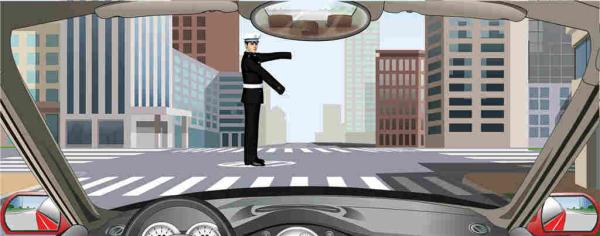
A. Right
B. Wrong
Answer: A
11. It is illegal to change lanes without turning on indicators.
A. Right
B. Wrong
Answer: A
12. The sign on the right indicates that overtaking is allowed on the section ahead.
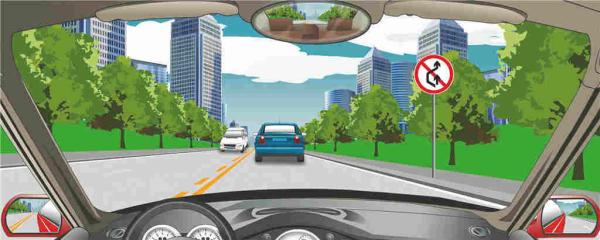
A. Right
B. Wrong
Answer: B
13. When encountering an emergency on a highway, the driver should not drastically turn to evade.
A. Right
B. Wrong
Answer: A
14. The motor vehicle should stop on the right and wait in this situation.
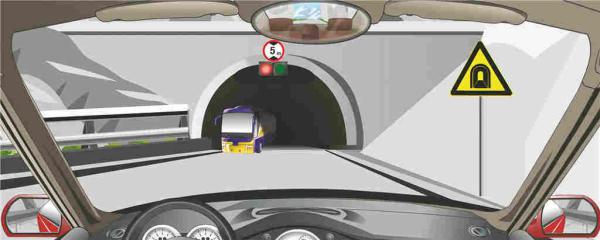
A. Right
B. Wrong
Answer: A
15. The driver should drive on the left in this kind of tunnel.
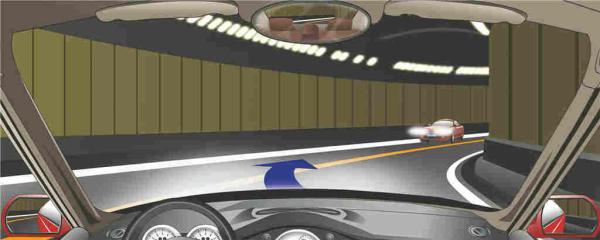
A. Right
B. Wrong
Answer: B
16. What should motor vehicle drivers do under the circumstance shown in the flash?
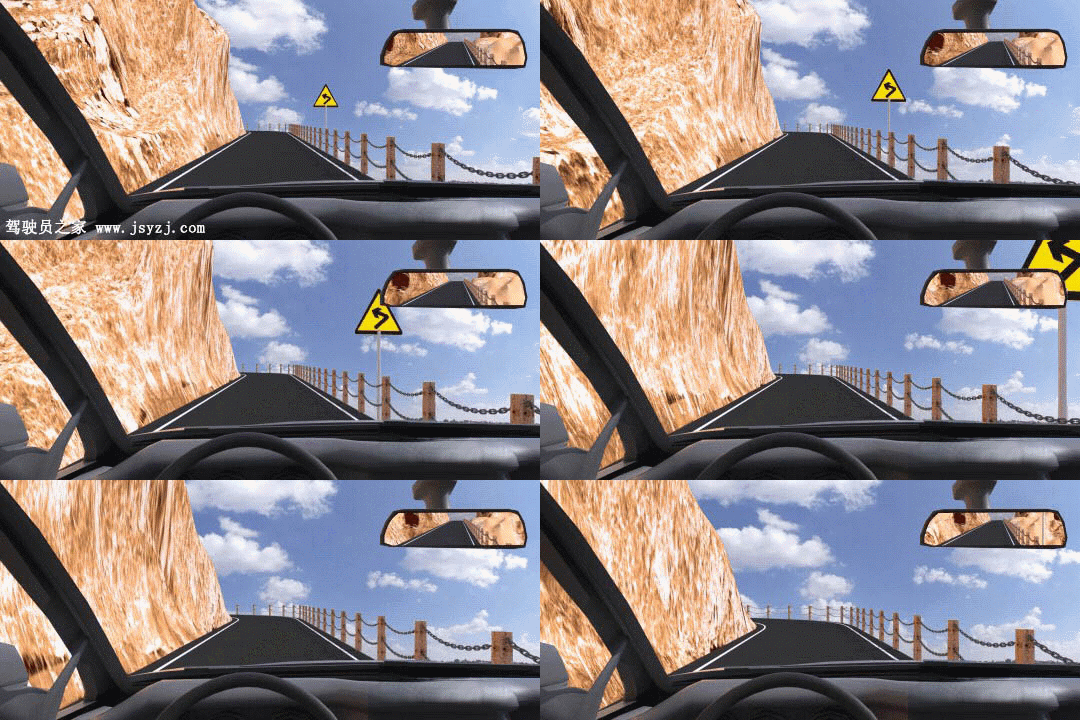
A. Drive by borrowing the opposite lane
B. Brake suddenly and pass through at a lower speed
C. Drive by the outer side of the curve
D. Reduce speed fully and drive by the right side
Answer: D
17. When the vehicle engine catches fire, what should the driver do first?
A. Turn off the engine as soon as possible
B. Extinguish the fire with water
C. Open the hood to extinguish the fire
D. Extinguish the fire from the leeward direction
Answer: A
18. A motor vehicle should slow down and stop at this level crossing.
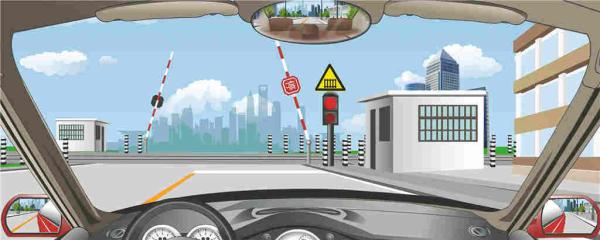
A. Right
B. Wrong
Answer: A
19. When a motor vehicle breaks down on an expressway and cannot be moved away from the driving lane, the driver may conduct emergency repairs on the driving lane.
A. Right
B. Wrong
Answer: B
20. What should the driver do in case the public bus suddenly pulls out from this bus station?
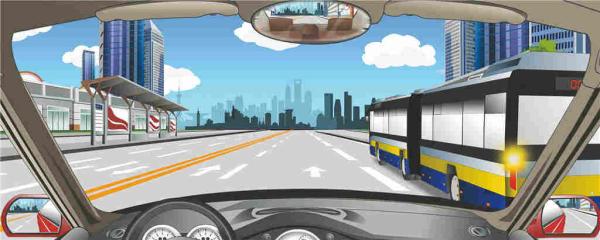
A. Stop behind the public bus
B. Overtake the public bus rapidly
C. Slow down and overtake the public bus slowly
D. Sound the horn continuously to warn the public bus
Answer: C