

1. When driving on a long downhill road, which is the best way to control driving speed?
A. Coast in neutral gear
B. Depress the clutch and coast
C. Use the engine to brake
D. Depress the brake pedal continuously
Answer: C
2. When a tire suddenly bursts on the road, the driver should violently depress the brake pedal to reduce speed and stop the vehicle.
A. Right
B. Wrong
Answer: B
3. When a motor vehicle catches fire, the driver should swiftly turn off the engine and open the hood to extinguish the fire.
A. Right
B. Wrong
Answer: B
4. The sign in front indicates a one-kilometer distance from the highway entry.

A. Right
B. Wrong
Answer: A
5. When rescuing a wounded person suffering blood loss in an emergency, it is necessary to first stop the bleeding by compression before other treatments are taken in accordance with the conditions of bleeding.
A. Right
B. Wrong
Answer: A
6. It is a bad habit for a driver to put his left arm on the window of the vehicle or hold the gear lever in his right hand for a long time.
A. Right
B. Wrong
Answer: A
7. Motor vehicles should accelerate when driving into an intersection with this traffic signal.
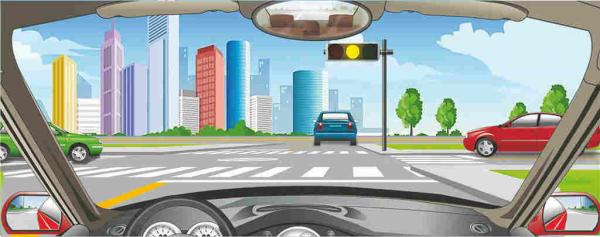
A. Right
B. Wrong
Answer: B
8. What should the driver do when he encounters an oncoming ambulance in the same lane?
A. Keep to the side and reduce speed or stop to yield
B. Drive ahead by occupying another lane
C. Yield by speeding up and changing lanes
D. Drive ahead in the original lane
Answer: A
9. When a motor vehicle passes over an inundated road the driver should change to a low gear and pass at a constant speed.
A. Right
B. Wrong
Answer: A
10. When a wounded person suffering burns is thirsty, he should only drink plain boiled water.
A. Right
B. Wrong
Answer: B
11. What should motor vehicle drivers do when going straight and passing through the intersection ahead?
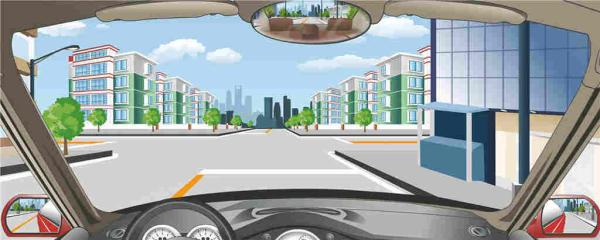
A. Reduce speed when approaching the intersection
B. Reduce speed after entering the intersection
C. May pass through the intersection without speed reduction
D. Accelerate in advance to pass through the intersection
Answer: A
12. As shown in this picture, the vehicles intending to turn left are not allowed to drive into left-turn waiting area directly to wait for green light.
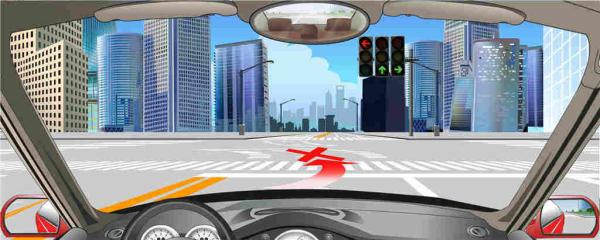
A. Right
B. Wrong
Answer: B
13. Which is the correct way to use a fire extinguisher?
A. Stand on the leeward side
B. Direct the fire extinguisher at the source of fire
C. Try to approach the source of fire as close as possible
D. Direct the fire extinguisher at the flames
Answer: B
14. The crosswalk of the intersection warns that pedestrians have priority.

A. Right
B. Wrong
Answer: A
15. When there is a braking failure on a downhill road, the driver should immediately try to find and drive to an emergency lane; after stopping the vehicle on the emergency lane, the driver should pull up the stopping brake so as to prevent a second danger arising from the vehicle sliding.
A. Right
B. Wrong
Answer: A
16. The sign on the left warns of no passing on the right-hand road ahead.
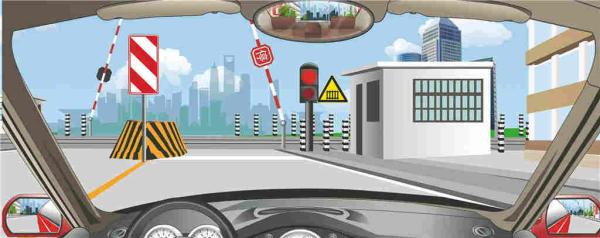
A. Right
B. Wrong
Answer: B
17. The sign on the left indicates vehicles are allowed to drive on the section ahead.
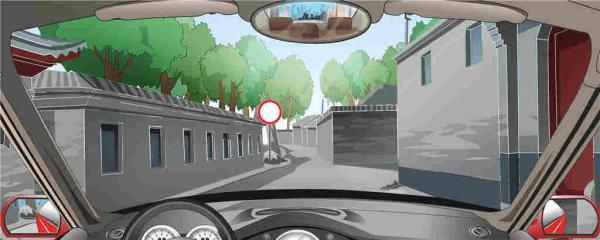
A. Right
B. Wrong
Answer: B
18. Under such circumstances, motor vehicle drivers should follow the vehicle in front and drive into the Intersection to wait.
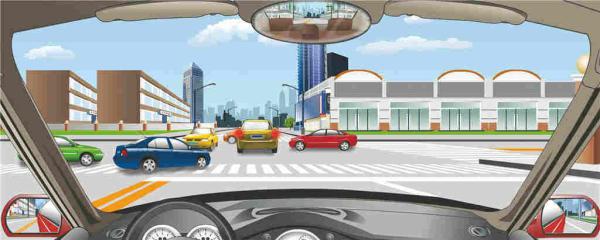
A. Right
B. Wrong
Answer: B
19. When a wounded person is unable to get off the vehicle by himself, he should be removed from the vehicle so as to avoid a secondary injury.
A. Right
B. Wrong
Answer: A
20. How to ensure safe driving at night?
A. Drive at speed limit
B. Cut speed and drive carefully
C. Maintain the current speed
D. Drive above the speed limit
Answer: B