

1. When a vehicle changes lane before an intersection, the driver should do so ______.
A. In the area marked by solid lines before the intersection
B. In the area marked by solid lines in the intersection
C. In the area marked by broken lines as indicated by the guide arrow
D. Before the stop line at the intersection
Answer: C
2. When crossing each other on a narrow road, the driver should slow down, yield and stop first.
A. Right
B. Wrong
Answer: A
3. How to run when encountering this situation?
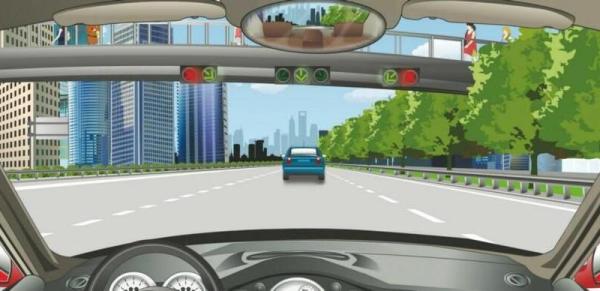
A. speed up to enter the lane of either side
B. enter the right lane
C. reduce speed and enter the lane of either side
D. can not run in the lane of neither side
Answer: D
4. Traffic Police only imposes a fine if a vehicle is suspected of using the falsified or altered label of inspection.
A. Right
B. Wrong
Answer: B
5. After a tire blows out and before the driver can control the speed of the vehicle, he should refrain from using the foot brake to stop the vehicle. Otherwise, a horizontal swing of the vehicle can cause greater danger.
A. Right
B. Wrong
Answer: A
6. When the driver discovers a tire is leaking and steers the vehicle off the main carriageway, he should refrain from applying emergency so as to avoid a vehicle turnover or a rear-end collision arising from the late braking of the following vehicle.
A. Right
B. Wrong
Answer: A
7. If a motorized vehicle driver causes a traffic accident and runs away but his conduct does not constitute a crime, he is subject to a 12-point penalty.
A. Right
B. Wrong
Answer: A
8. Whats the meaning of this sign?

A. No passing
B. driving at reduced speed
C. time limit for entering
D. no entering
Answer: A
9. The main impact of the road conditions at night on safe driving is ________.
A. The visibility is low and unfavorable for observing road traffic conditions
B. The road surface is complex and changing
C. The physical strength of the driver decreases
D. The driver can easily have impulse and illusion
Answer: A
10. A driver should buckled up before the vehicle moves.
A. Right
B. Wrong
Answer: A
11. When a vehicle passes a tunnel, it is prohibited from overtaking.
A. Right
B. Wrong
Answer: A
12. If a small motor vehicle driver has assumed equal or main liability for a traffic accident causing human deaths, and his driving license has not been revoked, it shall be checked within 30 days after the end of the scoring cycle.
A. Right
B. Wrong
Answer: A
13. This set of the hand signals of the traffic police indicates that the vehicles should ___ .
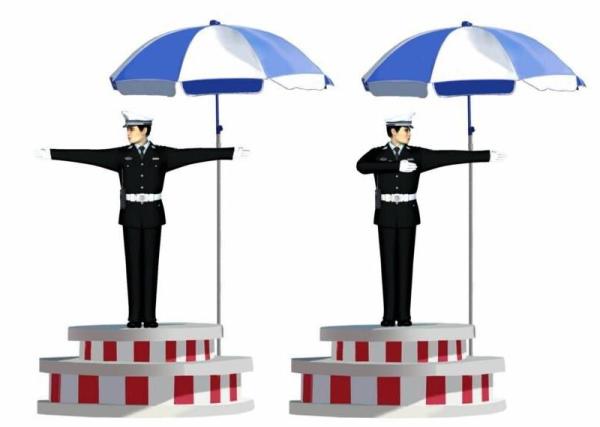
A. go straight
B. make a turn
C. stop
D. pull over
Answer: A
14. Whats the meaning of this sign?

A. fewer lanes
B. merging point
C. emergency lane
D. changing to left lane
Answer: A
15. Registration alternation is not needed when _____
A. change engine
B. add anti-collision device
C. change vehicles colour
D. change the chassis
Answer: B
16. What kind of violation does this broken down vehicle have?
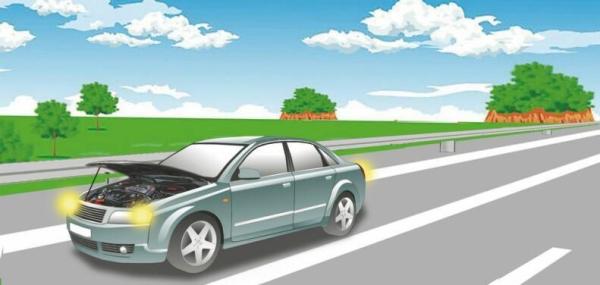
A. not turn on the hazard lights
B. not stop the car by the roadside
C. not solve the problem at once
D. not place the warning sign
Answer: D
17. Which illegal conduct is subject to a 12-point penalty
A. violate traffic lights
B. use falsified license plate
C. call or answer the mobile phone
D. violate prohibitive signs
Answer: B
18. When a vehicle passes a sharp curve, it may overtake if traffic is light.
A. Right
B. Wrong
Answer: B
19. Which should be carried onboard?
A. insurance policy
B. vehicle license
C. certificate of ex-factory inspection
D. vehicle registration papers
Answer: B
20. The police can detain the vehicle if one drives a vehicle without ______
A. vehicle license
B. qualification certificate
C. ID card
D. pass paper
Answer: A