

1. The guide arrow on the road surface of this lane indicates that only left turns are permitted at the intersection ahead.
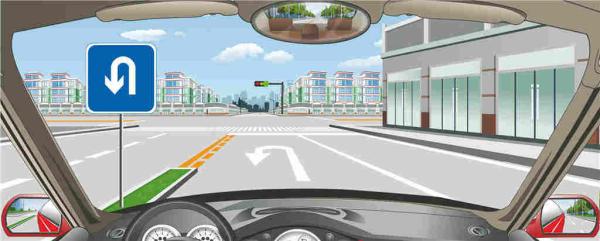
A. Right
B. Wrong
Answer: B
2. Motor vehicle drivers are allowed to overtake on this road section.
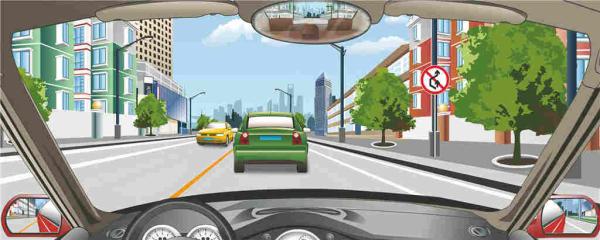
A. Right
B. Wrong
Answer: B
3. When driving on a muddy road, what should the driver do?
A. Try to avoid using the foot brake
B. Drive slowly in mid or low gear
C. Firmly hold the steering wheel
D. Speed up and pass through
Answer: ABC
4. What does this sign on the fly-over junction indicate?
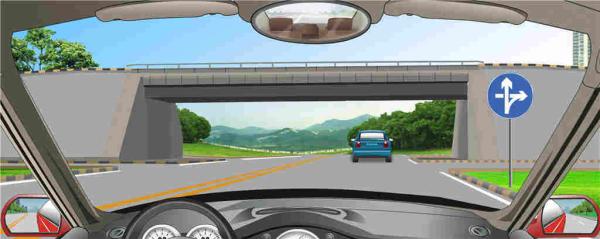
A. Turn right
B. Drive straight or turn left
C. Drive straight or turn right
D. Take a U-turn under bridge
Answer: C
5. Once inflammable gas causes a fire disaster, it should be put out with water in good time.
A. Right
B. Wrong
Answer: B
6. When rescuing a wounded person who has been poisoned by toxic gas, which of the following measures should be taken first?
A. Prevent heat loss
B. Bring him to a place with fresh air
C. Give him artificial respiration
D. Depress the heart over the chest
Answer: B
7. At 13: 10 pm, Mr. Luo set out in his medium bus from 0 km mark on the highway, and by 14: 10 had passed the 125km mark by 200 meters, he caused a rear-end collision with a motor vehicle that ran into the side slope on the southwest side, killing 11 people and injuring 2. Which of the following law-breaking acts did Mr. Luo commit?
A. Speeding
B. Driving not in accordance with traffic markings
C. Exceeding carrying capacity
D. Fatigued driving
Answer: A
8. When the engine suddenly stalls on the road and cannot be restarted, the driver should pull over in a timely fashion and identify the cause of the stalling.
A. Right
B. Wrong
Answer: A
9. What should be taken note of by drivers in this situation?
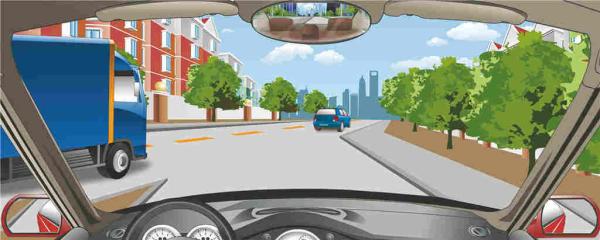
A. The motor vehicles on the left side
B. The motor vehicles on the right side
C. The motor vehicles behind
D. The motor vehicles in front
Answer: A
10. When driving a motor vehicle equipped with power steering, the driver should firmly hold the steering wheel and drive slowly if he suddenly finds that steering is difficult.
A. Right
B. Wrong
Answer: B
11. When encountering a school bus which stops at the right roadside and students are embarking or disembarking, and there are three motor vehicle lanes in each direction, motor vehicle drivers on the left lane behind the bus should stop and wait.
A. Right
B. Wrong
Answer: B
12. What should the driver do upon seeing this sign?
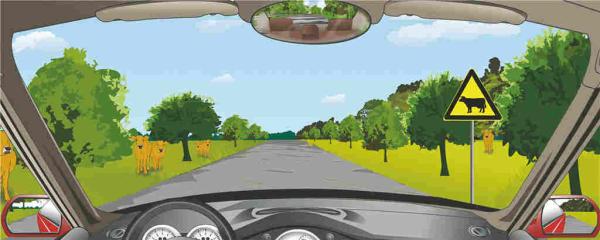
A. Slow down, look and pass slowly
B. Sound the horn to drive them away
C. Go through from the spaces between animals
D. Drive slowly and drive them away from the motor vehicle
Answer: A
13. Drivers may go straight and pass through when trafficpolice give these hand signals
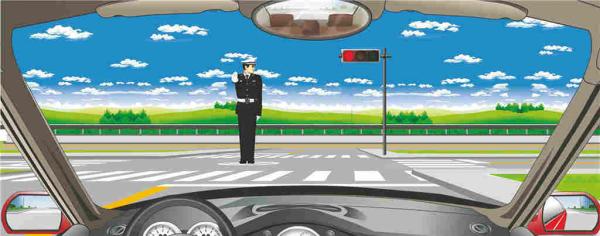
A. Right
B. Wrong
Answer: B
14. When driving on this dangerous mountainside road motor vehicle drivers should drive along the left side of the road.
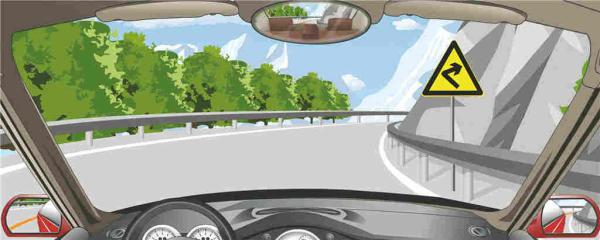
A. Right
B. Wrong
Answer: B
15. When the rear wheels of a motor vehicle skid sideways on a muddy road, the driver should turn the steering wheel in the opposite direction of the side skid.
A. Right
B. Wrong
Answer: B
16. This sign indicates that vehicles can either drive straight or turn right at the fly-over junction ahead.

A. Right
B. Wrong
Answer: B
17. Under such circumstances, motor vehicle drivers may sound the horn at the proper time and speed up to pass through.
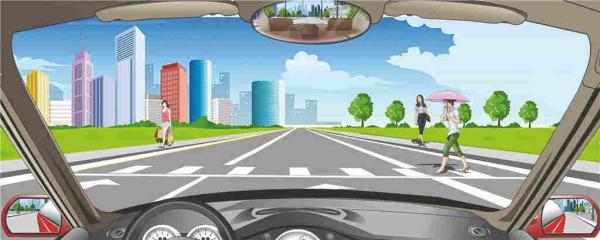
A. Right
B. Wrong
Answer: B
18. When the vehicle behind gives a notice of overtaking at night, the vehicle in front should not yield blindly.
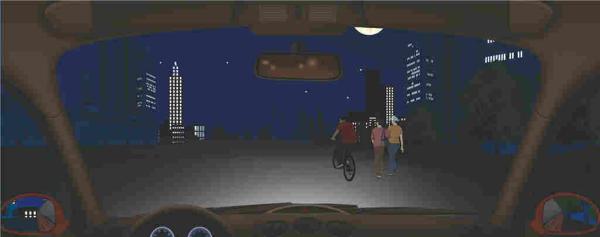
A. Right
B. Wrong
Answer: A
19. When passing this mountainous road, motor vehicle drivers should drive along the center of the road.
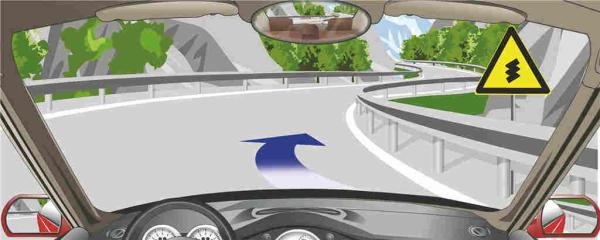
A. Right
B. Wrong
Answer: B
20. What should the driver do on this kind of curving mountain road?
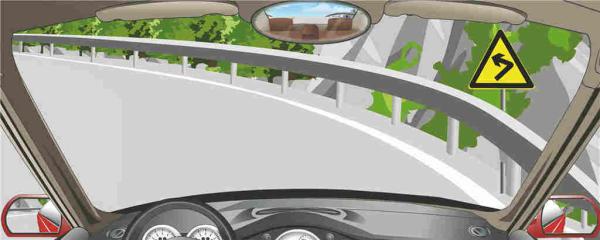
A. Borrow the opposite lane
B. Slow down and drive on the right
C. Stick to the central line of the road
D. Drive close to the right side
Answer: B