

1. How to do when the vehicle breaks down on road and needs to stop to solve the problem?
A. stop in the middle of the road
B. stop the vehicle where will not interfere the traffc
C. turn on the low beam lights or fog lights
D. stop on the spot to solve the problem
Answer: B
2. What should the driver do when encountering a vehicle from the opposite direction on a road without a central line?
A. driving closly by the roadside
B. driving by the central of the road
C. reducing speed and driving by right side
D. run by using the lane for non-motorized vehicles
Answer: C
3. When a bicycle borrows the motor vehicle lane, the motor vehicle may sound the horn hurriedly to warn the bicycle to yield.
A. Right
B. Wrong
Answer: B
4. According to regulations, motorcycle driver and passenger should wear helmets.
A. Right
B. Wrong
Answer: A
5. What is the meaning of this sign?
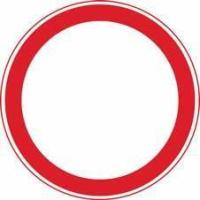
A. No passing
B. driving at reduced speed
C. time limit for entering
D. no entering
Answer: A
6. What is the meaning of this sign?
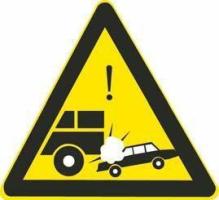
A. accident-prone section
B. construction section
C. reducing speed and going slowly section
D. jammed section
Answer: A
7. A motorized vehicle driver who deliberately covered or stained the license plate and placed the license plate unproperly, is subject to a ________.
A. 2-point penalty
B. 3-point penalty
C. 6-point penalty
D. 12-point penalty
Answer: D
8. The behavior of a motorized vehicle driver who has violated the law and regulations on road traffic safety is _______ .
A. faulty act
B. violation of regulations
C. rule-breaking act
D. violation of law
Answer: D
9. What is the meaning of this sign?

A. reducing speed 40m ahead
B. minimum speed is 40km/hr
C. axle weight limit is 40 tons
D. maximum speed limit is 40km/hr
Answer: D
10. The driver who drives after drunk is subject to ______
A. a criminal restriction and a fine
B. a prison term of more than 2 years
C. a criminal detention and a fine
D. a prison term of less than 2 years
Answer: C
11. When driving in a heavy rain, drivers should contro their speed to prevent their vehicles from sliding.
A. Right
B. Wrong
Answer: A
12. It is not safe for a female driver to wear high heels to drive a vehicle.
A. Right
B. Wrong
Answer: A
13. Which is subject to a 6-point penalty?
A. use other vehicle’s vehicle license
B. run 50% faster than the prescribed speed limit
C. illegally occupy emergency lane
D. drive after drinking
Answer: C
14. A driver can park the vehicle by borrowing the sidewalk if he cannot find the parking area.
A. Right
B. Wrong
Answer: B
15. If the driver’s accumulated penalty points reach the stipulated limit, he will be _______ by the traffic control department of the public security organ.
A. detained for less than 15 days
B. banned for lifetime from driving
C. educated on the law and regulations and take the exam again
D. held for criminal liabilities according to law
Answer: C
16. Which is correct when changing lane?
A. turn on the directional signal and turn left quickly
B. reduce speed properly when entering the left lane
C. cannot interfere other vehicles
D. speed up to enter the left lane
Answer: C
17. A motorized vehicle driver who uses falsified and altered vehicle license is subject to a ________.
A. 6-point penalty
B. 3-point penalty
C. 2-point penalty
D. 12-point penalty
Answer: D
18. Which is correct when riding a motorcycle
A. Both hands can temporarily leave the steering handle bar
B. Voluntarily operate the steering handle bar
C. It is prohibited to simultaneously move two hands from the steering handle bar
D. It is able to statically turn the steering handle bar
Answer: C
19. When a vehicle encounters a strong side wind in a mountain valley, the driver should drastically turn the steering handlebar to adjust the direction of the vehicle if he feels the vehicle deviates from the normal direction.
A. Right
B. Wrong
Answer: B
20. When the road maintenance vehicle and the engineering vehicle are on duty, the passing vehicles should avoid with care.
A. Right
B. Wrong
Answer: A