

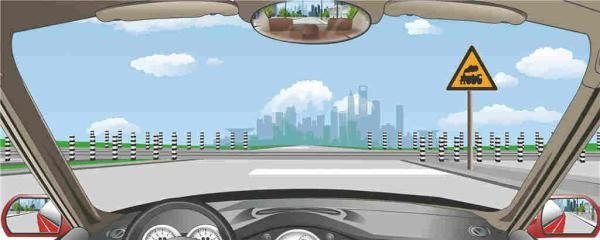
1. A motor vehicle should not pass the level crossing rapidly in this situation.
A. Right
B. Wrong
Answer: A
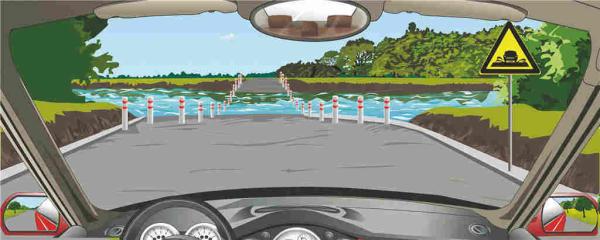
2. The sign on the right warns of a wet road surface ahead.
A. Right
B. Wrong
Answer: A
3. When a motor vehicle temporarily stops at night, which lamp should be turned on?
A. Front and rear fog lamp, clearance lamp and rear position lamp
B. Head lamp, clearance lamp and rear position lamp
C. Hazard lamp, clearance lamp and rear position lamp
D. Reverse lamp, clearance lamp and rear position lamp
Answer: C
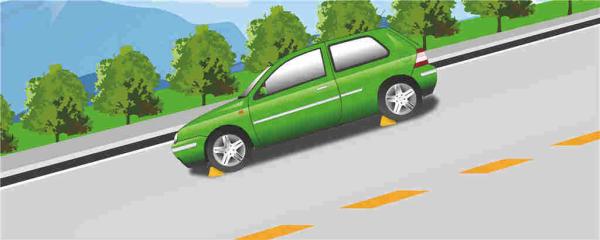
4. When parking for a long time on a downward slope due to breakdown on the road, drivers should use this method to stop up wheels.
A. Right
B. Wrong
Answer: A
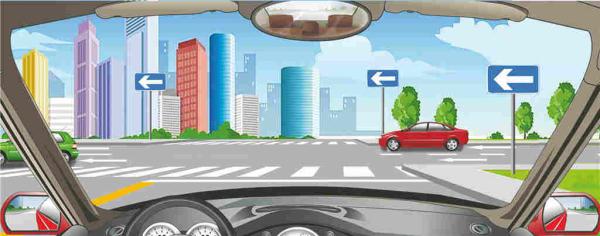
5. The sign in front indicates a one-way lane after turning left.
A. Right
B. Wrong
Answer: A
6. At this moment, the driver may speed up and pass the intersection rapidly.

A. Right
B. Wrong
Answer: B
7. This sign indicates the traffic broadcast and radio television channel of highway.
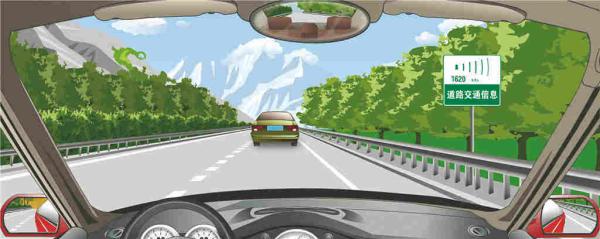
A. Right
B. Wrong
Answer: B
8. When a motor vehicle encounters thick fog on an expressway and the visibility is poor, the driver should immediately brake and stop.
A. Right
B. Wrong
Answer: B
9. When driving on an expressway, which of the following statements is not correct?
A. Drivers are not allowed to drive by riding or rolling on the lane dividing line
B. Drivers are prohibited from driving on road shoulders
C. Drivers may overtake on the ramp, the acceleration lane or the deceleration lane
D. Drivers are prohibited from learning to drive
Answer: C
10. Motor vehicles are not allowed to stop in this area for a long time.
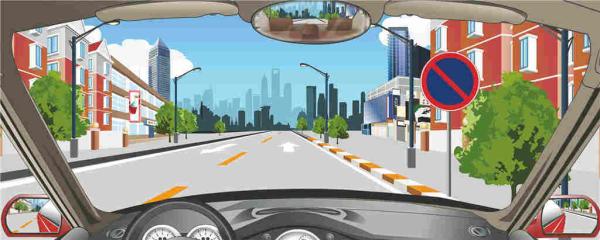
A. Right
B. Wrong
Answer: A
11. What should be given attention when setting off in this weather?
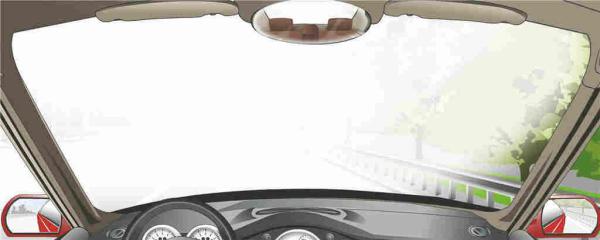
A. Turning on the high-beam
B. Turning on the front and rear fog lamps
C. Turning on the left indicator only
D. Continuously sounding the horn
Answer: B
12. When such circumstances happen suddenly, what should the driver do?

A. Reduce speed or stop to yield
B. Bypass in front of the pedestrians
C. Continuously sound the horn to alert the pedestrians
D. Bypass from behind the pedestrians
Answer: A
13. When a motor vehicle passes over an overflowing bridge, what should the driver do after stopping and observing closely?
A. Change to a high gear and pass rapidly
B. Constantly observe the changes of the flow
C. Prepare to stop at any time
D. Change to a low gear and pass through at a constant speed
Answer: D
14. The sign on the right warns of an unguarded railway intersection ahead.

A. Right
B. Wrong
Answer: B
15. Under such circumstances, what should motor vehicle drivers do?
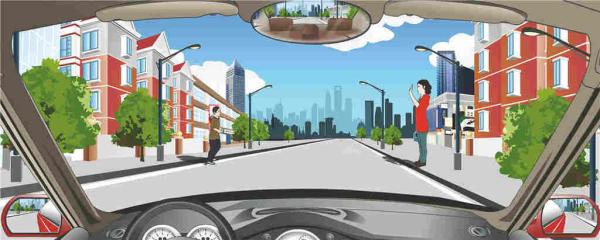
A. Guard against the sideslip of motor vehicles
B. Guard against the crossing of pedestrians
C. Speed up and pass through as quickly as possible
D. Continuously sound the horn
Answer: B
16. When driving in thick fog causing poor visibility on the expressway, the driver should apply emergency braking to stop at once.
A. Right
B. Wrong
Answer: B
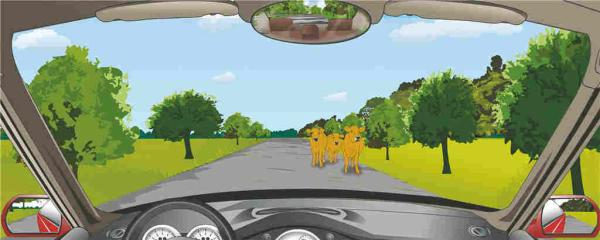
17. When driving on this section of the road, drivers should observe closely and prepare to yield to the animals crossing the road.
A. Right
B. Wrong
Answer: A
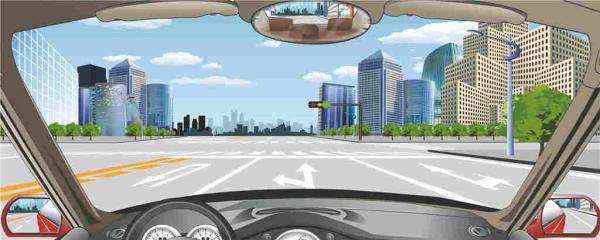
18. Before making a U-turn at the intersection ahead, motor vehicle drivers should drive to the lane for turning left and going straight.
A. Right
B. Wrong
Answer: B
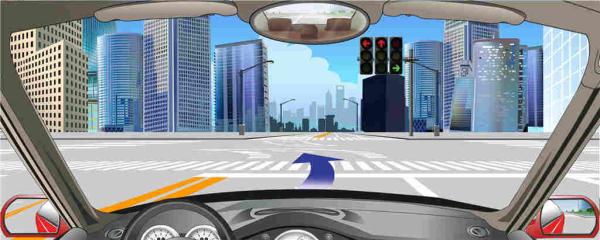
19. As shown in this picture, the vehicles intending to turn left are allowed to drive into the left-turn waiting area directly to wait for the green light.
A. Right
B. Wrong
Answer: B
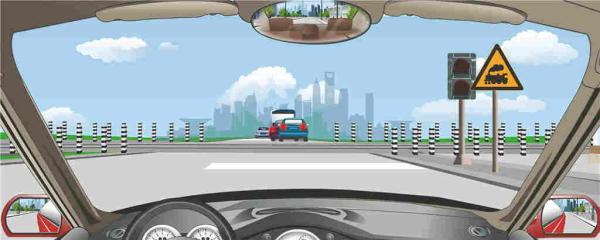
20. What should the driver do when the motor vehicle passes the level crossing?
A. Change to neutral gear and slide over
B. Stop, look and pass
C. Speed up, look and pass rapidly
D. Slow down, look and pass slowly
Answer: B