

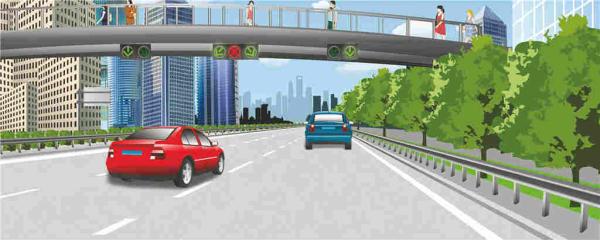
1. The red car is allowed to drive on this lane.
A. Right
B. Wrong
Answer: B
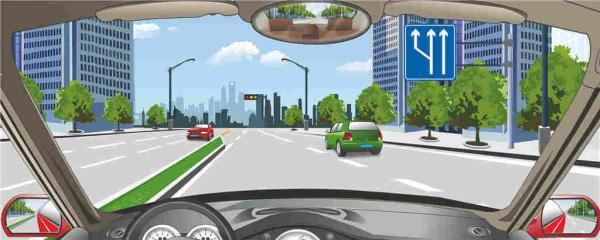
2. The sign on the right indicates a bypass flow intersection ahead.
A. Right
B. Wrong
Answer: B
3. As shown in this picture, the intersection guide line is designed to help drivers make turns.

A. Right
B. Wrong
Answer: A
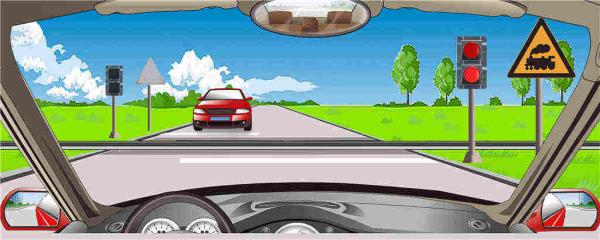
4. Motor vehicles should stop and wait when encountering two red lights flashing alternately at level crossings.
A. Right
B. Wrong
Answer: A
5. Mr. Ye drove a midsize van to Shangwen Road of Beitou Town. When passing a curve at the spot of 3 kilometers mark by 600 meters on the road, the van had a head-on collision at the speed of 40 kilometers per hour with Mr. Wang?ˉs three-wheeled freight motorcycle carrying 19 passengers, killing 10 people and injuring 9. What are the main illegal acts committed by the two drivers?
A. Mr. Ye drove an unpermitted vehicle type
B. Mr. Wang drove a freight motorcycle to carry passengers
C. Mr. Ye exceeded the speed limit
D. Mr. Wang failed to follow the guidance of the traffic signal lights
Answer: BC
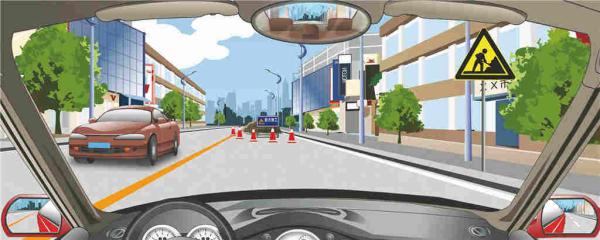
6. The sign on the right warns of a road section ahead under construction.
A. Right
B. Wrong
Answer: A
7. When a collision occurs on the passenger seat side or the impact is relatively small, which of the following methods is incorrect?
A. Firmly holding the steering wheel
B. Stretching both feet forward
C. Jumping out of the vehicle from one side
D. Leaning body backwards against the seat
Answer: C
8. Once inflammable gas causes a fire disaster, it should be put out with water in good time.
A. Right
B. Wrong
Answer: B
9. When reversing in this condition, in which of the following ways can motor vehicle drivers keep safe?

A. Reverse at a lower speed
B. Voluntarily stop and yield
C. Continuously sound the horn to alert
D. Reverse in a clockwise direction
Answer: B
10. Drivers may cross these central solid and broken yellow lines when overtaking.
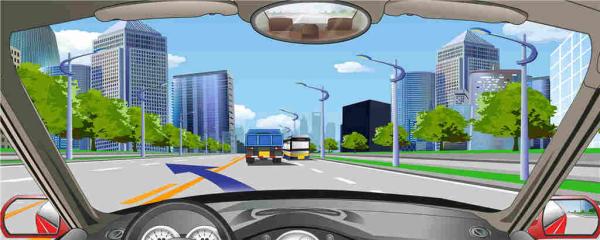
A. Right
B. Wrong
Answer: B
11. Mr. Zhou drove a light van (with 22 passengers) on the Bingcha Highway. At the spot of 79 kilometers mark by 150 meters of the highway, the van fell into the valley on one side, killing 12 people and injuring 10. What is the main illegal act committed by Mr. Zhou?
A. Driving a motor vehicle having failed to accept inspection in time
B. Carrying passengers on a freight motor vehicle
C. Speeding
D. Fatigued driving
Answer: B
12. The sign on the right indicates a passing bay ahead.
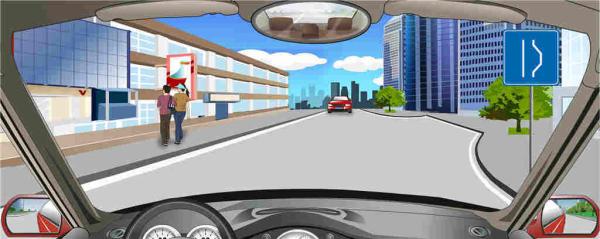
A. Right
B. Wrong
Answer: A
13. The driver should turn on the left-turn indicator after entering the acceleration lane on an expressway.
A. Right
B. Wrong
Answer: B
14. When driving a motor vehicle not equipped with the anti-lock braking system (ABS), what should the driver do if he brakes on a road covered by ice and snow?
A. Gently or intermittently depress the brake pedal
B. Depress the brake pedal as on other roads
C. Violently depress the brake pedal
D. Suddenly depress the pedal with force
Answer: A
15. If a motor vehicle experiences a water sliding phenomenon when running on an expressway in rain, what should the driver do?
A. Slow down by suddenly depressing the brake pedal
B. Slow down by slowly releasing the accelerator pedal
C. Turn the steering wheel immediately to adjust the direction
D. Speed up to increase the displacement of the wheels
Answer: B
16. The driver should yield to other non-motor vehicles when the motor vehicle turns right at this Intersection.
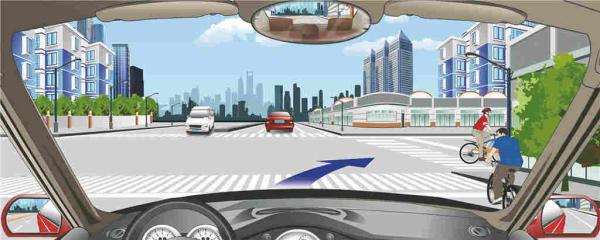
A. Right
B. Wrong
Answer: A
17. The sign on the right warns that there are vehicles converging into the intersection on the right.
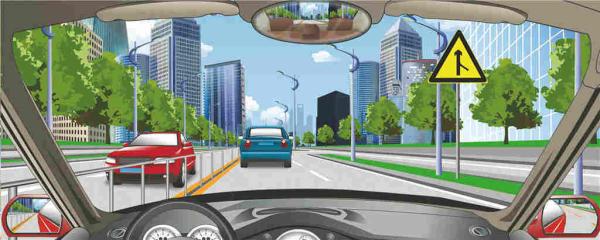
A. Right
B. Wrong
Answer: A
18. When a motor vehicle moves through water, the driver should try to maintain a constant speed and sufficient power and pass through without stopping.
A. Right
B. Wrong
Answer: A
19. Under such circumstances, motor vehicles are not allowed to overtake.
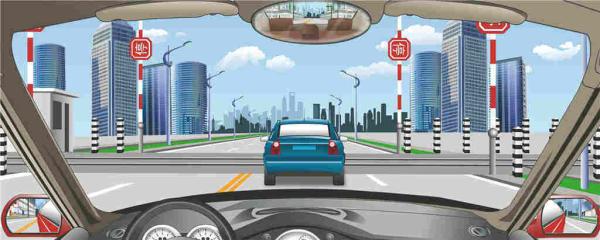
A. Right
B. Wrong
Answer: A
20. How should a motor vehicle follow the other vehicle In front when driving on a road covered with ice and snow?
A. Keep a long safe distance
B. Turn on hazard lamp
C. Change between high-and-low beam alternatively
D. Sound the horn in due time to give a notice to the vehicle in front
Answer: A