

1. What is the meaning of this sign?
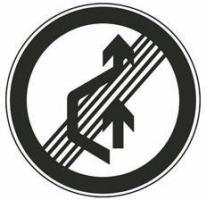
A. overtaking ban is lifted
B. changing lane is allowed
C. changing lane ban is lifted
D. borrowing lane ban is lifted
Answer: A
2. Traffic Police can detain the vehicle which is suspected of using the falsified or altered license plate and vehicle license.
A. Right
B. Wrong
Answer: A
3. Before the motorized vehicle runs on the road, the driver should check the safety and technical performance of the vehicle.
A. Right
B. Wrong
Answer: A
4. Which is correct when riding a motorcycle
A. Both hands can temporarily leave the steering handle bar
B. Voluntarily operate the steering handle bar
C. It is prohibited to simultaneously move two hands from the steering handle bar
D. It is able to statically turn the steering handle bar
Answer: C
5. When a motorized vehicle returns to the original lane after overtaking, the driver should Turn on the right-turn signal.
A. Right
B. Wrong
Answer: A
6. When approaching a sharp curve, motor vehicle drivers should reduce speed only after entering the curve.
A. Right
B. Wrong
Answer: B
7. Traffic Police can detain the vehicle according to law if it uses other vehicle’s license plate and vehicle license.
A. Right
B. Wrong
Answer: A
8. When a motor vehicle temporarily stops in fog, which lamp should be turned on?
A. Hazard lamp, clearance lamp and rear position lamp
B. Left-turn indicator, clearance lamp and rear position amp
C. Headlamp, clearance lamp and rear position lamp
D. Reverse lamp, clearance lamp and rear position lamp
Answer: A
9. If a motorized vehicle driver has caused a major traffic accident in violation of the traffic regulations which has caused human death due to his escaping, the driver is subject to a prison term of 3 years ~ 7 years.
A. Right
B. Wrong
Answer: B
10. A person can not apply the motorized vehicle driving license, if he has been held for criminal liabilities according to law because of driving after drinking and causing a major traffic accident.
A. Right
B. Wrong
Answer: A
11. When the road maintenance vehicle and the engineering vehicle are on duty, the passing vehicles should avoid with care.
A. Right
B. Wrong
Answer: A
12. When approaching another vehicle at night, why should the driver alternate between high-and-low-beam at a distance more than 150 meters?
A. Warn each other before passing
B. Driving habit
C. Easy to observe the situation ahead from either side
D. Courtesy
Answer: C
13. A motorized vehicle driver who deliberately covered or stained the license plate and placed the license plate unproperly, is subject to a ________.
A. 2-point penalty
B. 3-point penalty
C. 6-point penalty
D. 12-point penalty
Answer: D
14. When following other vehicles on a foggy day, what should the driver do?
A. Maintain a large safety distance
B. Turn on the high-beam
C. Turn on the low-bea
D. Sound the horn in due time
Answer: A
15. The police can detain the vehicle if one drives a vehicle without ______
A. driving license
B. ID card
C. pass paper
D. qualification certificate
Answer: A
16. Before riding a motorcycle, the driver should wear a safety helmet and adjust the angle of the rearview mirror till he can clearly watch the left side and the right side of the back.
A. Right
B. Wrong
Answer: A
17. A motorized vehicle driver who uses other motorized vehicle’s license plate and vehicle license is subject to a 3-point penalty.
A. Right
B. Wrong
Answer: B
18. What is the meaning of this sign?
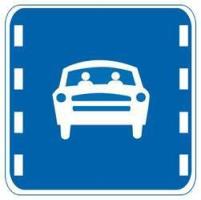
A. special lane for small vehicles
B. special lane for motorized vehicles
C. special lane for taxis
D. special lane for multi-passenger vehicles
Answer: D
19. If a motorized vehicle driver allows his vehicle to be driven by a person whose driving license has been detained, the traffic police will serve an oral warning.
A. Right
B. Wrong
Answer: B
20. When a driver drives a motorized vehicle during the period of probation, the driver should paste or hang a uniform probation mark on the rear part of the vehicle.
A. Right
B. Wrong
Answer: A