

1. When an erosive material catches fire, it should not be put out with water cannon.
A. Right
B. Wrong
Answer: A
2. When such circumstances happen suddenly, what should the driver do?

A. Reduce speed or stop to yield
B. Bypass in front of the pedestrians
C. Continuously sound the horn to alert the pedestrians
D. Bypass from behind the pedestrians
Answer: A
3. After a motor vehicle enters the ramp from an expressway, it should reduce its speed below the prescribed speed limit.
A. Right
B. Wrong
Answer: A
4. A motor vehicle should not obstruct other vehicles when it enters the driving lane from an acceleration lane.
A. Right
B. Wrong
Answer: A
5. How many kinds of law-breaking acts are displayed in flash 5?
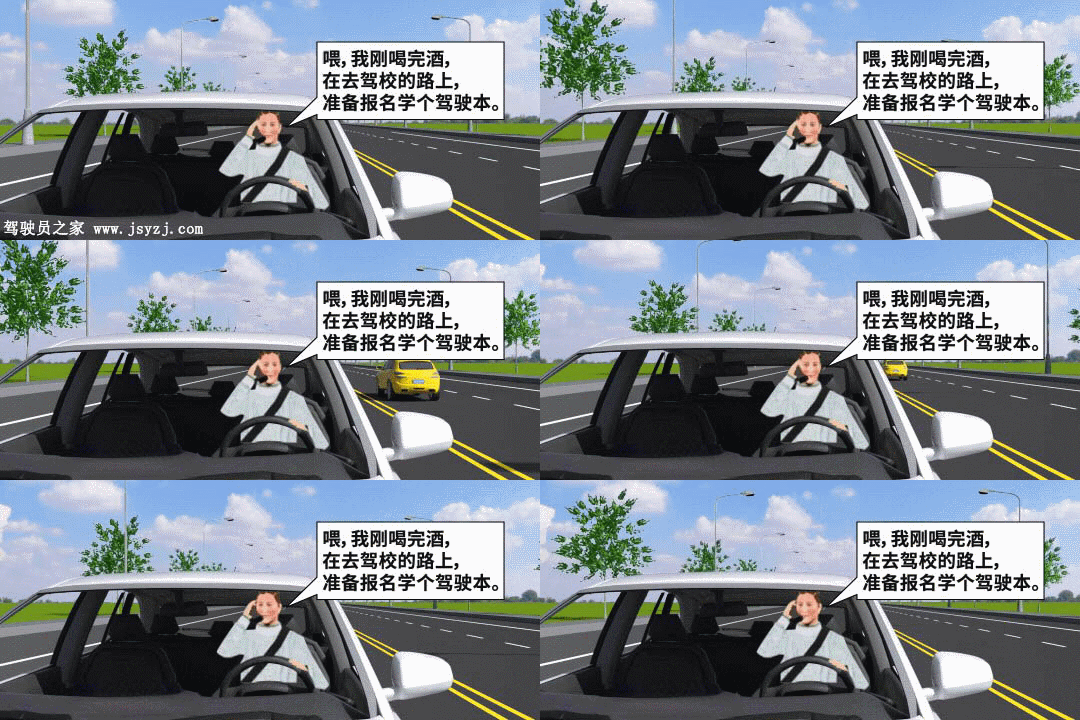
A. One
B. Two
C. Three
D. Four
Answer: C
6. When a motor vehicle catches fire, the driver should manage to park the vehicle in an open place far away from urban areas, buildings, trees, other motor vehicles and flammable materials.
A. Right
B. Wrong
Answer: A
7. This sign indicates that vehicles can either drive straight or turn right at the fly-over junction ahead.

A. Right
B. Wrong
Answer: B
8. The sign on the right warns of low-lying road ahead.

A. Right
B. Wrong
Answer: A
9. How to run when encountering this situation at the intersection?
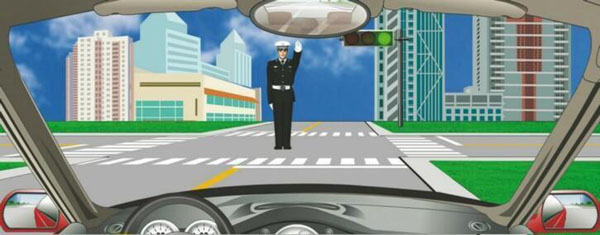
A. stop and wait
B. obey the traffic lights
C. run straight on the right side
D. may turn right
Answer: A
10. The driver should yield to other non-motor vehicles when the motor vehicle turns right at this Intersection.
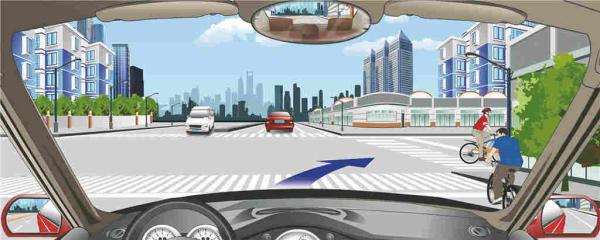
A. Right
B. Wrong
Answer: A
11. Mr. Yang drove an adapted minibus (capacity 9 people and carrying 64 passengers, including 62 kindergarten pupils). When driving in Ma Caogou Village of Yu Linzi County, the bus used the lane for oncoming traffic and had a head-on colision with a heavy dump truck. As a result of this accident, 22 people were killed and 44 injured. What are the main illegal acts in this case?
A. The truck exceeded the speed limit
B. Illegal adaptation of a motor vehicle
C. The minibus carried more passengers than capacity
D. Driving in the opposite direction lane
Answer: BCD
12. What is the best way to make turns on this kind of curving mountain road?
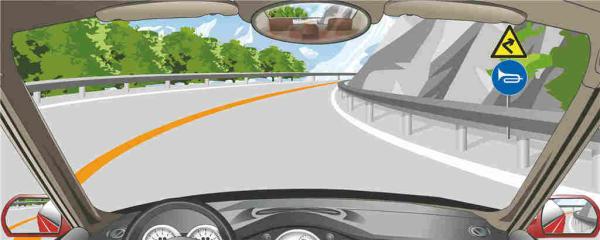
A. Drive along the outer side of the curve
B. Slow down, sound the horn and drive on the right
C. Borrow the opposite lane
D. Drive along the central line of the road
Answer: B
13. It is not a bad habit for a driver to frequently change lanes.
A. Right
B. Wrong
Answer: B
14. The sign on the right warns drivers to yield for oncoming motor vehicles.
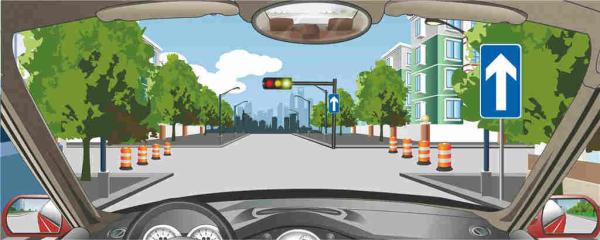
A. Right
B. Wrong
Answer: B
15. The sign on the right warns of a continuous downhill section ahead.
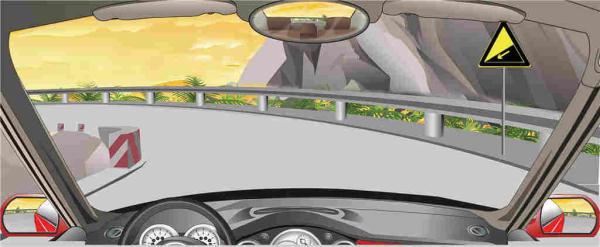
A. Right
B. Wrong
Answer: B
16. The driver should pay attention to the left side when the motor vehicle passes this intersection.
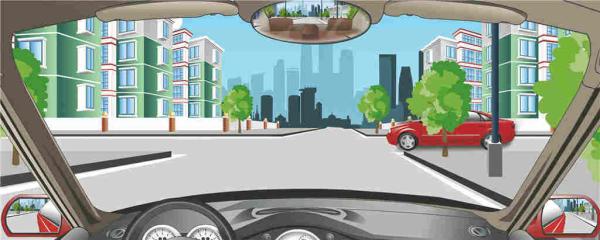
A. Right
B. Wrong
Answer: B
17. For a temporary stop on a foggy day, the driver should only turn on the fog lamp and the low-beam
A. Right
B. Wrong
Answer: B
18. How should lamps be used when motor vehicle drivers pass through a two-way tunnel?
A. Turn on the hazard lamps
B. Turn on the high-beam
C. Turn on the fog lamp
D. Turn on the low-beam
Answer: D
19. The sign on the right warns of a wildlife protection area ahead.
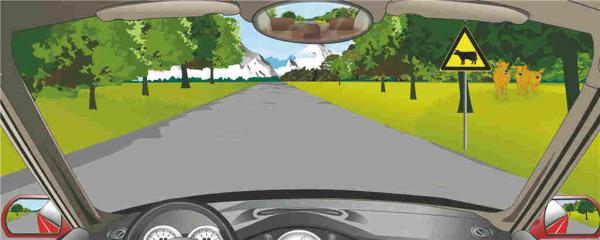
A. Right
B. Wrong
Answer: B
20. When a motor vehicle temporarily stops in fog, which lamp should be turned on?
A. Hazard lamp, clearance lamp and rear position lamp
B. Left-turn indicator, clearance lamp and rear position amp
C. Headlamp, clearance lamp and rear position lamp
D. Reverse lamp, clearance lamp and rear position lamp
Answer: A