

1. When a motor vehicle reaches a muddy or burst-and-muddy section of the road, the driver should stop, observe and select a level and solid section or a section with vehicle tracks.
A. Right
B. Wrong
Answer: A
2. Driving license will be detained if you allow to drive your car.
A. driver during the period of probation
B. driver who has obtained a driving license
C. one whose driving license been revoked
D. one whose penalty points reach 6 points
Answer: C
3. If a motorized vehicle driver has caused a major traffic accident in violation of the traffic regulations which has caused human death due to his escaping, the driver is subject to a prison term of _________.
A. less than 2 years
B. less than 3years
C. less than 7years
D. more than 7 years
Answer: D
4. In which section cannot overtake?
A. mountain road
B. urban elevated road
C. urban expressway
D. narrow bridge and curve
Answer: D
5. Use the high and low beam lights alternately when passing the crosswalk at night.
A. Right
B. Wrong
Answer: A
6. A motorized vehicle driver who uses other motorized vehicle’s license plate and vehicle license is subject to a 3-point penalty.
A. Right
B. Wrong
Answer: B
7. Traffic Police can detain the accident vehicle according to law if it needs to be collected evidence of the road accident.
A. Right
B. Wrong
Answer: A
8. When encountering an obstacle on one side of the road, what should vehicles do as they approach each other?
A. The vehicle not encountering an obstacle should Yield to the other vehicle
B. The slower vehicle should yield to the faster
C. The vehicle encountering an obstacle should yield to the other vehicle
D. The faster vehicle should yield to the slower
Answer: C
9. What is the meaning of this sign?

A. turn right
B. one-way road
C. going straight only
D. straight-going lane
Answer: A
10. When driving in icy and snowy weather, because of the reduction of the stability, it is easy for the wheels to race or slip when rapidly speeding up.
A. Right
B. Wrong
Answer: A
11. A Social vehicle is not allowed to stop in the section 30 meters to the ire hydrant or the fire brigade (station).
A. Right
B. Wrong
Answer: A
12. What is the meaning of this sign?
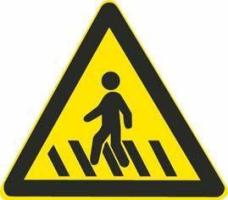
A. watch for pedestrians
B. watch for children
C. school area
D. crosswalk
Answer: A
13. When a motorcycle passing through an interchange discovers it has chosen a wrong route, it should immediately make a U turn from where it is or reverse to change route.
A. Right
B. Wrong
Answer: B
14. A person whose driving license has been destroyed cannot drive a motorized vehicle.
A. Right
B. Wrong
Answer: A
15. A correct measure to avoid tire burst of motor vehicles is to lower the tire pressure.
A. Right
B. Wrong
Answer: B
16. Which is subject to a 6-point penalty?
A. violate the traffic lights
B. drive school bus without qualification
C. drive the vehicle which permission is different
D. drive after drink
Answer: A
17. How to cross each other on a narrow mountain road without the central dividing line?
A. The vehicle not close to the mountain goes first
B. The vehicle close to the mountain goes first
C. The empty vehicle goes first
D. The slow-moving vehicle goes first
Answer: A
18. What is the meaning of this sign?
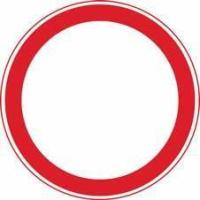
A. No passing
B. driving at reduced speed
C. time limit for entering
D. no entering
Answer: A
19. What is the meaning of this sign?

A. no changing lane
B. no left turn
C. no going straight
D. no U turn
Answer: D
20. What is the meaning of this sign?
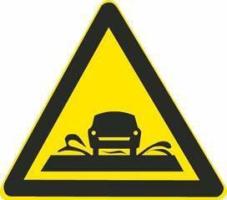
A. muddy road
B. low-lying road
C. overflowing road
D. ferry
Answer: C