

1. If the vehicle license of a motorized vehicle are lost, the vehicle owner should apply to the vehicle management station at the registration place for reissuing.
A. Right
B. Wrong
Answer: A
2. If a motorized vehicle driver has caused a major traffic accident in violation of the traffic regulations which has caused human death due to his escaping, the driver is subject to a prison term of _________.
A. less than 2 years
B. less than 3 years
C. less than 7 years
D. more than 7 years
Answer: D
3. This set of the hand signals of the traffic police indicates that the vehicles should ___ .
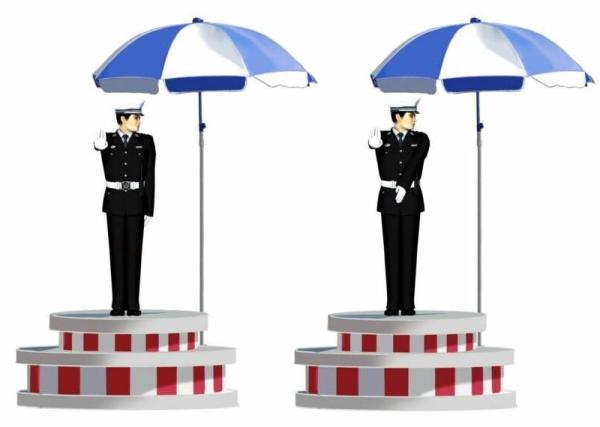
A. wait to turn left
B. pull over
C. reduce speed and pass slowly
D. turn left
Answer: D
4. This set of the hand signals of the traffic police indicates that the vehicles should ___ .
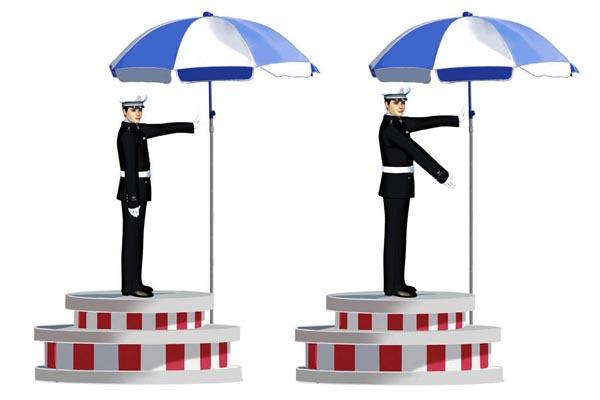
A. wait to turn left
B. pull over
C. turn right
D. reduce speed and pass slowly
Answer: C
5. When driving at night, the driver should go at a lower speed because his field of vision is limited and he can hardly observe the traffic conditions beyond the area covered by his vehicle light.
A. Right
B. Wrong
Answer: A
6. A motorized vehicle driver who escapes after causing a traffic accident but his conduct does not constitute a crime, is subject to a ________.
A. 3-point penalty
B. 2-point penalty
C. 12-point penalty
D. 6-point penalty
Answer: C
7. May turn right in this situation.
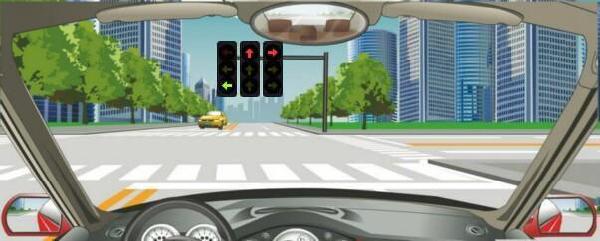
A. Right
B. Wrong
Answer: B
8. The passenger in the front seat does not need to buckle up when a motorized vehicle runs.
A. Right
B. Wrong
Answer: B
9. Which of the following vehicle in front in the same lane is not allowed to be overtaken?
A. large bus or large truck
B. taxis
C. ambulance on duty
D. public bus
Answer: C
10. If the registration paper, license plate and vehicle license of a motorized vehicle are lost or destroyed, the vehicle owner should apply for reissuing or replacing them to the _______________.
A. traffic police detachment vehicle management station at the residential place
B. vehicle management station at the issuing place of the driving license
C. vehicle management station at the registration place
D. local police station
Answer: C
11. The main impact of muddy roads on safe driving is _________.
A. The resistance to the vehicle becomes weaker
B. The tires can easily spin and skid
C. The visibility become lower and blurs the field of vision
D. The road grip becomes stronger
Answer: B
12. When driving a vehicle through an inundated road with pedestrians on both sides, the driver should ________.
A. Speed up and pass
B. Go forward normally
C. Continuously honk
D. Reduce speed and go slowly
Answer: D
13. When driving in windy, rainy, snowy, foggy and other complex weather conditions, the driver should turn on the head light, honk continuously and overtake rapidly if the vehicle in front goes slowly.
A. Right
B. Wrong
Answer: B
14. It lights to indicate that ______

A. charge current is too large
B. damaged battery
C. ammeter malfunction
D. charging circuit malfunction
Answer: D
15. A person who has the expired driving license can drive motorized vehicle within 1 year.
A. Right
B. Wrong
Answer: B
16. When bicycles ahead obstruct the traffic flow, the driver may honk to remind them,speed up and bypass.
A. Right
B. Wrong
Answer: B
17. The applicant should apply for the cancelation of the reservation one day in advance if he is unable to take the exam by appointment, the applicant will be judged as failed in the exam if he does not take the exam on the reserved examination time.
A. Right
B. Wrong
Answer: A
18. This sign warns the driver there have traffic lights ahead.

A. Right
B. Wrong
Answer: A
19. The three principles for careful driving are concentration, careful observation and early prevention.
A. Right
B. Wrong
Answer: A
20. Within how long should a driver whose information has changed apply for new license?
A. 30 days
B. 40 days
C. 50 days
D. 60 days
Answer: A