

1. How should a motor vehicle follow the other vehicle In front when driving on a road covered with ice and snow?
A. Keep a long safe distance
B. Turn on hazard lamp
C. Change between high-and-low beam alternatively
D. Sound the horn in due time to give a notice to the vehicle in front
Answer: A
2. When rescuing a wounded person in coma causing by excessive blood loss, it is necessary to take measures to prevent heat loss.
A. Right
B. Wrong
Answer: A
3. As shown in the flash, the driver?ˉs act is correct.
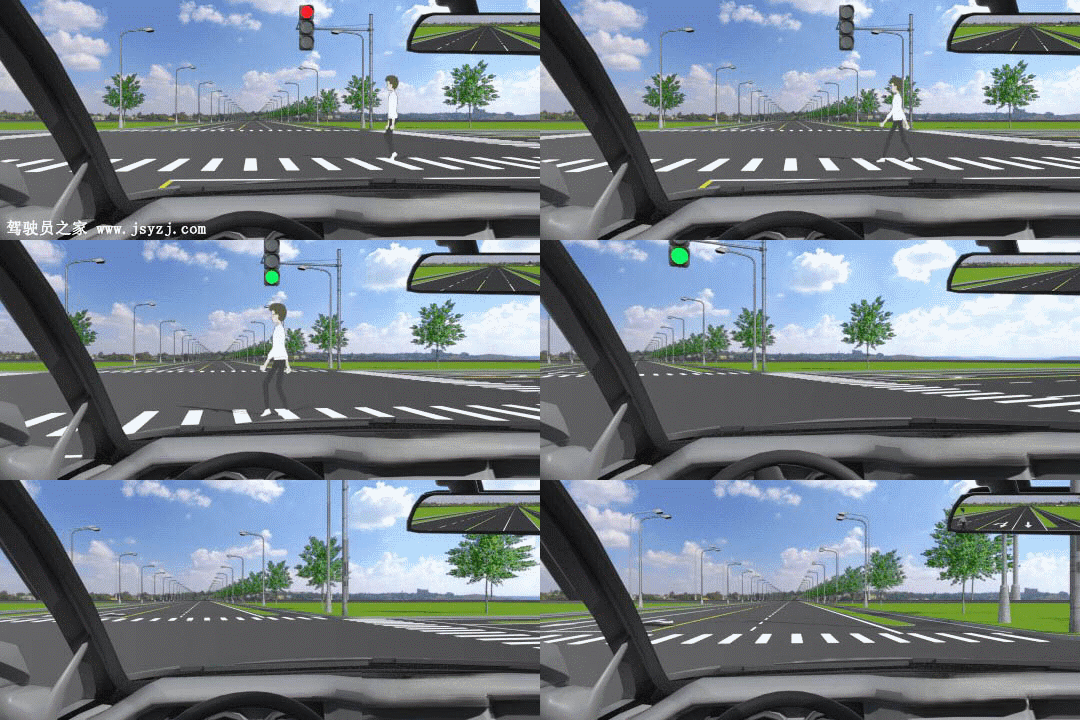
A. Right
B. Wrong
Answer: B
4. When a motor vehicle catches fire, the driver should swiftly turn off the engine and open the hood to extinguish the fire.
A. Right
B. Wrong
Answer: B
5. When driving on a road covered with ice and snow drivers should not use the emergency brake but can apply a sharp turn.
A. Right
B. Wrong
Answer: B
6. When a motor vehicle deviates from the normal direction due to steering failure and an accident is unavoidable, what should the driver do?
A. Apply emergency brake
B. Immediately steer and adjust
C. Immediately steer to the side where there is no obstacle and evade
D. Immediately steer to the side where there is an obstacle and evade
Answer: A
7. Under such circumstances, the motor vehicle is allowed to overtake.
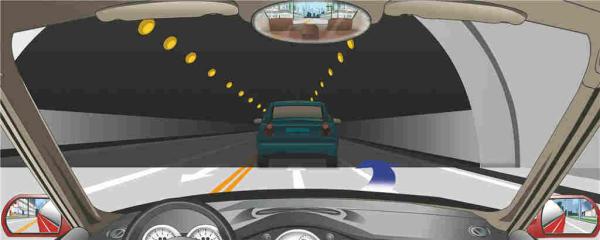
A. Right
B. Wrong
Answer: B
8. The sign on the left indicates the destinations of two highway directions
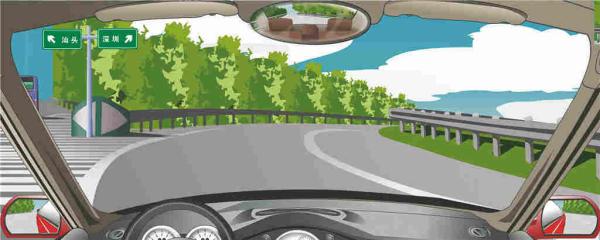
A. Right
B. Wrong
Answer: A
9. When encountering a school bus which stops at the right roadside and students are embarking or disembarking, and there are three motor vehicle lanes in each direction, motor vehicle drivers on the left lane behind the bus should stop and wait.
A. Right
B. Wrong
Answer: B
10. If a motor vehicle encounters a strong side wind when it leaves the opening of an expressway tunnel, what will happen?
A. A feeling of deceleration
B. A feeling of acceleration
C. A feeling of pressure
D. Deviation in direction
Answer: D
11. Once inflammable gas causes a fire disaster, it should be put out with water in good time.
A. Right
B. Wrong
Answer: B
12. When running on an expressway with three lanes in each direction, which one of the following lanes is not appropriate for the motor vehicle to use if its speed ranges between 90 kilometers per hour and 110 kilometers per hour?
A. The far left lane
B. The middle lane
C. The far right lane
D. Any lane
Answer: A
13. When passing a sharp curve, motor vehicle drivers may overtake if there are few other vehicles on the road.
A. Right
B. Wrong
Answer: B
14. When the engine suddenly stalls on the road and cannot be restarted, the driver should pull over in a timely fashion and identify the cause of the stalling.
A. Right
B. Wrong
Answer: A
15. Under such circumstances, what should be done by motor vehicle drivers in order to maintain safe driving?
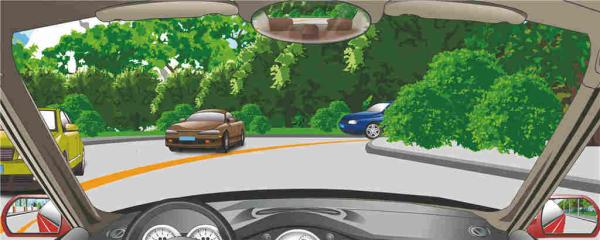
A. Sound the horn or turn on the headlamps
B. Reduce speed or drive on the right side
C. Keep to the central line as best as possible
D. Drive on the left side of the road
Answer: B
16. When extinguishing fire, the synthetic-made garments should not be taken off in order to protect the exposed skin from burning.
A. Right
B. Wrong
Answer: B
17. It is illegal to change lanes without turning on indicators.
A. Right
B. Wrong
Answer: A
18. The driver should speed up to 40 kilometers per hour when he sees this traffic sign.
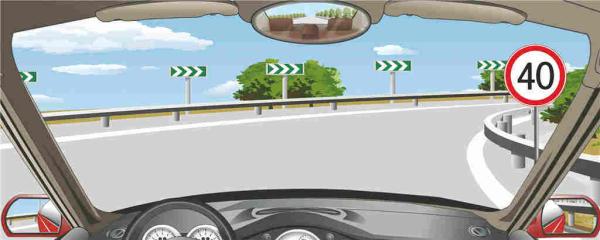
A. Right
B. Wrong
Answer: B
19. What should the driver do when seeing these hand signals?

A. Go straight and pass through the intersection
B. Stop in front of the stop-line and wait
C. Turn left at the intersection
D. Drive at a lower speed at the intersection
Answer: C
20. When a bus encounters an unexpected situation or an accident, the driver should do his best to minimize the loss and should never cause a secondary accident or even greater loss for the sake of avoiding danger.
A. Right
B. Wrong
Answer: A