

1. What should be given attention when setting off in this weather?
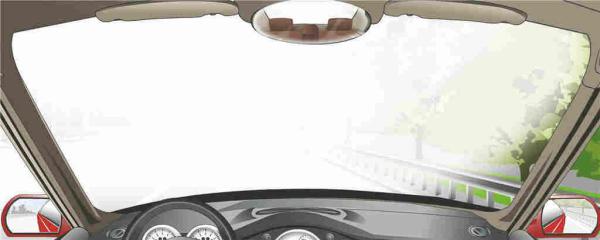
A. Turning on the high-beam
B. Turning on the front and rear fog lamps
C. Turning on the left indicator only
D. Continuously sounding the horn
Answer: B
2. When a motor vehicle encounters this situation at a crosswalk, the driver must slow down and pass slowly.
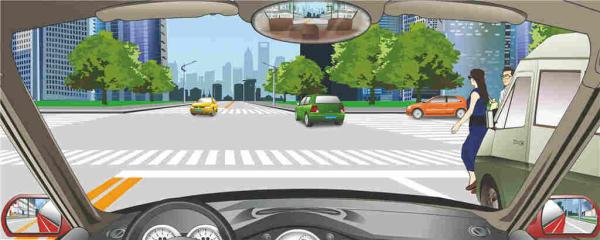
A. Right
B. Wrong
Answer: B
3. On a mountain road, what should the driver do in this situation?
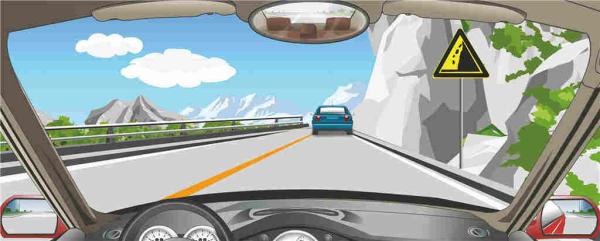
A. Drive on the left and speed up to bypass
B. Stop to observe and pass slowly
C. Observe closely and pass as soon as possible
D. Sound the horn several times and pass slowly
Answer: C
4. Before setting off, it is necessary to check the driving cabin, engine cabin, external and tires of the motor vehicle.
A. Right
B. Wrong
Answer: A
5. Drivers needn?ˉt yield to pedestrians who display such behavior.
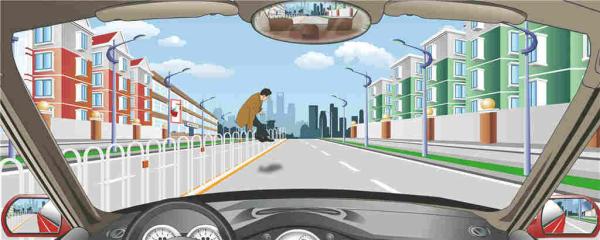
A. Right
B. Wrong
Answer: B
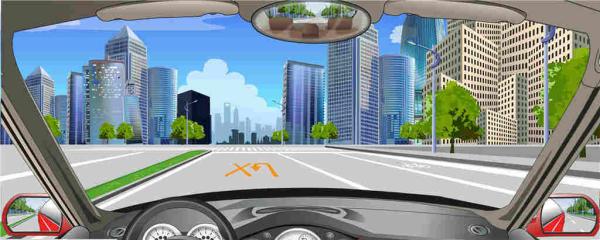
6. The road marker indicates that vehicles are not allowed to make a U-turn at the intersection ahead.
A. Right
B. Wrong
Answer: A
7. Motor vehicles are not permitted to change lanes in this position.

A. Right
B. Wrong
Answer: A
8. When rescuing a wounded person who has been poisoned by toxic gas, which of the following measures should be taken first?
A. Prevent heat loss
B. Bring him to a place with fresh air
C. Give him artificial respiration
D. Depress the heart over the chest
Answer: B
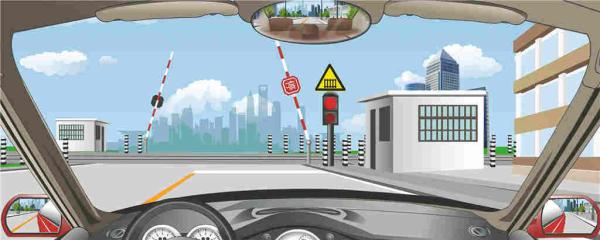
9. A motor vehicle should slow down and stop at this level crossing.
A. Right
B. Wrong
Answer: A
10. When entering an expressway ramp, which of the following statements is correct?
A. Drivers are allowed to overtake other vehicles
B. Drivers are prohibited from making U-turns
C. Drivers are allowed to stop
D. Drivers are allowed to reverse
Answer: B
11. When encountering a school bus which stops at the right roadside and students are embarking or disembarking, and there is only one motor vehicle lane in each direction, motor vehicle drivers behind the bus should stop and wait.
A. Right
B. Wrong
Answer: A
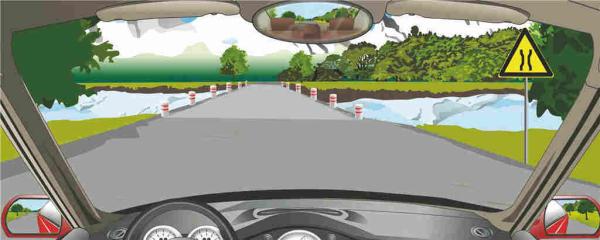
12. The sign on the right warns of a narrowed road on both sides ahead.
A. Right
B. Wrong
Answer: B
13. Under such circumstances, what should motor vehicle drivers do?

A. Guard against the sideslip of motor vehicles
B. Guard against the crossing of pedestrians
C. Speed up and pass through as quickly as possible
D. Continuously sound the horn
Answer: B
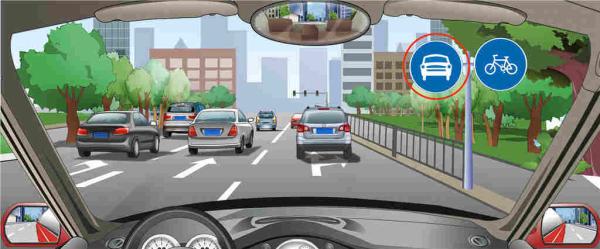
14. The sign in the red circle indicates that the left road is only for small vehicles.
A. Right
B. Wrong
Answer: B
15. After a motor vehicle falls into water, the driver should immediately close the windows to prevent water from flowing into the compartment and to keep the air from flowing out. At the same time, he/she should make calls to tell the rescue personnel the place of the accident and wait for their arrival.
A. Right
B. Wrong
Answer: B
16. As shown in the flash, the motor vehicle chooses a correct way to pass through the level crossing.

A. Right
B. Wrong
Answer: A
17. How should lamps be used when a motor vehicle meets an oncoming bicycle on a narrow road or a narrow bridge at night?
A. Continuously change between low-beam and high-beam
B. Use clearance lamp
C. Use high-beam
D. Use low-beam
Answer: D
18. When extinguishing a fire, the driver should refrain from breathing through mouth or crying loudly Otherwise, the fire and smoke will scorch the upper respiratory tract.
A. Right
B. Wrong
Answer: A
19. After setting off from the roadside, motor vehicle drivers should speed up as soon as possible and make a sharp left-turn in order to drive into the normal lane.
A. Right
B. Wrong
Answer: B
20. The sign in front indicates that vehicles except public buses are not allowed to drive in this lane.
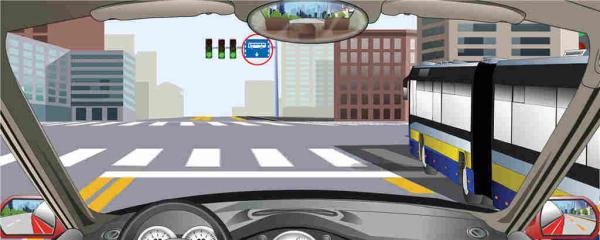
A. Right
B. Wrong
Answer: A