

1. Under such circumstances, what should the motor vehicle driver do?
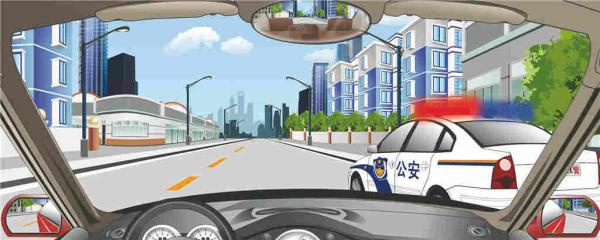
A. Reduce speed and yield by the left side
B. Reduce speed and yield by the right side
C. Speed up and yield by the left side
D. Go ahead along the original route
Answer: A
2. The sign on the right warns of a road section ahead under construction.
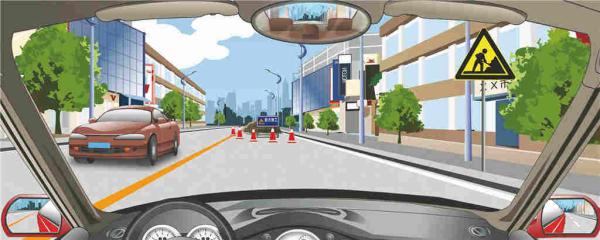
A. Right
B. Wrong
Answer: A
3. The red car is allowed to drive on this lane.
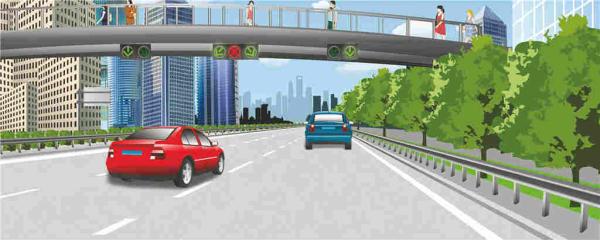
A. Right
B. Wrong
Answer: B
4. When a motor vehicle slides sideways, how should the driver adjust the direction?
A. If the front wheels skid sideways, turn the steering wheel in the direction of the skid
B. If the front wheels skid sideways, turn the steering wheel in the opposite direction of the skid
C. If the rear wheels skid sideways, turn the steering wheel in the direction of the skid
D. If the rear wheels skid sideways, turn the steering wheel in the opposite direction of the skid
Answer: BC
5. When driving on a snowy day, drivers should follow the tracks on the road before them.
A. Right
B. Wrong
Answer: A
6. In order to keep safe when driving on the highway, which ones of the following statements are prohibited acts?
A. Reversing, moving against regulations, making a U-turn by crossing the central divider, or stopping in the lane.
B. Riding or rolling on the lane-dividing line or driving on the shoulder
C. Overtaking on ramps, accelerations lanes, or deceleration lanes.
D. Testing vehicles or learning to drive a vehicle
Answer: ABCD
7. When a motor vehicle catches fire on the expressway the driver should drive the motor vehicle to the service area or the parking lot to extinguish the fire.
A. Right
B. Wrong
Answer: B
8. As shown in this flash, what should the motor vehicle driver do when encounters this situation?
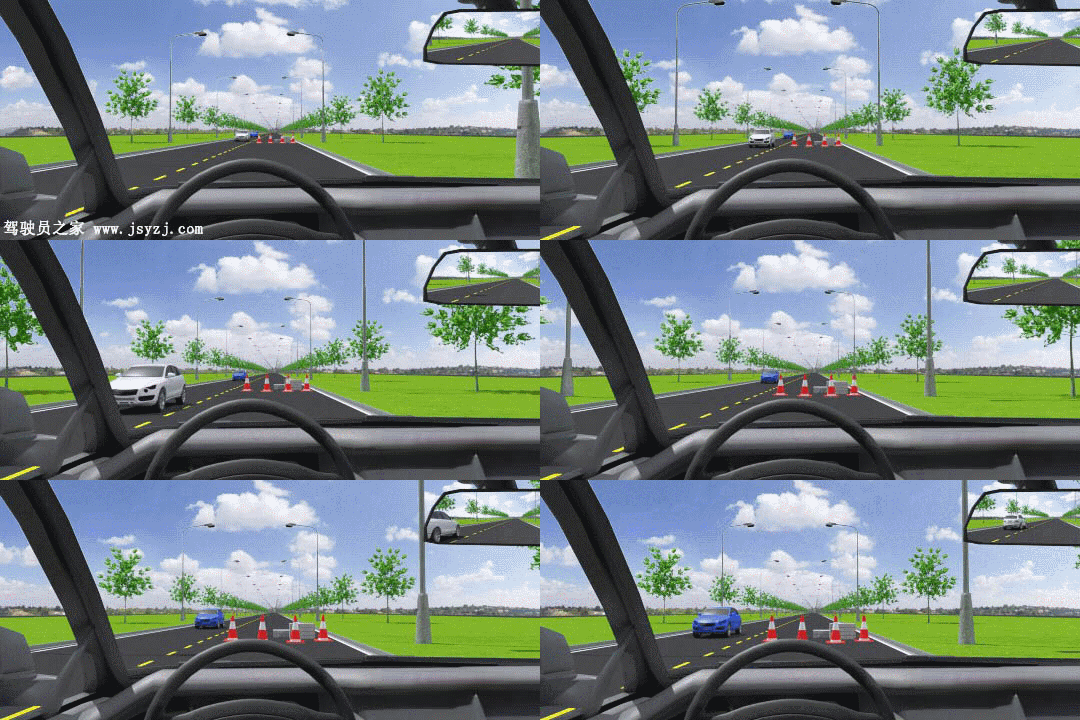
A. Use the mergency brake
B. Turn sharply and pass rapidly
C. Slide over rapidly without encountering collision
D. Stop smoothly
Answer: D
9. Under such circumstances, motor vehicle drivers may sound the horn at the proper time and speed up to pass through.
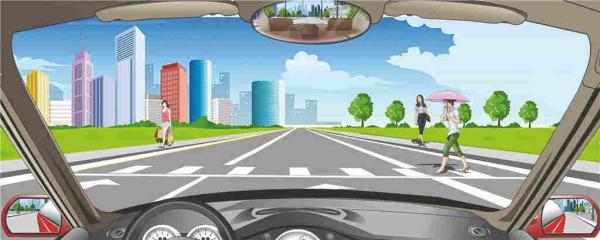
A. Right
B. Wrong
Answer: B
10. Crossing the broken white line on the right edge of the road is allowed.
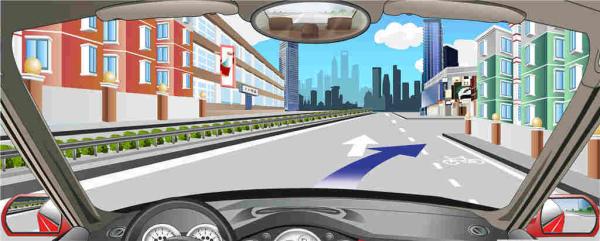
A. Right
B. Wrong
Answer: A
11. When the tire pressure is too low, what will happen if the tire changes its shape in waves and increases in temperature due to fast movement?
A. Unstable tire pressure
B. Even lower tire pressure
C. Driving resistance increases
D. Tire burst
Answer: D
12. What is the best way to make turns on this kind of curving mountain road?
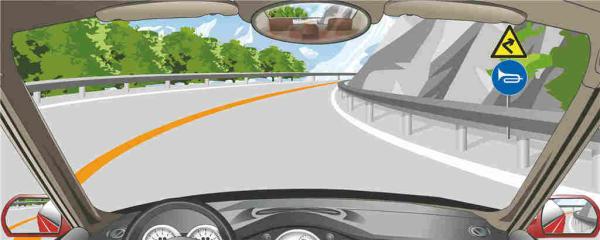
A. Drive along the outer side of the curve
B. Slow down, sound the horn and drive on the right
C. Borrow the opposite lane
D. Drive along the central line of the road
Answer: B
13. As shown in this picture, the vehicles intending to turn left are not allowed to drive into left-turn waiting area directly to wait for green light.
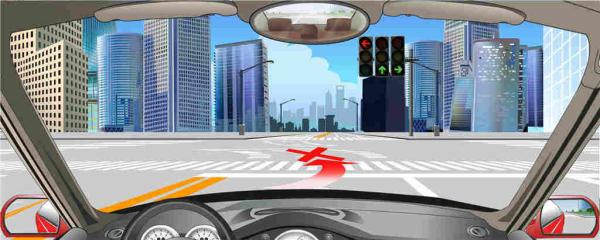
A. Right
B. Wrong
Answer: B
14. The sign in front is an advance announcement of the directions led by this intersection.
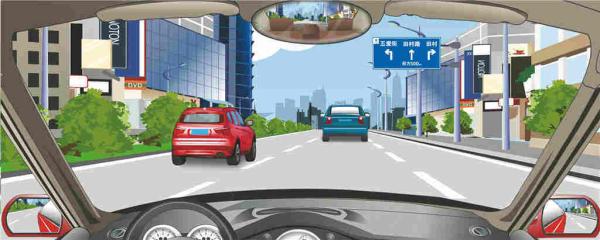
A. Right
B. Wrong
Answer: A
15. What should the driver do when a motor vehicle encounters this situation on a mountain road?
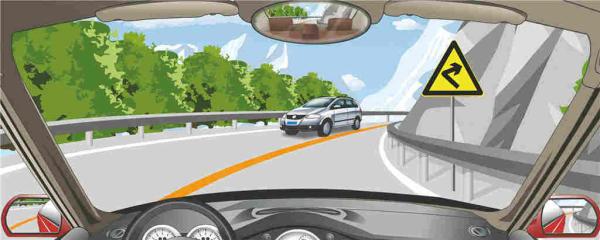
A. Stick to respective lanes and speed up to approach each other
B. Drive close to the central line of the road
C. Retain the normal speed
D. Slow down
Answer: D
16. What should motor vehicle drivers do when approaching an oncoming vehicle on a frozen road?
A. Cut speed as approaching each other
B. Pass each other by speeding up properly
C. Pass each other slowly by cutting speed in advance
D. Pass each other along the central line to the best
Answer: C
17. Mr. Tong drove a large bus (capacity 55 people and carrying 54) to Taiyuan City. When he drove on a muddy road at the speed of 45 kilometers per hour, the bus skidded into a deep ditch, killing 14 people dead and badly injuring 40 What is the main illegal act committed by Mr. Tong?
A. Overloaded
B. Speeding
C. Driving after drinking
D. Fatigued driving
Answer: B
18. What should be done when drivers evade an emergency on the highway?
A. Take braking measures to reduce speed
B. Yield by turning to the left side
C. Evade by swiftly turning the steering wheel
D. Yield by turning to the right side
Answer: A
19. The braking distance will be shortened greatly when the motor vehicle is equipped with ABS brakes.
A. Right
B. Wrong
Answer: B
20. After entering the acceleration lane of an expressway, the driver should increase the speed to how many kilometers per hour?
A. More than 30 km/hour
B. More than 40 km/hour
C. More than 50 km/hour
D. More than 60 km/hour
Answer: D