

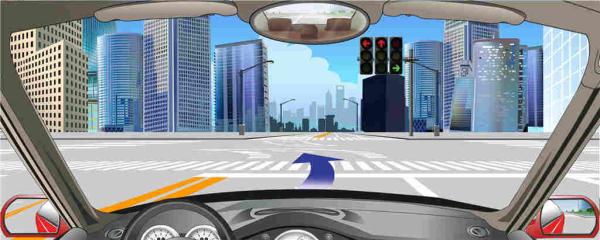
1. As shown in this picture, the vehicles intending to turn left are allowed to drive into the left-turn waiting area directly to wait for the green light.
A. Right
B. Wrong
Answer: B
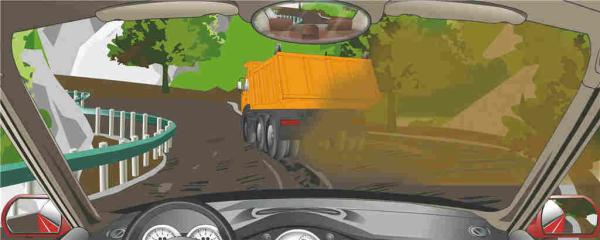
2. When encountering this situation on a mountainous road, motor vehicle drivers should overtake the vehicle in front by speeding up.
A. Right
B. Wrong
Answer: B
3. When driving on a road covered with ice and snow drivers should not use the emergency brake but can apply a sharp turn.
A. Right
B. Wrong
Answer: B
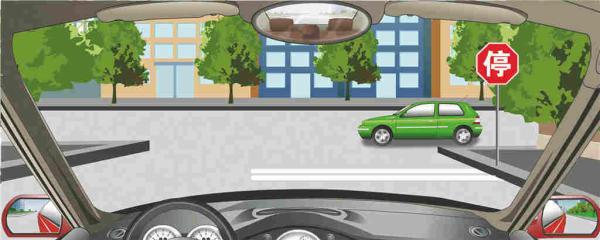
4. The sign on the right indicates to stop and yield at the intersection ahead.
A. Right
B. Wrong
Answer: A
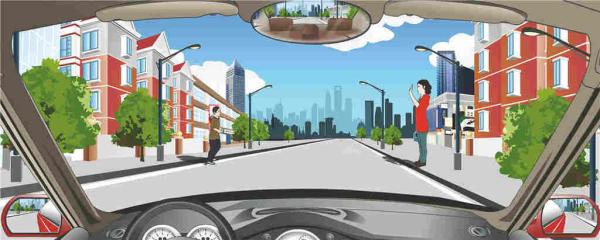
5. Under such circumstances, what should motor vehicle drivers do?
A. Guard against the sideslip of motor vehicles
B. Guard against the crossing of pedestrians
C. Speed up and pass through as quickly as possible
D. Continuously sound the horn
Answer: B
6. Which one of the following is the safest way when driving a motor vehicle on this kind of road surface?
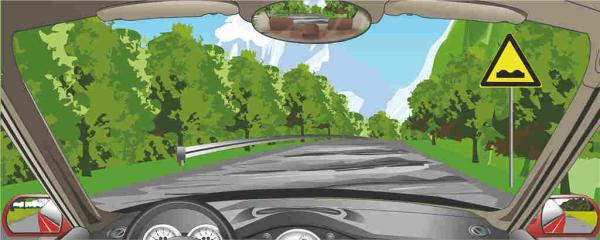
A. Slide over by using neutral gear
B. Pass with a high speed
C. Pass by speeding up
D. Pass with a low speed
Answer: D
7. The sign on the right warns of a dangerous mountainside road ahead.
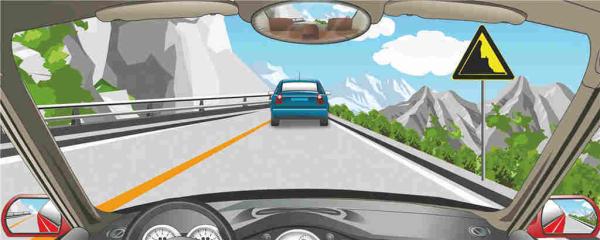
A. Right
B. Wrong
Answer: A
8. When passing an intersection, vehicle motor drivers are not allowed to overtake.
A. Right
B. Wrong
Answer: A
9. The driver may turn right directly at this intersection.
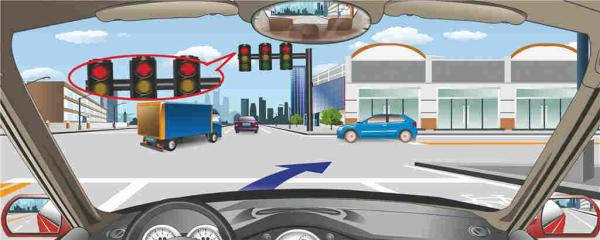
A. Right
B. Wrong
Answer: B
10. When fixing the unexposed bones in position, it is necessary to exceed the upper and lower joints of the wounded body part.
A. Right
B. Wrong
Answer: A
11. The guide arrow on the road surface of this lane indicates that only left and right turns are permitted on the lanes ahead.
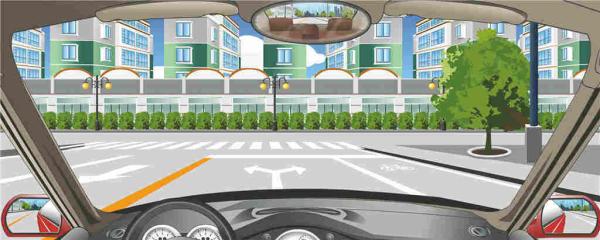
A. Right
B. Wrong
Answer: A
12. The broken white line on the right side of the road indicates that drivers are allowed to change lanes by crossing the line.
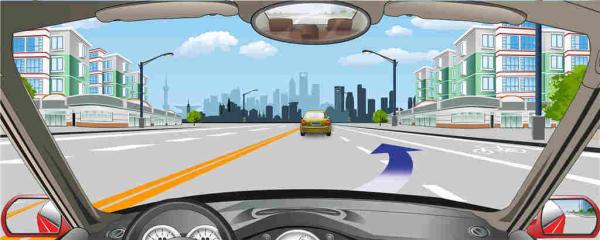
A. Right
B. Wrong
Answer: A
13. How should the driver pass this place safely?
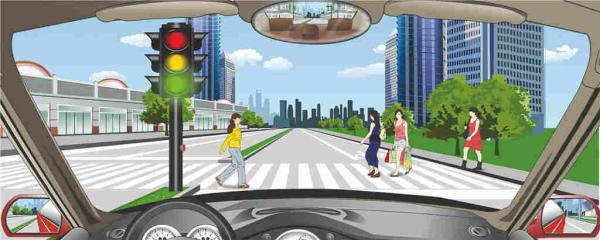
A. Speed up and pass in the front of the pedestrians
B. Bypass behind the pedestrians
C. Slow down and sound the horn
D. Stop and wait until the pedestrians pass
Answer: D
14. The sign on the right side warns of an emergency lane 500 meters ahead.
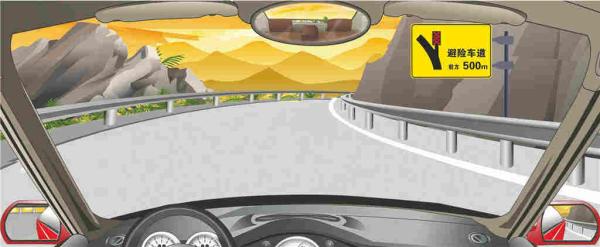
A. Right
B. Wrong
Answer: A
15. The circle in the center of the intersection indicates that drivers should drive along the inner side when making a small left turn.
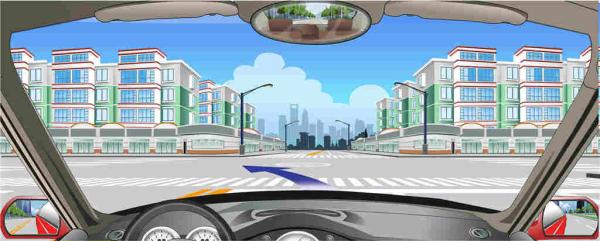
A. Right
B. Wrong
Answer: A
16. The sign on the right warns of a ferry crossing 100 meters after turning right at the intersection ahead.

A. Right
B. Wrong
Answer: A
17. What should the driver do in this situation?
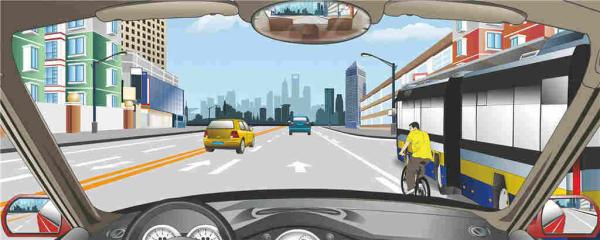
A. Speed up and overtake from the left side
B. Sound the horn continuously to warn the bicycle
C. Follow the bicycle closely
D. Slow down and yield to the bicycle
Answer: D
18. Driving and smoking has no negative effect on safe driving
A. Right
B. Wrong
Answer: B
19. When a motor vehicle reaches a muddy or burst-and-muddy section of the road, the driver should stop, observe and select a level and solid section or a section with vehicle tracks.
A. Right
B. Wrong
Answer: A
20. As shown in the flash, the motor vehicle chooses a correct way to pass through the level crossing.

A. Right
B. Wrong
Answer: A