

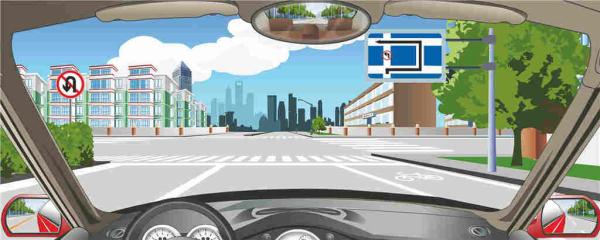
1. The sign on the right indicates a bypass route at the intersection ahead.
A. Right
B. Wrong
Answer: A
2. When a motor vehicle breaks down on a mountain road, what should the driver do?
A. Park on a downhill section
B. Park on an uphill section
C. Park on a gentle section of the mountain road
D. Park on the crest of a slope
Answer: C
3. When steering failure happens suddenly, if the road condition permits straight movement, drivers should not apply emergency braking.
A. Right
B. Wrong
Answer: A
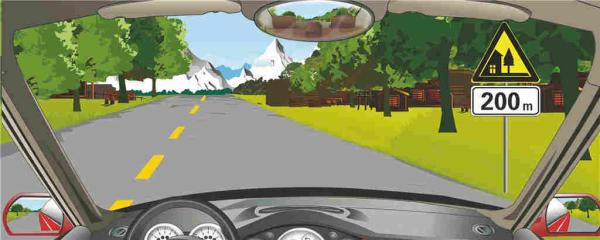
4. The sign on the right warns of a village 200 meters ahead.
A. Right
B. Wrong
Answer: A
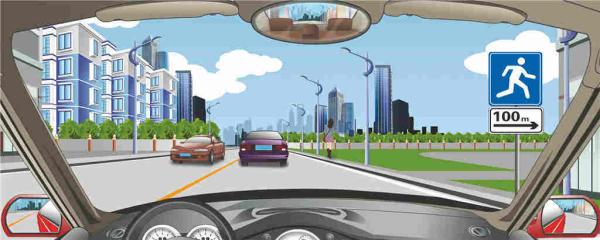
5. The sign on the right indicates an emergency shield 100 meters ahead.
A. Right
B. Wrong
Answer: A
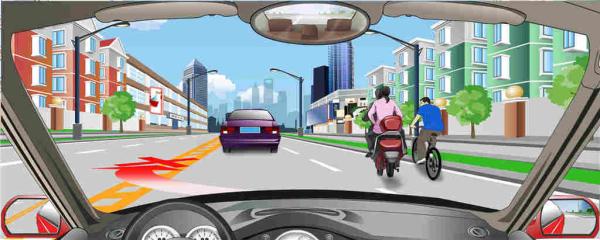
6. Drivers are not allowed to drive on or across these filled-in slanted yellow lines.
A. Right
B. Wrong
Answer: A
7. When driving on an expressway, which of the following statements is not correct?
A. Drivers are not allowed to drive by riding or rolling on the lane dividing line
B. Drivers are prohibited from driving on road shoulders
C. Drivers may overtake on the ramp, the acceleration lane or the deceleration lane
D. Drivers are prohibited from learning to drive
Answer: C
8. Under such circumstances, what should motor vehicle drivers do?
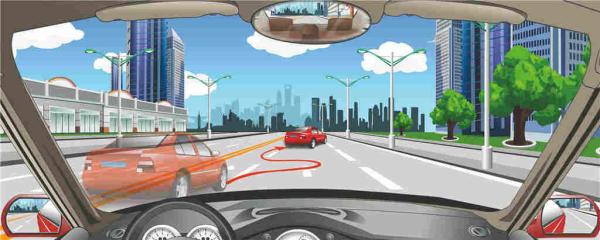
A. Overtake the vehicle quickly on its left
B. Keep a long braking space
C. Continuously sound the horn to alert the vehicle in front
D. Overtake the vehicle quickly from its right
Answer: B
9. It is a bad habit for a driver to put his left arm on the window of the vehicle or hold the gear lever in his right hand for a long time.
A. Right
B. Wrong
Answer: A
10. As shown in the flash, the motor vehicle chooses a correct way to pass through the level crossing.

A. Right
B. Wrong
Answer: A
11. Drivers needn?ˉt yield to pedestrians who display such behavior.
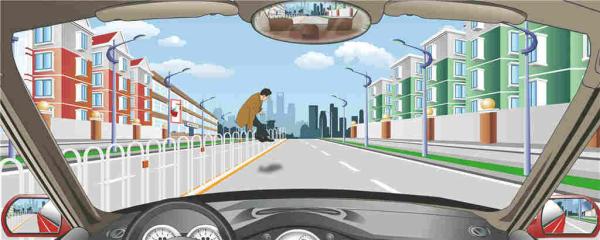
A. Right
B. Wrong
Answer: B
12. The sign on the right warns of a wildlife protection area ahead.
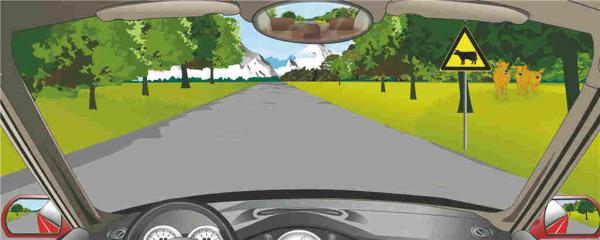
A. Right
B. Wrong
Answer: B
13. When driving on an expressway, which of the following statements is correct?
A. Drivers may overtake on either the ramp, the acceleration lane or the deceleration lane
B. Drivers are prohibited from reversing, driving in the opposite direction or making a U turn by crossing the central dividing strip
C. Drivers may drive on the emergency lane in a non-emergency case
D. Drivers may test a motor vehicle or learn to drive
Answer: B
14. The sign in front indicates a 2-kilometer distance from the destination of the highway ahead.
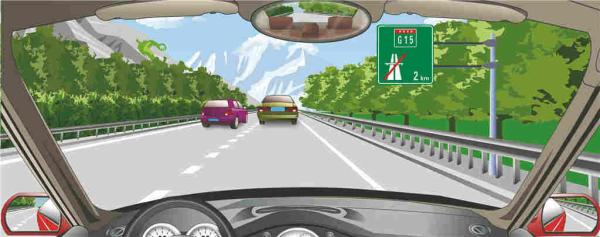
A. Right
B. Wrong
Answer: A
15. The sign on the right warns of a dangerous mountainside road ahead.
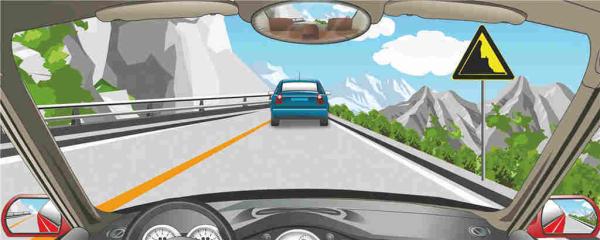
A. Right
B. Wrong
Answer: A
16. When the motor vehicle encounters a crosswalk in this situation, the driver may speed up and pass rapidly.
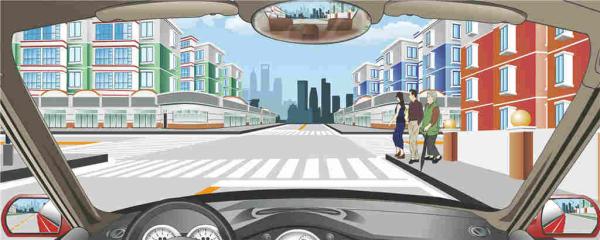
A. Right
B. Wrong
Answer: B
17. The sign on the right indicates notice by sounding the horn.
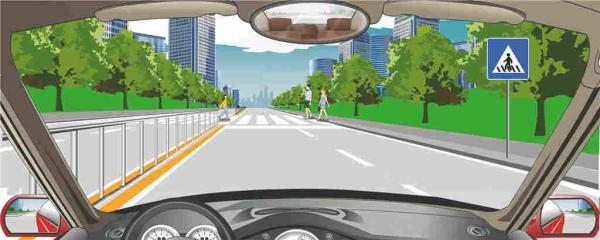
A. Right
B. Wrong
Answer: B
18. Under such circumstances, the motor vehicle is allowed to overtake.
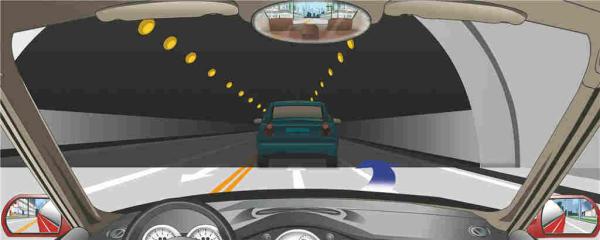
A. Right
B. Wrong
Answer: B
19. When a motor vehicle on an expressway stops in an emergency due to breakdown or an accident, what should the driver and the passengers do?
A. Stand in front of the motor vehicle
B. Wait in the motor vehicle for rescue
C. Stand behind the motor vehicle
D. Promptly move to the road shoulder on the right side or the emergency lane
Answer: D
20. In this situation, motor vehicles are permitted to stop temporarily at bus stations.
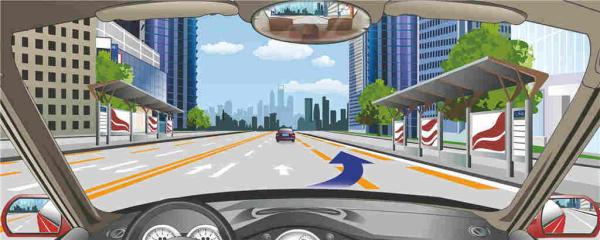
A. Right
B. Wrong
Answer: B