

1. When finding a tire burst on the road, the driver should gently depress the brake pedal, reduce speed and stop the vehicle slowly.
A. Right
B. Wrong
Answer: A
2. The sign on the right indicates an inspection station 100 meters ahead.
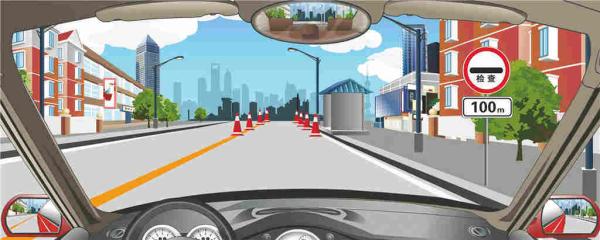
A. Right
B. Wrong
Answer: A
3. Under such circumstances, what should be done by motor vehicle drivers in order to yield to the pedestrians politely?
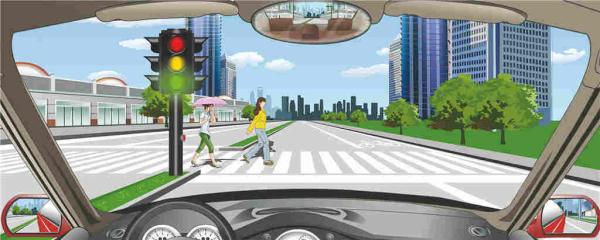
A. Set off after pedestrians pass
B. Set off and bypass in front of the pedestrians
C. Sound the horn to warn the pedestrians to yield
D. Set off and approach the pedestrians slowly
Answer: A
4. Which of the following is a bad driving habit when the vehicle in front is moving slowly in a queue?
A. Cutting in and rushing to pass
B. Not overtaking other vehicles forcefully
C. Stop or pass alternatively
D. Do not occupy on a non-motor vehicle lane
Answer: A
5. When encountering this situation in a residential area, the driver should follow them closely.
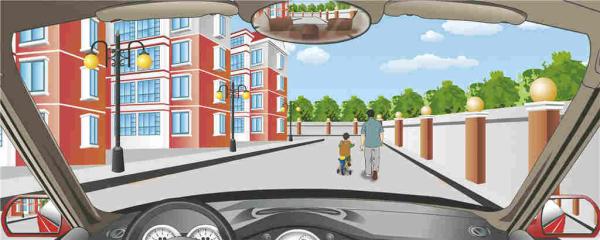
A. Right
B. Wrong
Answer: B
6. The sign on the right warns of a hump bridge right ahead.
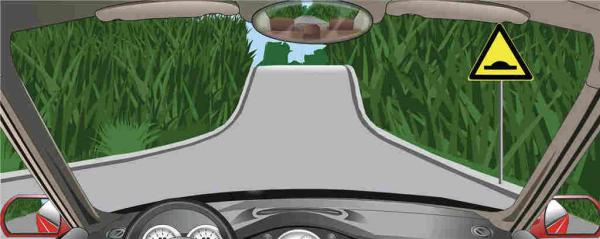
A. Right
B. Wrong
Answer: B
7. When there is a braking failure on a downhill road, the driver should immediately try to find and drive to an emergency lane; after stopping the vehicle on the emergency lane, the driver should pull up the stopping brake so as to prevent a second danger arising from the vehicle sliding.
A. Right
B. Wrong
Answer: A
8. What should drivers keep in mind when driving on a mountainous road?
A. Keep a safe distance
B. Avoid occupancy of another lane when making a turn
C. Downshift in advance when ascending an abrupt slope
D. Taking full advantage of engine braking when descending a long slope
Answer: ABCD
9. This sign warns of an intersection of railways and highways ahead.
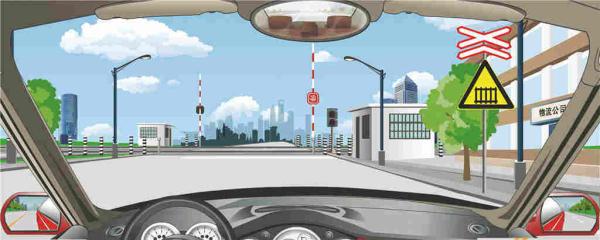
A. Right
B. Wrong
Answer: A
10. If a fast-moving motor vehicle has a steering failure, using emergency braking will not cause an overturn.
A. Right
B. Wrong
Answer: B
11. Mr. Tong drove a large bus (capacity 55 people and carrying 54) to Taiyuan City. When he drove on a muddy road at the speed of 45 kilometers per hour, the bus skidded into a deep ditch, killing 14 people dead and badly injuring 40 What is the main illegal act committed by Mr. Tong?
A. Overloaded
B. Speeding
C. Driving after drinking
D. Fatigued driving
Answer: B
12. What should be done by drivers in order to safely pass through the curve in this condition?

A. Reduce speed and drive on the right side
B. Drive on the central line of the road
C. Drive on the outer side of the curve
D. Drive by borrowing the opposite lane
Answer: A
13. When a motor vehicle accidentally hits the guardrail of the highway, what should be done by the driver in order to keep safe?
A. Firmly holding and properly adjusting the steering wheel
B. Turning swiftly to the opposite direction
C. Immediately applying emergency braking
D. Immediately steering to the collision side
Answer: A
14. When finding a tire burst on the road, the driver should use emergency braking while controlling the direction of the vehicle at the same time to stop the vehicle quickly.
A. Right
B. Wrong
Answer: B
15. The sign on the right indicates that the number of the lanes ahead will increase.
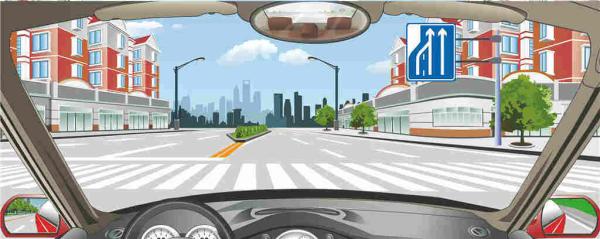
A. Right
B. Wrong
Answer: B
16. The sign on the right indicates notice by sounding the horn.
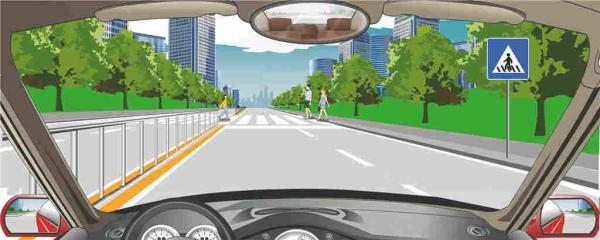
A. Right
B. Wrong
Answer: B
17. The diamond-shaped sign on the road indicates a crosswalk on the road ahead.
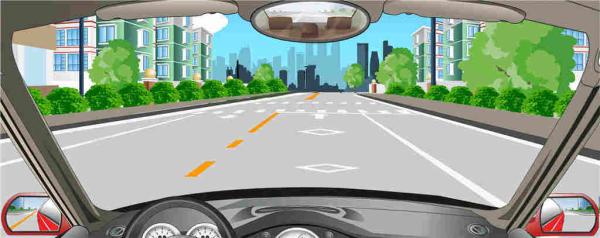
A. Right
B. Wrong
Answer: A
18. The driver may not yield when the motor vehicle encounters this situation at the intersection.
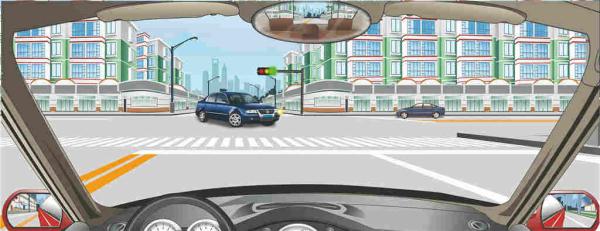
A. Right
B. Wrong
Answer: B
19. What should the driver do if he encounters this situation at the intersection when driving straight?
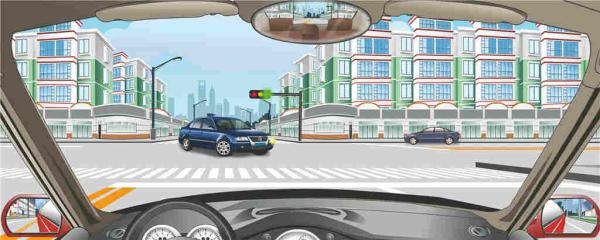
A. Sound the horn to warn the other vehicle to yield
B. Speed up and pass in the front of the vehicle
C. Turn on the headlamp to warn the other vehicle to yield
D. Slow down or stop to yield
Answer: D
20. The sign on the right indicates that the speed limit of 40km/hour is lifted on the road ahead.
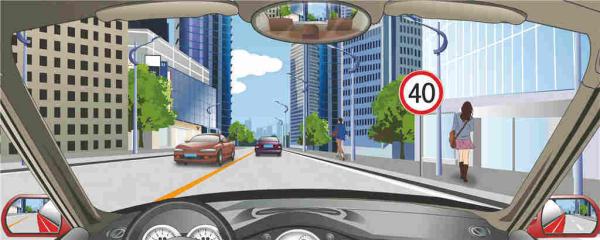
A. Right
B. Wrong
Answer: B