

1. When a vehicle passes a crosswalk, the driver should yield to the pedestrians.
A. Right
B. Wrong
Answer: A
2. Whats the meaning of this sign?
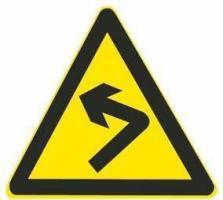
A. bypass from left side
B. continuous curves
C. sharp left curve
D. sharp right curve
Answer: C
3. A motorized vehicle driver who uses falsified and altered vehicle license is subject to a ________.
A. 6-point penalty
B. 3-point penalty
C. 2-point penalty
D. 12-point penalty
Answer: D
4. It lights when turning on the front fog light.

A. Right
B. Wrong
Answer: B
5. Traffic Police only imposes a fine if a vehicle is suspected of using the falsified or altered label of inspection.
A. Right
B. Wrong
Answer: B
6. Whats the meaning of this sign?

A. lanes for going in different directions
B. lane for both U turn and left turn
C. the lane of no left turn and no U turn
D. lane for both going straight and left turn
Answer: B
7. When a motorized vehicle returns to the original lane after overtaking, the driver should turn on the right-turn signal.
A. Right
B. Wrong
Answer: A
8. Whats the meaning of the white broken lines area on the far left side?
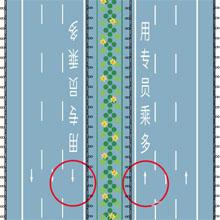
A. special lane for multi-passenger vehicles
B. special lane for small buses
C. special lane for taxis with no passenger
D. special lane for large buses
Answer: A
9. Traffic Police can detain the vehicle according to law if it is without the mandatory traffic accident insurance in accordance with state regulations.
A. Right
B. Wrong
Answer: A
10. When driving at night on a road that has good lighting, the driver should use _______.
A. The fog light
B. The low beam light
C. The high beam light
D. The hazard lights
Answer: B
11. Whats the meaning of this sign?
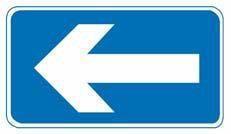
A. yield if going to turn left
B. straight one-way road
C. right one-way road
D. left one-way road
Answer: D
12. It is a bad habit for a driver to put his left arm on the window of the vehicle or hold the gear lever in his right hand for a long time.
A. Right
B. Wrong
Answer: A
13. When overtaking on a mountain road, the vehicle should overtake ______.
A. By taking every possible chance
B. By selecting a wide gentle uphill section
C. By selecting a fairly long downhill section
D. By selecting a relatively gentle downhill section
Answer: B
14. When driving in thick fog causing poor visibility on the expressway, the driver should apply emergency braking to stop at once.
A. Right
B. Wrong
Answer: B
15. The driving license of 10-year validity will be issued if the penalty points never reached 12 points in every scoring cycle during the 6-year validity of the license.
A. Right
B. Wrong
Answer: A
16. If the vehicle has no license plate, label of inspection or label of insurance, preserve the scene and immediately report to the police.
A. Right
B. Wrong
Answer: A
17. You may speed up to go through the intersection in this case.Answer£o
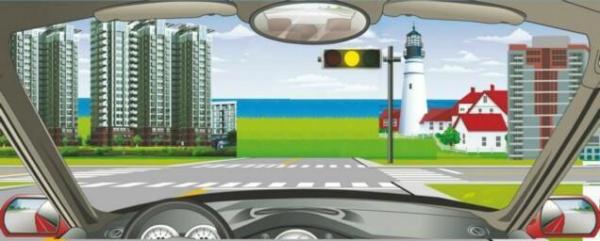
A. Right
B. Wrong
Answer: B
18. Whats the meaning of the double yellow solid lines?

A. opposite direction lanes dividing line that can not be crossed
B. opposite direction lanes dividing line that can be crossed
C. bilateral same direction lanes dividing line that can be crossed
D. one-way lanes dividing line
Answer: A
19. What does this symbol indicate?

A. luggage compartment is opened
B. door of one side is opened
C. engine compartment is opened
D. cover of fuel tank is opened
Answer: A
20. When driving in a foggy day, the driver should turn on ______.
A. The reverse light
B. The low beam light
C. The fog light
D. The high beam light
Answer: C