

1. Turning on the high-beam is an effective way to improve visibility in fog weather.
A. Right
B. Wrong
Answer: B
2. What should a driver do before entering a tunnel on an expressway
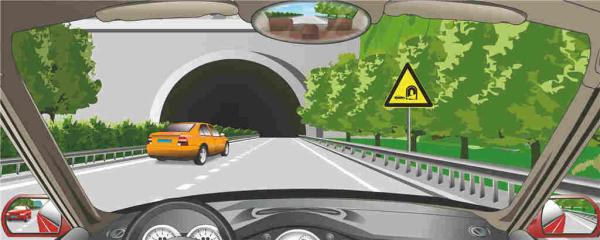
A. Turn on the high-beam
B. Turn on the width lamp and the tail lamp
C. Turn on the low-beam
D. Sound the horn before entering the tunnel
Answer: C
3. What should be done by motor vehicle drivers in order to yield politely to such pedestrians?
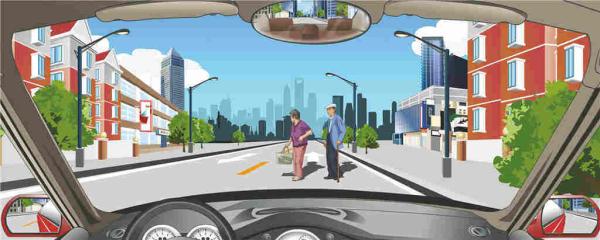
A. Speed up and bypass in front of the pedestrians
B. Speed up and bypass from behind the pedestrians
C. Reduce speed or stop to yield
D. Continuously sound the horn to alert the pedestrians
Answer: C
4. The main impact of muddy roads on safe driving is that the wheels may easily spin and skid
A. Right
B. Wrong
Answer: A
5. When following other vehicles on the uphill section of a mountain road, what should the driver do if the vehicle in front stops?
A. Overtake from either side of the front vehicle
B. Stop close to the vehicle in front
C. Stop with a larger space from the vehicle in front
D. Sound the horn continuously to warn the other driver
Answer: C
6. When seeing this sign, the driver should slow down promptly.
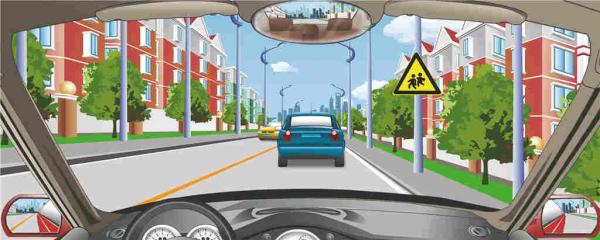
A. Right
B. Wrong
Answer: A
7. The driver should turn on the left-turn indicator after entering the acceleration lane on an expressway.
A. Right
B. Wrong
Answer: B
8. The braking distance will be shortened greatly when the motor vehicle is equipped with ABS brakes.
A. Right
B. Wrong
Answer: B
9. When a head-on collision with another vehicle is unavoidable, what should the driver do?
A. Change head-on collision to side collision
B. Immediately turn the steering wheel to the right side to evade
C. Immediately apply emergency braking
D. Immediately turn the steering wheel to the left side to evade
Answer: C
10. When approaching a vehicle on a narrow slope, which one of the following ways is correct?
A. The descending vehicle yields to the ascending
B. The vehicle which is further from the slope crest should yield
C. The ascending vehicle yields to the descending
D. If the descending vehicle has reached the midpoint while the ascending vehicle has not yet set out, the descending vehicle must yield.
Answer: A
11. The road marker indicates that vehicles are not allowed to make a U-turn at the intersection ahead.
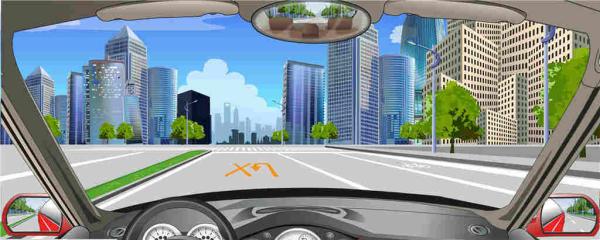
A. Right
B. Wrong
Answer: A
12. Drivers may turn left when traffic police give these hand signals.
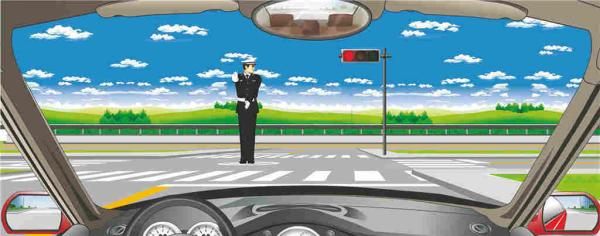
A. Right
B. Wrong
Answer: B
13. When rescuing a wounded person suffering from spinal fracture, which of the following measures should be taken?
A. Prevent heat loss
B. Rescue the wounded person with a soft stretcher
C. Keep the wounded part in position with a sling
D. Help the wounded person when walking
Answer: C
14. When there is a braking failure, the driver should first control the direction and then try to control the speed.
A. Right
B. Wrong
Answer: A
15. If a motor vehicle breaks down or causes a traffic accident on the expressway and cannot run normally the vehicle may be towed by any accompanying motor vehicles.
A. Right
B. Wrong
Answer: B
16. The signs on each side warn of changes in road alignment ahead.
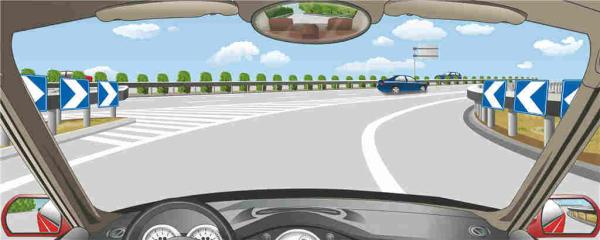
A. Right
B. Wrong
Answer: A
17. As shown in this picture, the intersection guide line is designed to help drivers make turns.
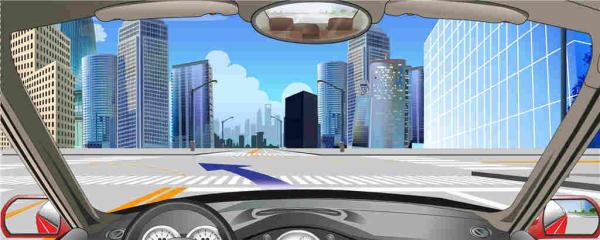
A. Right
B. Wrong
Answer: A
18. Motor vehicles are prohibited from driving straight or turning left in this situation.
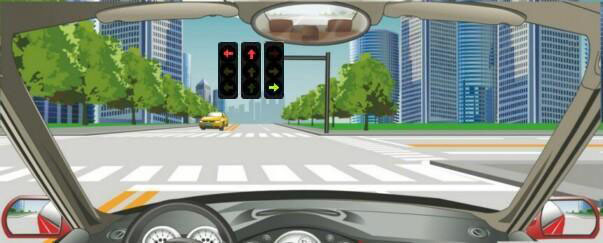
A. Right
B. Wrong
Answer: A
19. When passing this mountainous road, motor vehicle drivers should drive along the center of the road.
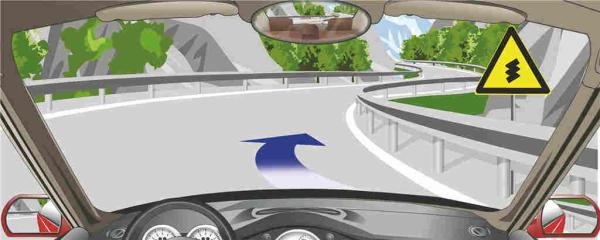
A. Right
B. Wrong
Answer: B
20. When there is a braking failure on a downhill road, the driver should immediately try to find and drive to an emergency lane; after stopping the vehicle on the emergency lane, the driver should pull up the stopping brake so as to prevent a second danger arising from the vehicle sliding.
A. Right
B. Wrong
Answer: A