

1. What is this instrument?
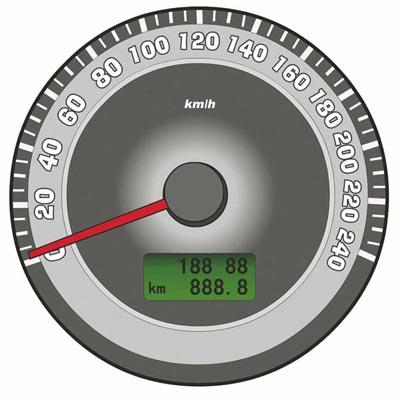
A. speed and mileage meter
B. engine tachometer
C. top speed meter
D. fuel consumption / 100 km
Answer: A
2. It lights to remind that engine coolant may be insufficient.

A. Right
B. Wrong
Answer: A
3. How to do first when encountering such kind of bridge?
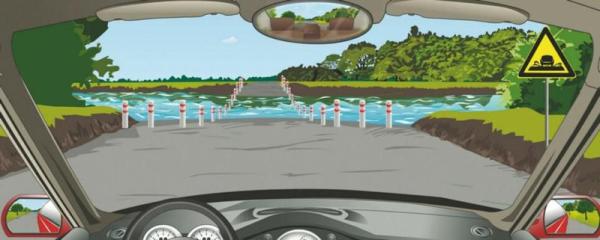
A. maintain the speed and pass
B. speed up and pass as soon as possible
C. stop and observe
D. pass slowly
Answer: C
4. Whats the meaning of this mark on the road?
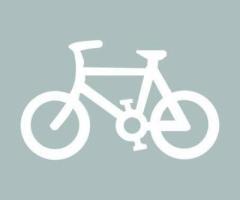
A. the lane for non-motorized vehicles
B. the special lane for motorcycles
C. the special lane for battery bicycles
D. the special lane for bicycles
Answer: A
5. Whats the meaning of this sign?

A. stop and yield the right side vehicle while crossing each other
B. no passing on the right side road
C. two-way lane section ahead
D. stop and yield the opposite vehicle while crossing each other
Answer: D
6. What to do besides controlling speed less than 20km/hr when the visibility is lower than 50 meters on the expressway?
A. run in the emergency lane
B. leave the expressway as soon as possible
C. stop by the roadside as soon as possible
D. run slowly in the road shoulder
Answer: B
7. Which behavior a person had in 3 years is not allowed to apply for a motorized vehicle driving license?
A. insulin injections
B. drunken experience
C. smoking addiction
D. drug injections
Answer: D
8. A motorized vehicle driver who drives after drinking is subject to a 12-point penalty.
A. Right
B. Wrong
Answer: A
9. Whats the meaning of this sign?
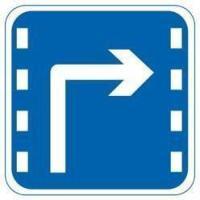
A. right-turn lane
B. U turn lane
C. left-turn lane
D. lanes for going in different directions
Answer: A
10. When overtaking, the driver should try his best to increase the horizontal distance and,when necessary, may cross the solid line to overtake.
A. Right
B. Wrong
Answer: B
11. Whats the meaning of this guide arrow?

A. Y-shaped intersection ahead
B. separate road ahead
C. only left or right turn ahead
D. merging with both sides ahead
Answer: C
12. Whats the meaning of this sign?
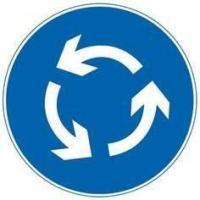
A. passing by the right side
B. passing by the left side
C. running to right side
D. running the roundabout
Answer: D
13. It lights continuously to indicate that engine control system failed.
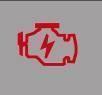
A. Right
B. Wrong
Answer: A
14. When a vehicle passes a level crossing, it is prohibited from overtaking.
A. Right
B. Wrong
Answer: A
15. Full penalty points of a scoring cycle because of violating the traffic regulations is 12 points.
A. Right
B. Wrong
Answer: A
16. What marking is it?
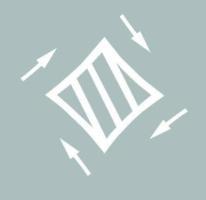
A. A cross-hatched marking
B. prohibitive area
C. guide line
D. central circle
Answer: D
17. What is the max speed when in or out of the lane for non-motorized vehicles?
A. 40km/hr
B. 50km/hr
C. 60km/hr
D. 30km/hr
Answer: D
18. A person who has falsified or altered the motorized vehicle driving license and if his act constitutes a crime, he should be held for criminal liabilities according to law.
A. Right
B. Wrong
Answer: A
19. A motorized vehicle driver who uses falsified and altered vehicle license is subject to a ________.
A. 6-point penalty
B. 3-point penalty
C. 2-point penalty
D. 12-point penalty
Answer: D
20. The passenger in the front seat does not need to buckle up when a motorized vehicle runs.
A. Right
B. Wrong
Answer: B