

1. When a driver needs to borrow a lane to bypass an obstacle in front and a vehicle in the opposite direction is approaching the obstacle, the driver should ___________.
A. Reduce speed or stop and yield to the vehicle coming in the opposite direction
B. Speed up and bypass the obstacle in advance
C. Honk to indicate the vehicle in the opposite direction to yield
D. Rapidly occupy the lane and force the vehicle coming in the opposite direction to stop and yield
Answer: A
2. This sign reminds overflowing road or overflowing bridge ahead.
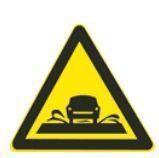
A. Right
B. Wrong
Answer: A
3. Whats the meaning of this sign?

A. bypass from right side
B. one-way passing
C. watch for danger
D. bypass from left side
Answer: A
4. The vehicle is allowed to _______ at this intersection.
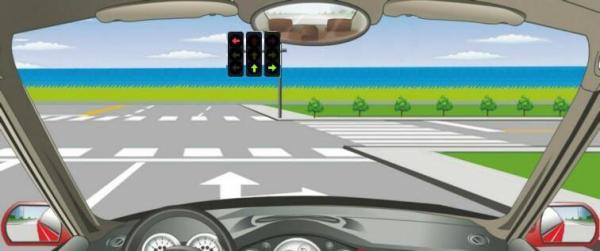
A. go straight or turn right
B. turn left
C. go straight or turn left
D. turn left or turn right
Answer: A
5. Driving a motorized vehicle on the road should be required to be with a license plate.
A. Right
B. Wrong
Answer: A
6. When encountering stopping in turn or slow-moving vehicles in front at an intersection where lanes are reduced, the motorized vehicle should _________.
A. enter the intersection from road shoulder by the right side of the vehicle in front
B. enter the intersection from the side of interspace
C. pass alternately with one vehicle each lane to enter the intersection
D. change to left lane and cut in to enter the intersection
Answer: C
7. Do not hang or place articles close to the front and rear windows that block the vision of the driver.
A. Right
B. Wrong
Answer: A
8. When running on the road having maximum speed limit signs, the motorized vehicle is not allowed to exceed the marked maximum speed.
A. Right
B. Wrong
Answer: A
9. When a vehicle goes uphill on a mountain road, it should change to a lower gear in a timely, accurate and rapid manner so as to avoid a situation in which driving at a high gear can reduce the power of the engine.
A. Right
B. Wrong
Answer: A
10. This sign reminds there is a ferry ahead for vehicles.
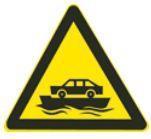
A. Right
B. Wrong
Answer: A
11. Motor vehicle frontal collision, the double protection of the airbag and the safety belts can give full play to the role.
A. Right
B. Wrong
Answer: A
12. When a vehicle has to stop on an expressway due to a vehicle trouble, the driver should place a breakdown warning sign beyond ______ m behind the vehicle.
A. 25
B. 150
C. 100
D. 50
Answer: B
13. In which situation the traffic police can detain the vehicle according to law?
A. exceeding 10% of the prescribed speed limits
B. driving when he is exhausted
C. not buckled up while driving
D. driving after drinking
Answer: D
14. Whats the meaning of this sign?
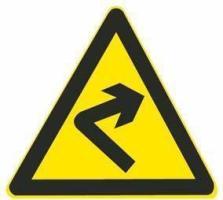
A. sharp right curve
B. bypass from right side
C. continuous curves
D. sharp left curve
Answer: A
15. Whats the meaning of this sign?
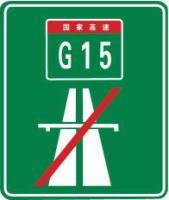
A. expressway exit ahead
B. expressway entry ahead
C. expressway ending ahead
D. expressway beginning ahead
Answer: C
16. It lights to indicate that ______

A. left-turn signal flashes
B. front and rear width lights light on
C. front and rear width lights light on
D. right-turn signal flashes
Answer: A
17. Before a vehicle enters a curve of a mountain road, the driver ______ if there is no vehicle coming in the opposite direction.
A. Should reduce speed, honk and drive on the right side
B. Should drive along the outer side of the curve
C. May briefly borrow the opposite lane
D. May speed up and pass along the tangent line of the curve
Answer: A
18. Which is correct in this kind of intersection?

A. make a U turn along the left lane
B. cannot make a U turn
C. make a U turn through the middle lane
D. make a U turn inside the intersection
Answer: B
19. If a motorized vehicle driver escapes after causing a major traffic accident which has caused human death, the driver is subject to a prison term of ________.
A. more than 7 years
B. less than 3 years
C. 3 ~ 7 years
D. more than 10 years
Answer: C
20. When an accident has caused congestion on an expressway, the vehicles may run in the emergency strip on the right or in the shoulder of the road.
A. Right
B. Wrong
Answer: B