

1. Under the circumstances shown in the flash, what should be done by the vehicle in front?
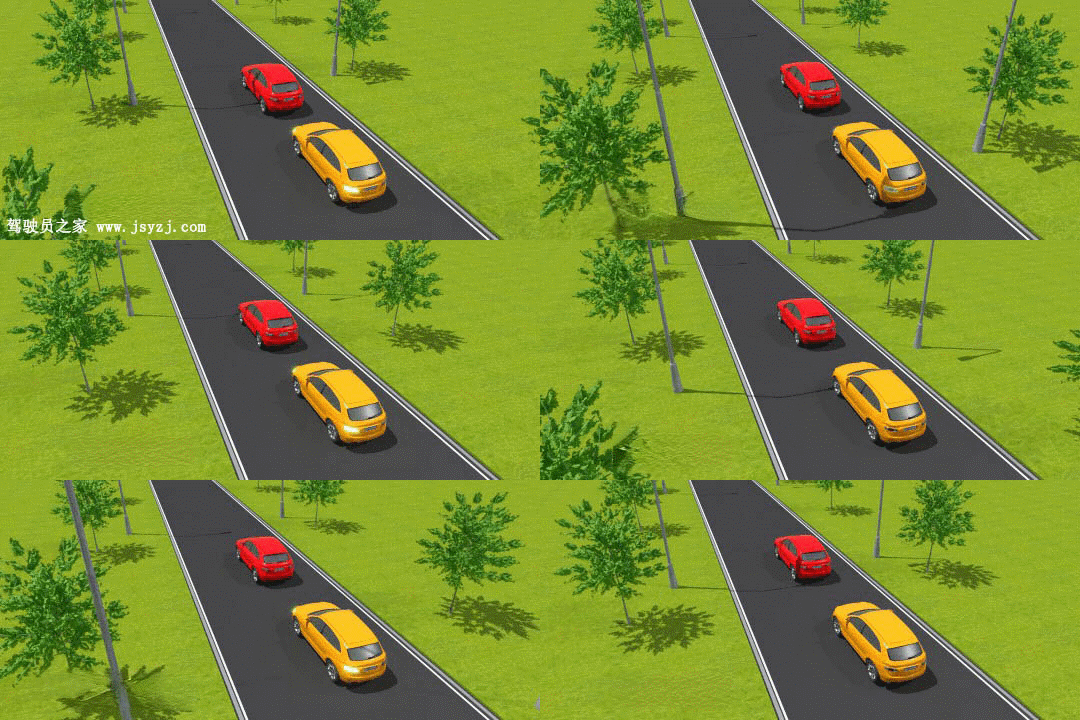
A. Reduce speed swiftly or apply emergency brake
B. Drive at a higher speed after giving a proper space
C. Reduce speed and yield by the right side of the road
D. Drive at a higher speed by the right side of the road
Answer: C
2. The sign on the right indicates that no restriction for temporary parking.
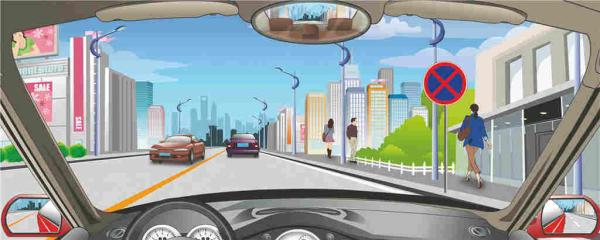
A. Right
B. Wrong
Answer: B
3. It is an illegal act for the driver to make calls while driving.
A. Right
B. Wrong
Answer: A
4. The sign in front is an advance announcement of the directions led by the interchange.
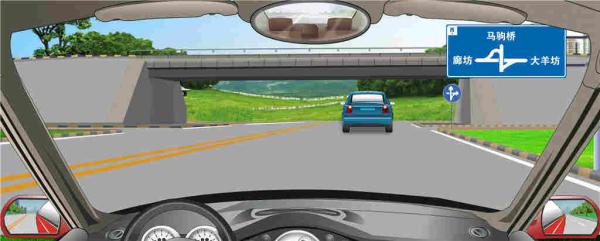
A. Right
B. Wrong
Answer: A
5. When the tire pressure is too low, what can happen when driving at a high speed?
A. Tire pressure will be unstable
B. Tire pressure will increase
C. Driving resistance will decrease
D. The tire will burst
Answer: D
6. If a motor vehicle has an accident on a foggy day and stops on an expressway, which of the following acts is dangerous?
A. Leaving the motor vehicle as soon as possible
B. Standing outside the guardrail as much as possible
C. Turning on the hazard lamp and fog lamp
D. Placing a warning sign behind the vehicle in the oncoming direction
Answer: D
7. Motor vehicles should stop and wait when encountering two red lights flashing alternately at level crossings.
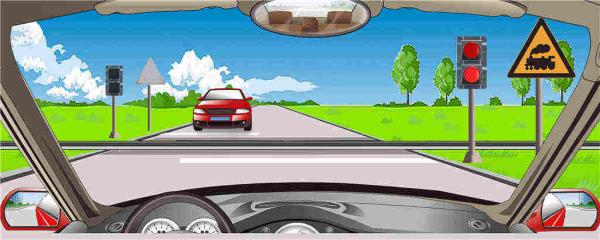
A. Right
B. Wrong
Answer: A
8. What should drivers keep in mind when driving on a mountainous road?
A. Keep a safe distance
B. Avoid occupancy of another lane when making a turn
C. Downshift in advance when ascending an abrupt slope
D. Taking full advantage of engine braking when descending a long slope
Answer: ABCD
9. A driver should speed up when passing through road sections with this traffic marking.

A. Right
B. Wrong
Answer: B
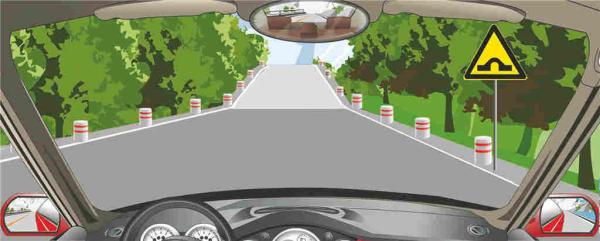
10. The sign on the right warns of a bumpy road ahead.
A. Right
B. Wrong
Answer: B
11. When braking failure happens to a fast-moving motor vehicle, what should be done by the driver to brake?
A. Continuously depressing the brake pedal
B. Immediately changing to a low gear to reduce speed and using the handbrake
C. Swiftly depressing the clutch pedal
D. Swiftly pulling up the handbrake
Answer: B
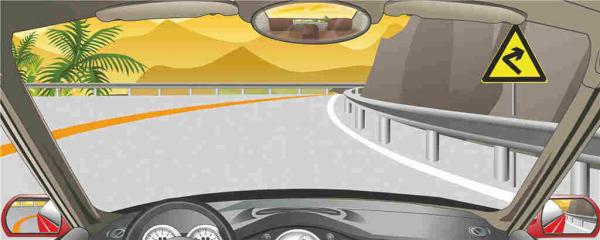
12. The sign on the right side warns of a sharp right turn ahead.
A. Right
B. Wrong
Answer: A
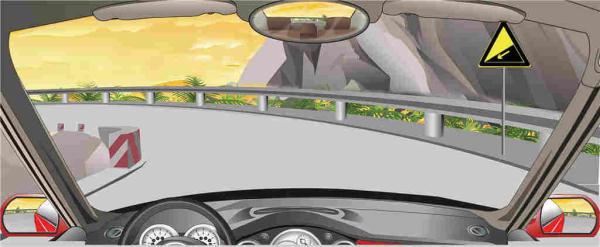
13. The sign on the right warns of a continuous downhill section ahead.
A. Right
B. Wrong
Answer: B
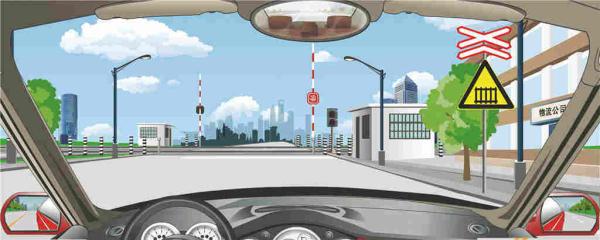
14. This sign warns of an intersection of railways and highways ahead.
A. Right
B. Wrong
Answer: A
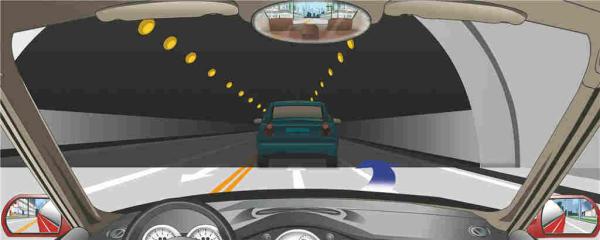
15. Under such circumstances, the motor vehicle is allowed to overtake.
A. Right
B. Wrong
Answer: B
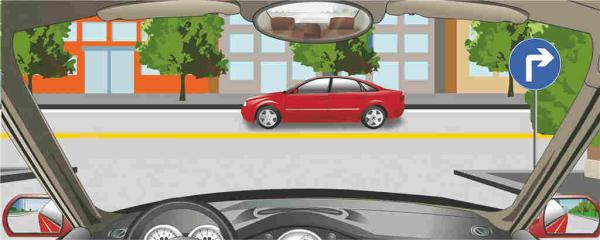
16. The sign on the right indicates right-hand turn only.
A. Right
B. Wrong
Answer: A
17. The slow-down-and-yield line at the intersection ahead indicates that vehicle drivers should stop and give the right of way to vehicles on the trunk road.

A. Right
B. Wrong
Answer: B
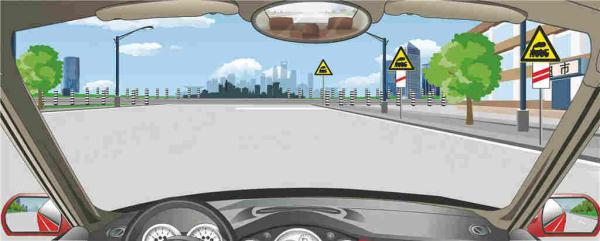
18. The sign on the right warns of a guarded crossing 150 meters ahead.
A. Right
B. Wrong
Answer: B
19. Mr. Qi drove a large bus with 28 passengers (capacity 55 people). When arriving at an intersection without any traffic signals from south to north at a speed of 50 kilometers per hour, the bus had a side collision with Mr. Li?ˉs heavy semi-trailer tractor (capacity 40 tons and carrying 55.2 tons) running from east to west. As a result of this accident, 12 people were killed and 17 injured. What are the main illegal acts in this case?
A. The bus carried more passengers than capacity
B. The bus exceeded the speed limit
C. The tractor carried more cargo than capacity
D. The driver of the tractor was inexperienced
Answer: BC
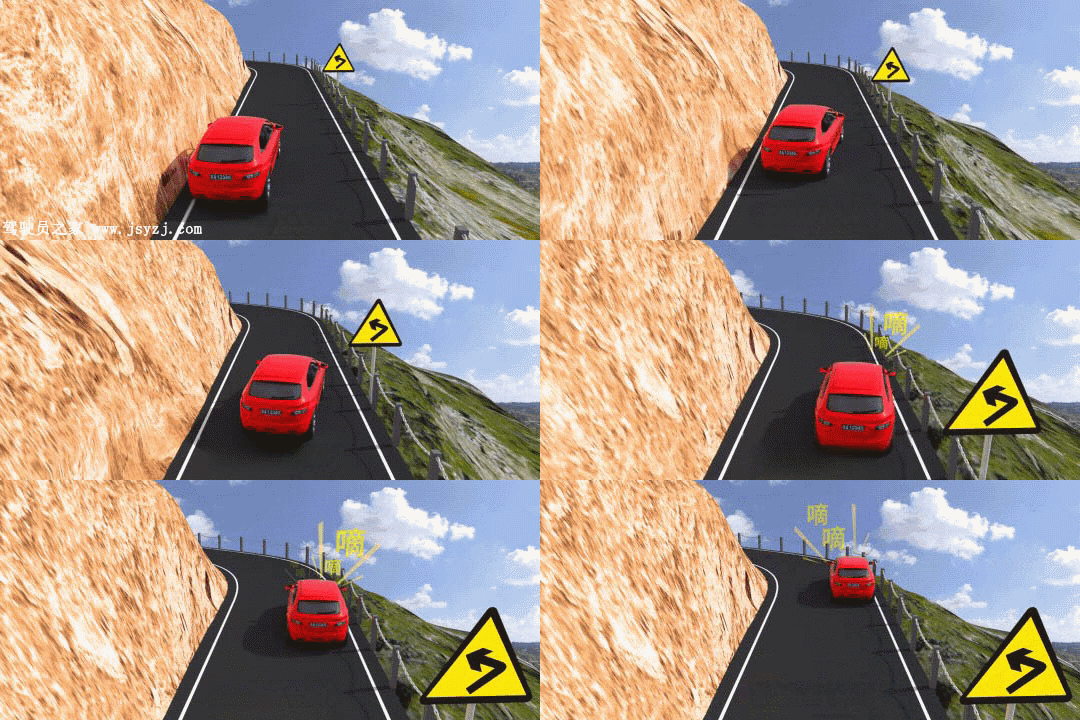
20. When making a turn on a mountainous road, drivers should cut speed, sound the horn and drive along the right side.
A. Right
B. Wrong
Answer: A