

1. Driving a motorized vehicle in the city road which has no central line, the maximum speed can not exceed 50 kilometers per hour.
A. Right
B. Wrong
Answer: B
2. Traffic Police can detain the accident vehicle according to law if it needs to be collected evidence of the road accident.
A. Right
B. Wrong
Answer: A
3. What is the meaning of this sign?
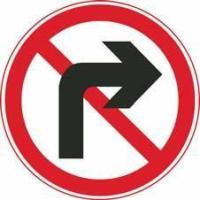
A. no entering the intersection
B. no right turn
C. no changing lane
D. no U turn
Answer: B
4. When encountering a vehicle in front ascending on a mountainous road covered with ice and snow, what should the motor vehicle driver do?
A. Ascend after the vehicle in front passes the slope
B. Overtake the vehicle in front swiftly and drive on
C. Overtake the vehicle in front with a slow speed and drive on
D. Follow the vehicle in front closely
Answer: A
5. You can drive a motorized vehicle a short distance after drinking as long as it does not interfere the driving operation.
A. Right
B. Wrong
Answer: B
6. One who runs away after causing a traffic accident and constitute a crime can not apply for motorized vehicle driving license.
A. Right
B. Wrong
Answer: A
7. What is the meaning of this sign?
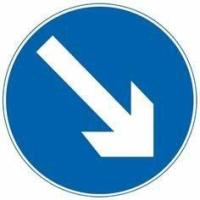
A. downhill section on right side
B. driving by the right side of the road
C. stopping by the right side of the road
D. right turn only
Answer: B
8. When a motorcycle passing through an interchange discovers it has chosen a wrong route, it should immediately make a U turn from where it is or reverse to change route.
A. Right
B. Wrong
Answer: B
9. Before riding a motorcycle, the driver should wear a safety helmet and adjust the angle of the rearview mirror till he can clearly watch the left side and the right side of the back.
A. Right
B. Wrong
Answer: A
10. What is the meaning of this sign?
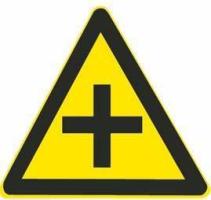
A. intersection
B. ring intersection
C. T-shaped intersection
D. Y-shaped intersection
Answer: A
11. Serious wave will appear when the front tire blows out; the driver should release the accelerator, firmly hold the steering wheel with both hands, quickly gradually break down, and stop to yield.
A. Right
B. Wrong
Answer: A
12. When driving on a road covered with ice and snow, drivers tend to encounter glare caused by reflection of light rays from the road surface.
A. Right
B. Wrong
Answer: A
13. When encountering an overflowing bridge, the driver should look at the situation, and passes through slowly before he makes sure that it is safe to do so.
A. Right
B. Wrong
Answer: A
14. If the driver’s accumulated penalty points reach the stipulated limit, he will be _______ by the traffic control department of the public security organ.
A. detained for less than 15 days
B. banned for lifetime from driving
C. educated on the law and regulations and take the exam again
D. held for criminal liabilities according to law
Answer: C
15. A motorized vehicle driver who uses other motorized vehicle’s license plate and vehicle license is subject to a 3-point penalty.
A. Right
B. Wrong
Answer: B
16. What is the meaning of this sign?
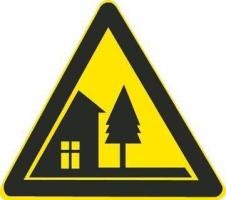
A. watch for pedestrians
B. crosswalk
C. village or town
D. primary school
Answer: C
17. A driver may drive a motorized vehicle after the driving license has been lost within 3 months.
A. Right
B. Wrong
Answer: B
18. It is not a bad habit for a driver to frequently change lanes.
A. Right
B. Wrong
Answer: B
19. When a motor vehicle passes over an inundated road drivers should change to a high gear and pass rapidly.
A. Right
B. Wrong
Answer: B
20. Which of the following vehicle in front in the same lane is not allowed to be overtaken?
A. police car on duty
B. large bus or large truck
C. taxis
D. public bus
Answer: A