

1. As shown in the flash, what should the driver do when the motor vehicle encounters this situation?
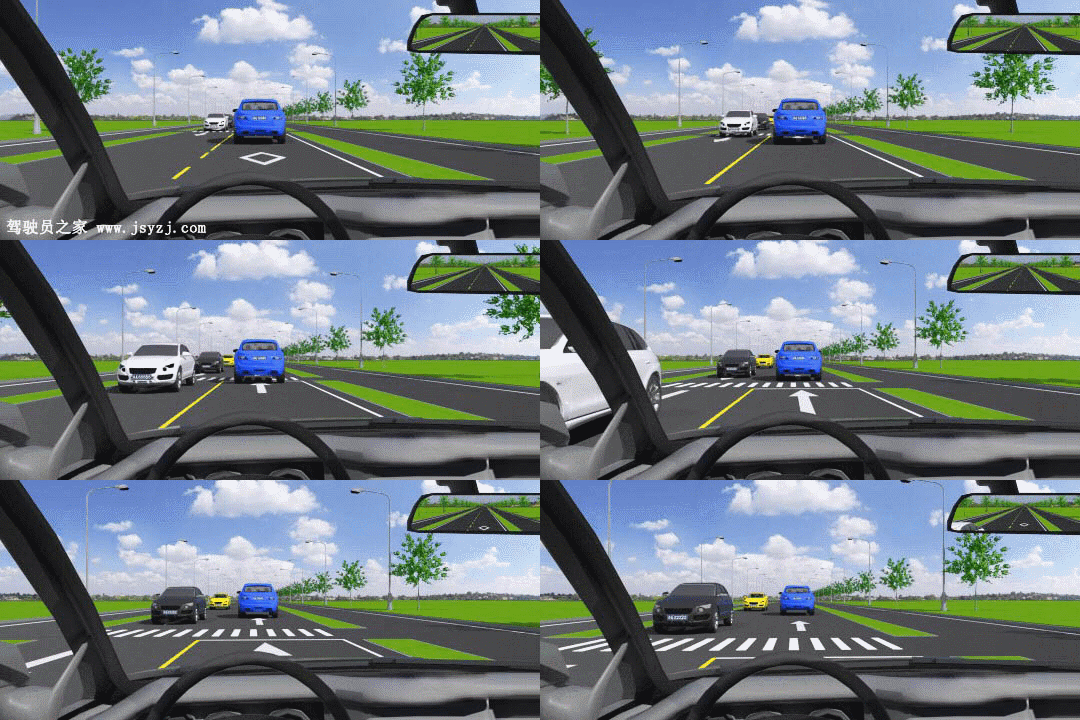
A. Speed up and pass rapidly
B. Stop immediately
C. Sound the horn to indicate the pedestrians to yield
D. Observe the movement of pedestrians and non-motor vehicles before passing
Answer: D
2. The driver should take emergency evasion measures when the motor vehicle suddenly self-ignites. Which ones of the following methods are correct?
A. Spray clean water to extinguish the fire
B. Report to the police
C. Use the spare fire extinguisher in the vehicle to put out the fire
D. Set up a warning sign in the oncoming direction
Answer: BCD
3. The sign on the left indicates no U-turn at the intersection ahead.

A. Right
B. Wrong
Answer: A
4. Motor vehicle drivers don?ˉt need to use any lamp at night when passing through a road section where the street light condition is good.
A. Right
B. Wrong
Answer: B
5. How should lamps be used when motor vehicle drivers pass through a two-way tunnel?
A. Turn on the hazard lamps
B. Turn on the high-beam
C. Turn on the fog lamp
D. Turn on the low-beam
Answer: D
6. Rescue personnel should check the breath of the unconscious person before applying any other emergency treatment.
A. Right
B. Wrong
Answer: A
7. When driving on a muddy road, what should drivers do to pass at an even speed without stopping?
A. Use the handbrake
B. Press the clutch pedal
C. Press the brake pedal
D. Use the accelerator pedal
Answer: D
8. If a motor vehicle deviates from the straight direction due to steering failure, what should be done by the driver in order to reduce speed and stop the vehicle as soon as possible?
A. Gently depressing the brake pedal
B. Pulling up the handbrake
C. Immediately changing to a low gear to reduce speed
D. Decisively and continuously depressing and releasing the brake pedal
Answer: D
9. How should the driver use vehicle lights when the motor vehicle enters this intersection?
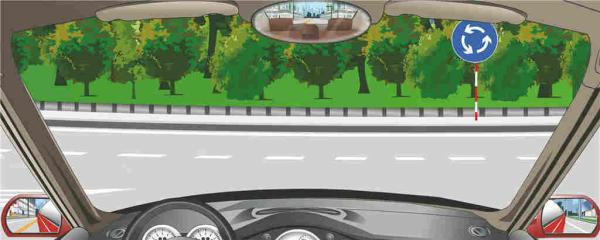
A. Turn on the right-turn indicator
B. Turn on the hazard lamps
C. No need to turn on any indicators
D. Turn on the left indicator
Answer: C
10. How many kinds of law-breaking acts are displayed in flash 6?
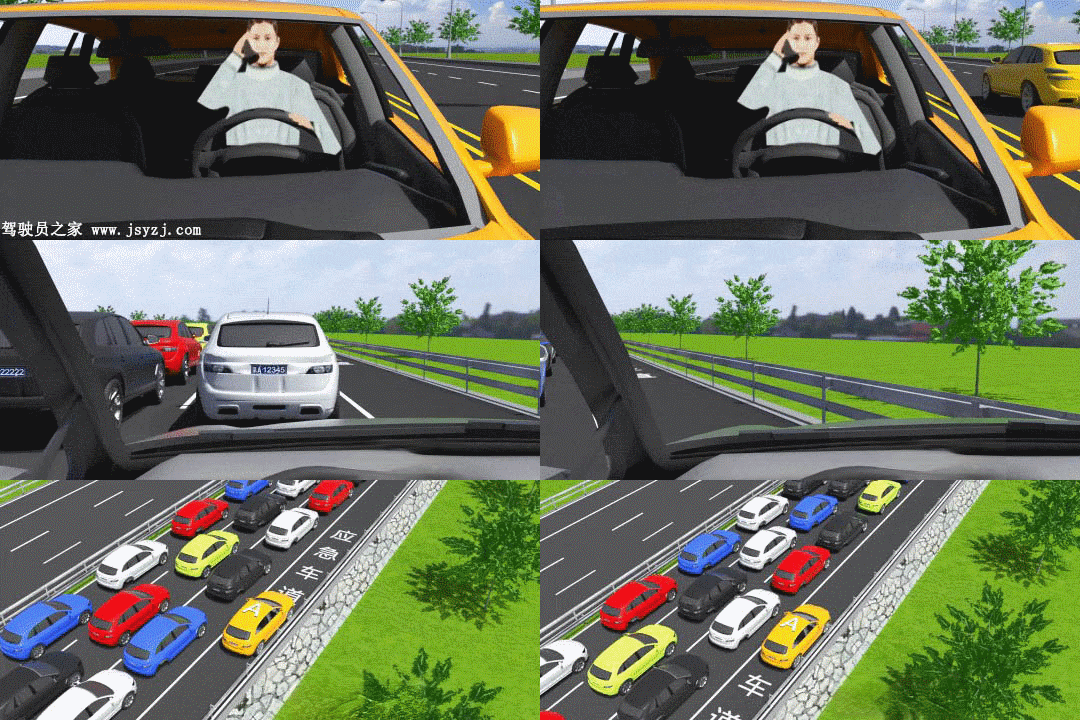
A. One
B. Two
C. Three
D. Four
Answer: C
11. The motor vehicle should stop on the right and wait in this situation.
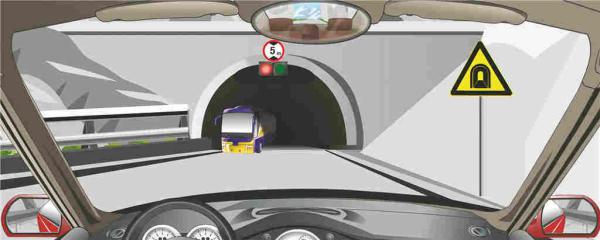
A. Right
B. Wrong
Answer: A
12. What should be checked before driving?
A. No parts need to be checked
B. Whether the tires have been cleaned
C. Where the spare tire is placed
D. The fastening and air pressure of tires
Answer: D
13. What should be done to keep safe when a motor vehicle driver is overtaking in this condition?

A. Reducing speed and keeping a safe distance
B. Continuously sounding the horn to indicate the vehicle in front
C. Accelerating to pass while keeping a certain distance
D. Overtaking by occupying the opposite lane
Answer: A
14. When driving in thick or extremely thick fog, what should the driver do due to the low visibility in such weather?
A. Turn on the headlamp and drive slowly
B. Turn on the fog lamp and drive slowly
C. Park in a safe place
D. Drive slowly close to the roadside
Answer: C
15. Which one of the following vehicle types is not allowed to pass, as indicated by the right-hand sign?
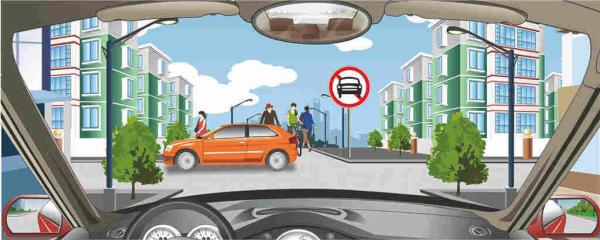
A. Large trucks
B. Large buses
C. Motor vehicles of all kinds
D. Small vans
Answer: C
16. This sign warns that the section ahead is under traffic monitoring.
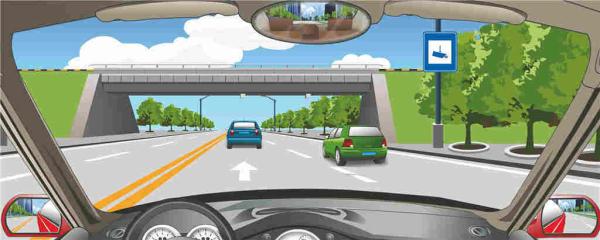
A. Right
B. Wrong
Answer: A
17. When a motor vehicle turns at an excessively high speed, it can easily slide sideways.
A. Right
B. Wrong
Answer: A
18. The sign on the right warns of a guarded railway crossing 100 meters ahead.
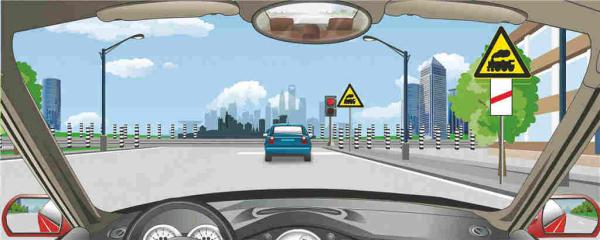
A. Right
B. Wrong
Answer: B
19. When rescuing a wounded person suffering from spinal fracture, which of the following measures should be taken?
A. Prevent heat loss
B. Rescue the wounded person with a soft stretcher
C. Keep the wounded part in position with a sling
D. Help the wounded person when walking
Answer: C
20. When driving in rain and encountering pedestrians with umbrellas or wearing raincoats, what should be done by motor vehicle drivers in order to yield?
A. Drive at a normal speed
B. Sound the horn to alert when approaching the pedestrians
C. Speed up and bypass on the left
D. Reduce speed and sound the horn in advance
Answer: D