

1. If a motor vehicle experiences a water sliding phenomenon when running on an expressway in rain, what should the driver do?
A. Slow down by suddenly depressing the brake pedal
B. Slow down by slowly releasing the accelerator pedal
C. Turn the steering wheel immediately to adjust the direction
D. Speed up to increase the displacement of the wheels
Answer: B
2. Which one of the following measures is correct when a motor vehicle encounters this situation at night?
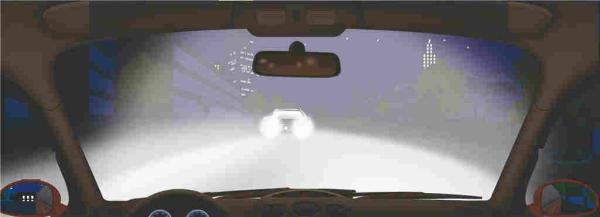
A. Keep driving at a normal speed
B. Drive at an increased speed to avoid light
C. Cut speed or stop to yield
D. Turn on high-beam to reject
Answer: C
3. Before making a U-turn at the intersection ahead, motor vehicle drivers should drive to the lane for turning left and going straight.
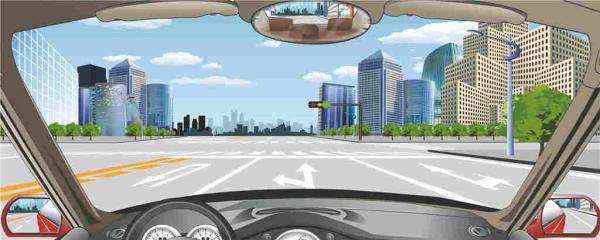
A. Right
B. Wrong
Answer: B
4. Motor vehicles are not allowed to stop in this area for a long time.
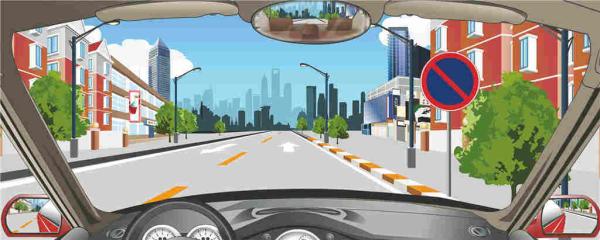
A. Right
B. Wrong
Answer: A
5. Two parallel broken double-yellow lines indicate the position of a diversion lane.
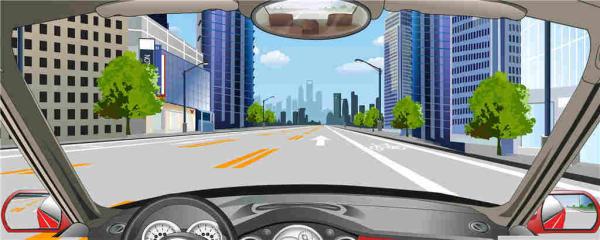
A. Right
B. Wrong
Answer: A
6. The motor vehicle should speed up and pass rapidly under this situation.
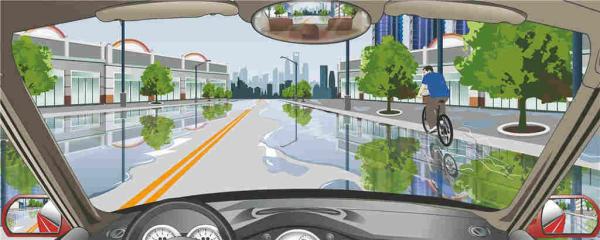
A. Right
B. Wrong
Answer: B
7. When a motor vehicle falls into water and the side door cannot be opened, which of the following methods is correct for self-rescue?
A. Smash the window glass
B. Close the windows
C. Make calls for help
D. Try to open the door with a tool
Answer: A
8. When driving on an expressway, what should the driver do if he has missed an exit but the next exit is far away?
A. Reverse along the road shoulder
B. Continue on
C. Stop immediately
D. Make a U-turn at the current location
Answer: B
9. The sign on the right warns of a dangerous mountainside road ahead.
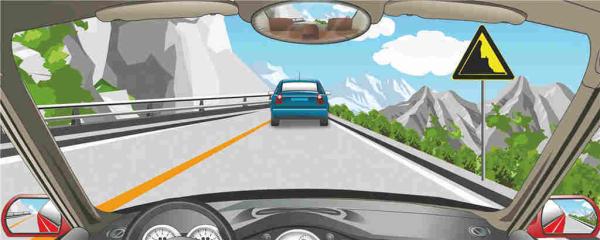
A. Right
B. Wrong
Answer: A
10. The distance-ascertaining section of an expressway is used for the drivers to ascertain the safety distance when the speed is 100 kilometers per hour.
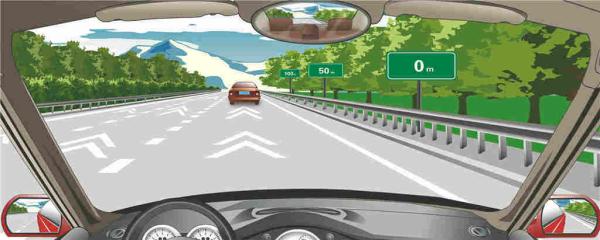
A. Right
B. Wrong
Answer: A
11. How to ensure safe driving at night?
A. Drive at speed limit
B. Cut speed and drive carefully
C. Maintain the current speed
D. Drive above the speed limit
Answer: B
12. When driving on an expressway in rain, the driver should slow down to avoid steering failure arising from water slide
A. Right
B. Wrong
Answer: A
13. What should be taken note of by drivers in this situation?
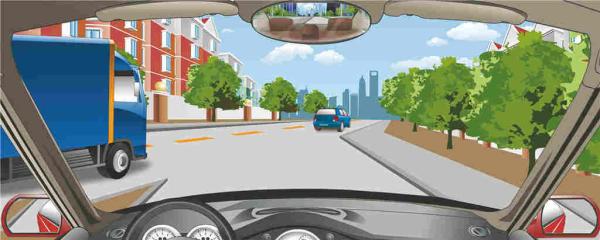
A. The motor vehicles on the left side
B. The motor vehicles on the right side
C. The motor vehicles behind
D. The motor vehicles in front
Answer: A
14. Which is the wrong measure to avoid tire burst?
A. Reduce tire pressure
B. Check tires regularly
C. Remove foreign matters from the tire tread grooves timely
D. Replace tires that have cracks or deep cuts
Answer: A
15. What should motor vehicle drivers do under such circumstances at night?
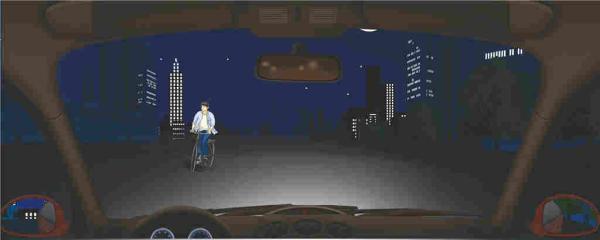
A. Turn off the headlamp when approaching
B. Use low-beam
C. Use high-beam
D. Turn off all lamps in advance
Answer: B
16. When a motor vehicle passes over an inundated road the driver should change to a low gear and pass at a constant speed.
A. Right
B. Wrong
Answer: A
17. Drivers may cross these central solid and broken yellow lines when overtaking.
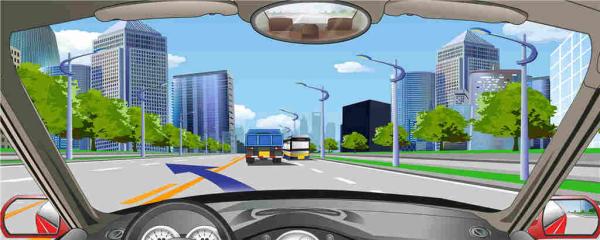
A. Right
B. Wrong
Answer: B
18. When parking temporarily in this situation, motor vehicle drivers are allowed to turn the steering wheel right to avoid sliding.
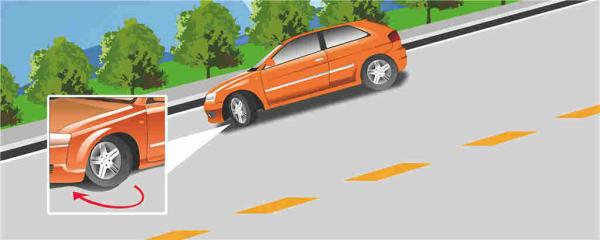
A. Right
B. Wrong
Answer: A
19. If a motor vehicle misses an exit on the expressway, the driver may reverse along the road shoulder.
A. Right
B. Wrong
Answer: B
20. At this intersection, motor vehicle drivers may directly make a U-turn along the U-turn turning lane.
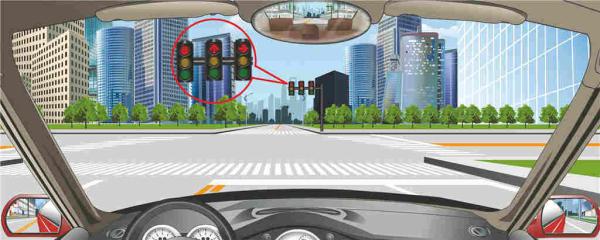
A. Right
B. Wrong
Answer: B