

1. Whats the meaning of this sign?
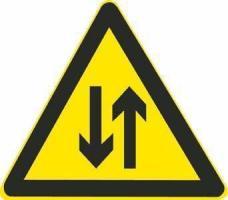
A. reduce speed and yield
B. variable lane
C. separated road
D. two-way traffic
Answer: D
2. This sign warns two neighboring inverse curves ahead.
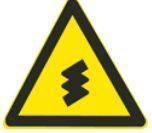
A. Right
B. Wrong
Answer: B
3. What marking is the yellow road surface in the center of the intersection?
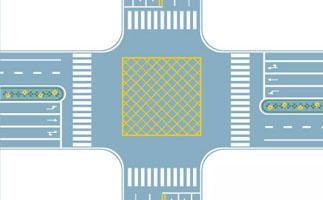
A. central circle
B. guide line
C. cross-hatched marking
D. parking area
Answer: C
4. Honking in a foggy day can arouse the attention of the opposite side. After hearing the honking from the opposite side, the driver should also honk to respond.
A. Right
B. Wrong
Answer: A
5. Driving a motorized vehicle in the city road which has no central line, the maximum speed can not exceed 50 kilometers per hour.
A. Right
B. Wrong
Answer: B
6. What is the max speed on this expressway?
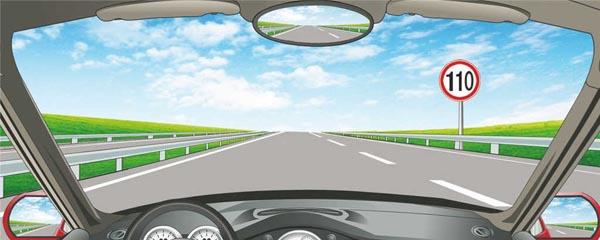
A. 110km/hr
B. 120km/hr
C. 90km/hr
D. 100km/hr
Answer: A
7. Whats the meaning of the diamond broken lines on the road?

A. road construction marking
B. vertical deceleration marking
C. horizontal deceleration marking
D. fewer lanes indication marking
Answer: B
8. After the green light at an intersection is on, the vehicles may not yield if non-motorized vehicles cut in.
A. Right
B. Wrong
Answer: B
9. When a vehicle passes a crosswalk, the driver should yield to the pedestrians.
A. Right
B. Wrong
Answer: A
10. You have the priviledged passing right of way at the intersection in this situation.
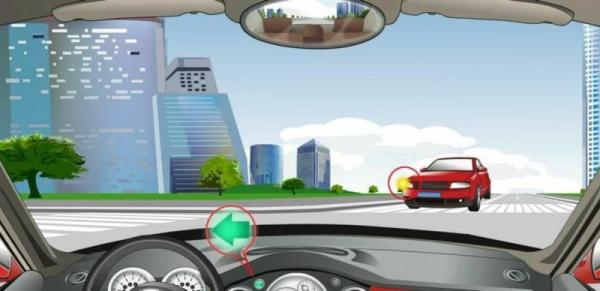
A. Right
B. Wrong
Answer: A
11. When the road maintenance vehicle and the engineering vehicle are on duty, the passing vehicles should avoid with care.
A. Right
B. Wrong
Answer: A
12. How to pass when encountering this situation at the intersection?
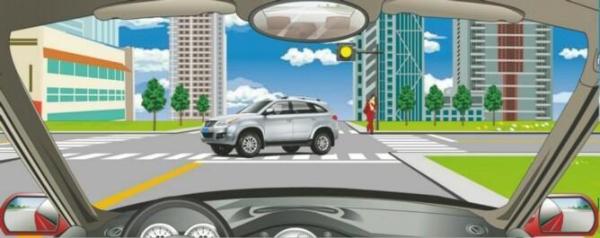
A. make sure it is safe to pass
B. turn right and speed up to pass
C. speed up and pass straight
D. turn left and speed up to pass
Answer: A
13. The behavior of a motorized vehicle driver who has violated the law and regulations on road traffic safety is _______ .
A. faulty act
B. violation of regulations
C. rule-breaking act
D. violation of law
Answer: D
14. The driver who chases and races while driving on the road, and commits serious acts is subject to ______
A. a prison term of 6 months
B. a prison term of more than 1 year
C. a criminal restriction and a fine
D. a criminal detention and a fine
Answer: D
15. Whats the meaning of this sign?
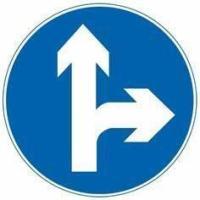
A. going straight and left turn
B. going straight and right turn
C. no going straight and no right turn
D. left turn and right turn only
Answer: B
16. Driving on the expressway with full signs and marking, the driver should run in the lane and at the speed according to _________.
A. Signs and markings
B. Rules on road traffic safety
C. Vehicle manual
D. Local regulations
Answer: A
17. How often should a driver who is more than 60 years old present the certificate of physical conditions?
A. every 3 years
B. every 2 years
C. every 6 months
D. every 1 year
Answer: D
18. The three principles for careful driving are concentration, careful observation and early prevention.
A. Right
B. Wrong
Answer: A
19. Which part of the driver can be protected by the safety pillow when there is a rear-end collision?
A. waist
B. chest
C. head
D. neck
Answer: D
20. How to run in this situation?
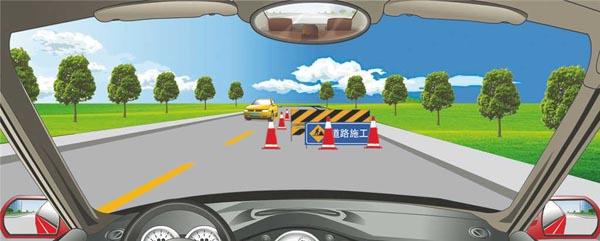
A. stop and yield to the opposite car
B. turn on the left-turn signal and run on the left side
C. turn on the head lights to let the other side yield
D. speed up to bypass the obstacle and then cross the other vehicle
Answer: A