

1. How should lamps be used when a motor vehicle meets an oncoming bicycle on a narrow road or a narrow bridge at night?
A. Continuously change between low-beam and high-beam
B. Use clearance lamp
C. Use high-beam
D. Use low-beam
Answer: D
2. The sign in the red circle indicates that vehicles except non-motor vehicles are not allowed to drive in this lane.
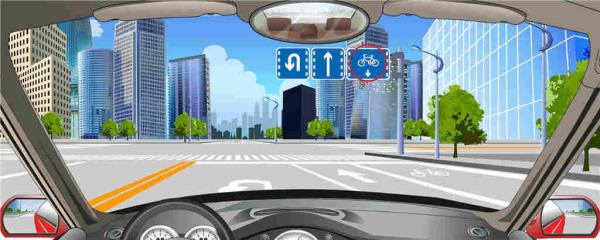
A. Right
B. Wrong
Answer: A
3. Motor vehicle drivers may make a U-turn in the broken line area as long as it will not affect the normal traffic flow.
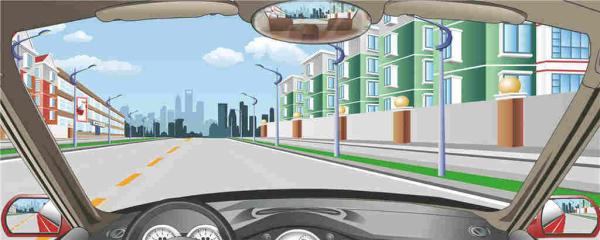
A. Right
B. Wrong
Answer: A
4. The sign on the right warns of a dangerous mountainside road on the left of the road ahead.
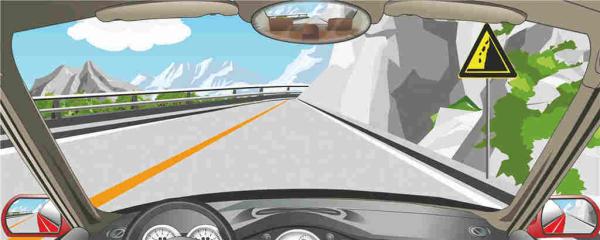
A. Right
B. Wrong
Answer: B
5. The sign on the right warns of a non-motor vehicle lane.
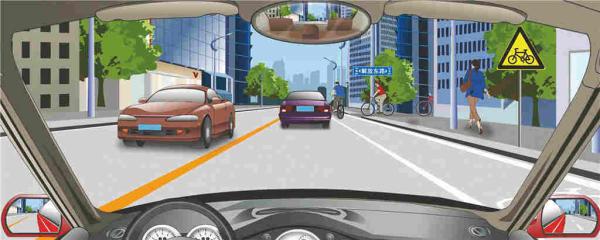
A. Right
B. Wrong
Answer: B
6. Which one of the following is a safe way for motor vehicles to converge into an intersection marked with this sign?

A. Speeding up and driving into the traffic flow directly
B. Driving into the traffic flow behind the gray car on the main road
C. Driving into the traffic flow from the front of the red car on the main road
D. Turning on the indicator and driving into the flow directly
Answer: B
7. Which of the following is a safe way for motor vehicles to pass the intersection marked with this sign?
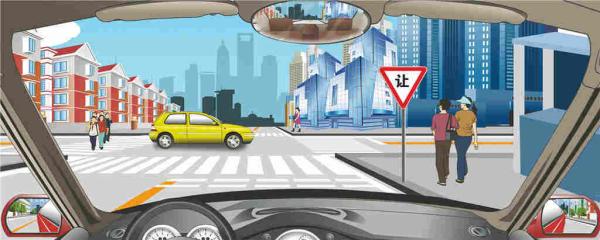
A. Stop and observe the traffic situation around the intersection
B. Approach the intersection by speeding up
C. Observe the traffic situation on the left rear side
D. Approach the intersection at a reduced speed
Answer: D
8. When steering failure happens suddenly, if the road condition permits straight movement, drivers should not apply emergency braking.
A. Right
B. Wrong
Answer: A
9. When finding a tire burst on the road, the driver should gently depress the brake pedal, reduce speed and stop the vehicle slowly.
A. Right
B. Wrong
Answer: A
10. What should the driver do upon finding that one of the right tires is leaking while driving?
A. Brake swiftly to slow down
B. Brake slowly to slow down
C. Turn to the left side swiftly
D. Apply emergency braking
Answer: B
11. How many kinds of law-breaking acts are displayed in flash 7?
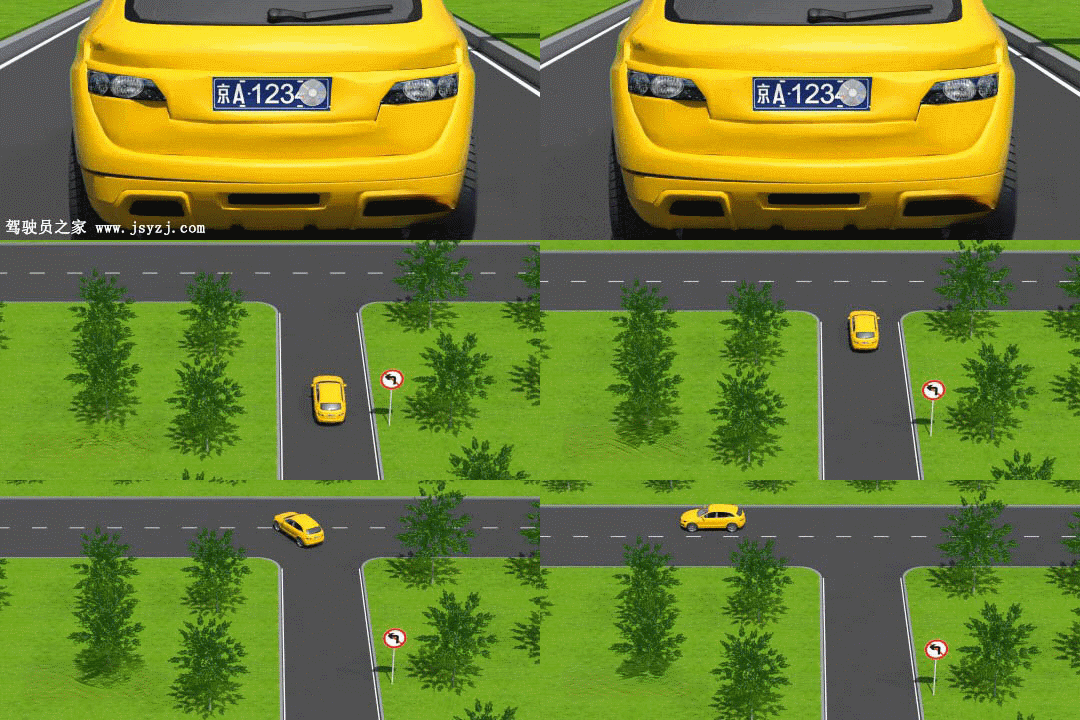
A. One
B. Two
C. Three
D. Four
Answer: B
12. What should a motor vehicle driver do to ensure safety when experiencing a breakdown at night?
A. Park in a safe place
B. Turn on hazard lamp
C. Turn on clearance lamp and tail lamp
D. Set up a warning sign in accordance with regulation
Answer: ABCD
13. When driving in a strong wind, drivers should abruptly turn the steering wheel to return to the original direction if they feel the vehicle deviates horizontally due to a strong gale.
A. Right
B. Wrong
Answer: B
14. Upon encountering this traffic signal, how should a driver react?
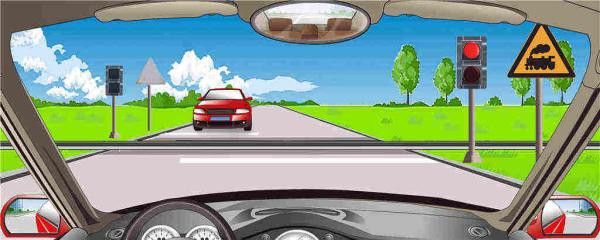
A. Observe the traffic situation and pass at a reduced speed
B. Pass at an increased speed without changing gears
C. Pass before the train comes
D. Crossing the stop line is prohibited
Answer: D
15. The solid yellow line on the curb indicates that temporary stopping or parking is allowed at the roadside.
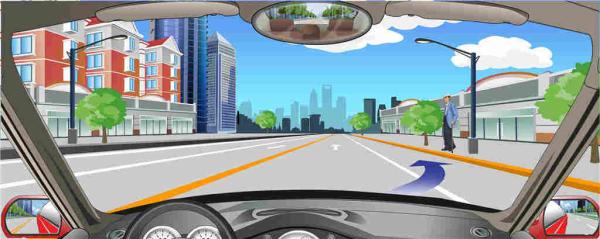
A. Right
B. Wrong
Answer: B
16. When there is no bandage for rescuing a wounded person, which of the following measures is wrong?
A. Dress the wounds with a handkerchief
B. Dress the wounds with a towel
C. Dress the wounds with cotton clothes
D. Dress the wounds with string
Answer: D
17. A correct measure to avoid tire burst of motor vehicles is to lower the tire pressure.
A. Right
B. Wrong
Answer: B
18. When encountering a school bus which stops at the right roadside and students are embarking or disembarking, and there are two motor vehicle lanes in each direction, motor vehicle drivers on the left lane behind the bus should stop and wait.
A. Right
B. Wrong
Answer: A
19. After a traffic accident, what is the most effective measure to prevent secondary accidents?
A. Evacuate all passengers
B. Turn on the hazard lamps
C. Mark the original place of the injured persons
D. Properly place the danger warning sign
Answer: ABD
20. Before a motor vehicle enters a tunnel, the driver should adjust the speed in accordance with the indication of the traffic sign at the entrance of the tunnel.

A. Right
B. Wrong
Answer: A