

1. If a vehicle has the right of way at an intersection but encounters a vehicle cutting in, the driver should _________.
A. Rush to pass
B. Speed up in advance and pass
C. Reduce speed and evade, or stop to yield when necessary
D. Go forward at the normal speed according to the right of way and refuses to evade
Answer: C
2. When the road maintenance vehicle and the engineering vehicle are on duty, the passing vehicles should avoid with care.
A. Right
B. Wrong
Answer: A
3. A motorized vehicle driver is not allowed during the period of probation to pull a trailer.
A. Right
B. Wrong
Answer: A
4. Which kind of vehicle can be driven if the authorized vehicle applied for is small motor vehicle with automatic transmission?
A. low-speed truck
B. small motor vehicle
C. motorcycle
D. light truck with automatic transmission
Answer: D
5. When driving on a mountain road covered by ice and snow, the vehicle behind should ______ if the vehicle in front is climbing a slope.
A. Climb slowly
B. Closely follow and climb
C. Select a proper place to stop and climb after the vehicle in front has passed
D. Rapidly overtake the vehicle in front
Answer: C
6. Whats the meaning of this sign?
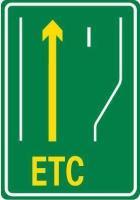
A. payment lane on the expressway
B. check lane on the expressway
C. card getting lane on the expressway
D. ETC lane on the expressway
Answer: D
7. When encountering non-motorized vehicles cutting in on the road, the driver should ___.
A. Honk to warn
B. Speed up and pass
C. Reduce speed and yield
D. Suddenly speed up when approaching
Answer: C
8. Whats the meaning of this sign?
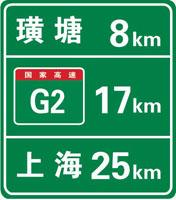
A. indication of the place name of the expressway ending
B. indication of the driving route of the expressway
C. indication of the driving direction of the expressway
D. indication of the location and distance of the expressway
Answer: D
9. It lights to indicate that ______

A. the front fan works
B. air external circulation
C. windscreen defroster
D. air internal circulation
Answer: D
10. A motorized vehicle driver who reverses, drives in the opposite direction or make a U turn by crossing the central dividing strip on the expressway is subject to a 6-point penalty.
A. Right
B. Wrong
Answer: B
11. Which is correct if a vehicle breaks down and is difficult to move?
A. turn on the hazard lights
B. turn on all the lights of the vehicle
C. forbid the passengers to get off
D. place a warning sign in front of the vehicle
Answer: A
12. You can not drive a motorized vehicle into the lane where the red X-shaped light or the red arrow light is on.
A. Right
B. Wrong
Answer: A
13. How to use lights at night while crossing each other on narrow road or bridge?
A. turn off all the lights
B. turn on the low beam lights
C. turn off the head lights
D. turn on high beam lights
Answer: B
14. Whats the meaning of this sign?
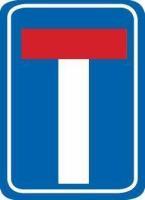
A. T-shaped intersection
B. branching intersection
C. reduce speed to pass
D. dead-end road
Answer: D
15. Which part of the driver can be protected by the safety pillow when there is a rear-end collision?
A. waist
B. chest
C. head
D. neck
Answer: D
16. If a motorized vehicle breaks down or causes a traffic accident on the expressway and cannot to run normally, the vehicle should be towed by ______.
A. a vehicle passing by
B. a large bus
C. a vehicle traveling together
D. a tow truck
Answer: D
17. What marking is the white semicircle in the circle?

A. driving at reduced speed
B. ascertaining the vehicles speed
C. reducing the speed at the intersection
D. ascertaining the distance between the vehicles
Answer: D
18. When a vehicle approaches a crosswalk, the driver should ________.
A. Speed up and pass
B. Stop immediately
C. Honk to indicate the pedestrians to yield
D. Observe the movement of pedestrians and non-motorized vehicles, make sure it is safe before passing
Answer: D
19. When a motorized vehicle stops temporarily at the roadside, the driver ________.
A. Is not allowed to stop in the opposite direction or in parallel
B. May stop anyway he likes as long as it is convenient for him to get out
C. May stop the vehicle in the opposite direction
D. May stop the vehicle in parallel
Answer: A
20. In the course of reversing, the driver should move slowly, observe the conditions on both sides and in the rear and be ready to stop anytime.
A. Right
B. Wrong
Answer: A