

1. When a motorized vehicle returns to the original lane after overtaking, the driver should turn on the right-turn signal.
A. Right
B. Wrong
Answer: A
2. If the driver finds there is no vehicle following, he can change lanes without turning on the turn signal.
A. Right
B. Wrong
Answer: B
3. How to use lights when entering the speed-reducing lane?
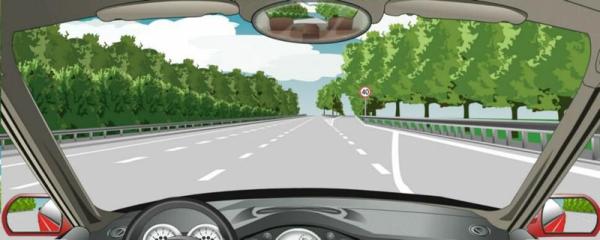
A. turn on the hazard lights
B. turn on the head light
C. turn on the left-turn signal
D. turn on the right-turn signal
Answer: D
4. In the course of making a U turn, the driver should strictly control the speed, carefully observe the road conditions before and behind the vehicle, and may advance or reverse only if it is safe to do so.
A. Right
B. Wrong
Answer: A
5. When driving at night on a road with no or poor lighting, the driver should switch from the low beam light to the high beam light. But the vehicle following in the same direction is not allowed to use the high beam light.
A. Right
B. Wrong
Answer: A
6. When driving on a mountain road covered by ice and snow, the vehicle behind should ______ if the vehicle in front is climbing a slope.
A. Climb slowly
B. Closely follow and climb
C. Select a proper place to stop and climb after the vehicle in front has passed
D. Rapidly overtake the vehicle in front
Answer: C
7. When passing an unmanned level crossing, the driver should ________.
A. Speed up and pass
B. Reduce speed and pass
C. Maintain the speed and pass
D. Stop, look and pass
Answer: D
8. Whats the meaning of this sign?
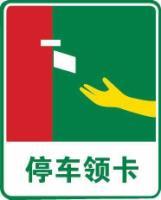
A. stop to get card
B. stop to pay
C. ETC lane
D. stop for inspection
Answer: A
9. Whats the meaning of this sign?
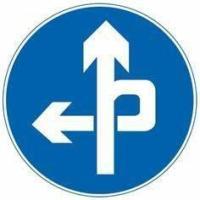
A. going straight and turning left at an interchange
B. going straight and turning right at an interchange
C. going straight and turning left
D. going straight and turning right
Answer: A
10. It lights to remind that the driver??s seat is not adjusted properly.

A. Right
B. Wrong
Answer: B
11. This sign reminds a sharp curve ahead.
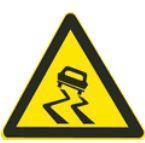
A. Right
B. Wrong
Answer: B
12. Emergency braking on a road covered by ice and snow can easily cause side skidding. The driver should use the engine braking to reduce speed.
A. Right
B. Wrong
Answer: A
13. A motorized vehicle driver who violates of traffic lights is subject to a 6-point penalty.
A. Right
B. Wrong
Answer: A
14. What does this sign mean?
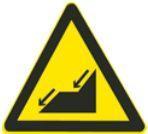
A. Reminding continuous two or more up slopes ahead
B. Reminding the steep uphill road ahead
C. Reminding the steep downhill road ahead
D. Reminding continuous two or more down slopes ahead
Answer: D
15. A rear tire blowout can sway the tail of the vehicle. The driver should firmly hold the steering wheel with both hands to ensure the vehicle go straight, reduce speed and then stop.
A. Right
B. Wrong
Answer: A
16. Which kind of vehicle can be initially applied for when one reaches 20 years old?
A. large truck
B. large bus
C. midsize bus
D. trailer
Answer: A
17. The main impact of the road conditions at night on safe driving is ________.
A. The visibility is low and unfavorable for observing road traffic conditions
B. The road surface is complex and changing
C. The physical strength of the driver decreases
D. The driver can easily have impulse and illusion
Answer: A
18. Before entering a level crossing, the vehicle should reduce speed and change to a lower gear, and _____ after entering the level crossing.
A. Cannot change gear
B. Can change gear
C. Can change to a higher gear
D. Stop and look
Answer: A
19. How to do when encountering this situation of waiting in line?
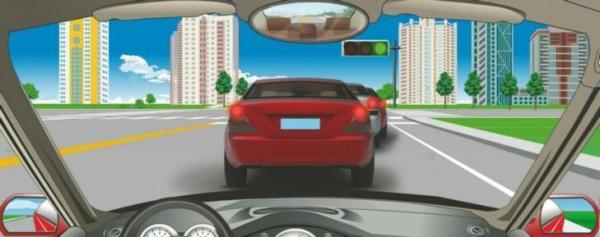
A. cross the solid line from left side to overtake
B. overtake from both sides as will
C. wait in line
D. borrow the lane from right side to overtake
Answer: C
20. When causing a road accident involving property damage, the parties to the accident have no dispute over the fact and cause, they should take photos of the scene or mark the vehicles location when they move the vehicles.
A. Right
B. Wrong
Answer: A