

1. What does this sign on the fly-over junction indicate?
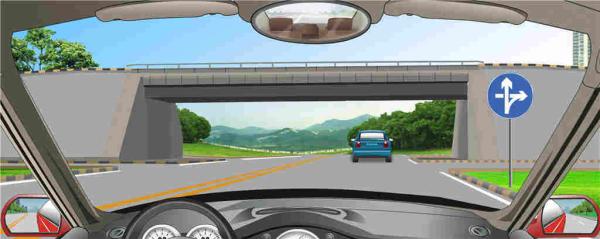
A. Turn right
B. Drive straight or turn left
C. Drive straight or turn right
D. Take a U-turn under bridge
Answer: C
2. As shown in this picture, before driving to the intersection, vehicles are not allowed to change lanes by crossing the solid white line.
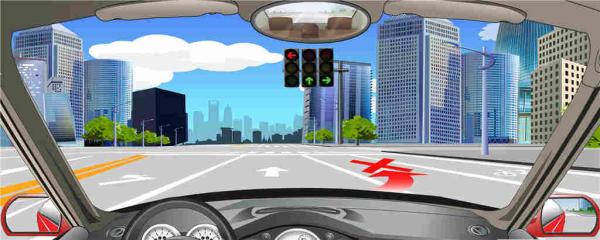
A. Right
B. Wrong
Answer: A
3. When following a vehicle on the road, the distance from the vehicle in front is not important. As long as the driver goes forward at the same speed as the vehicle in front does, he can avoid a rear-end collision.
A. Right
B. Wrong
Answer: B
4. When the electric equipment and gasoline of a motor vehicle catches fire, the driver may extinguish the fire with water.
A. Right
B. Wrong
Answer: B
5. What should motor vehicle drivers do under the circumstance shown in the flash?
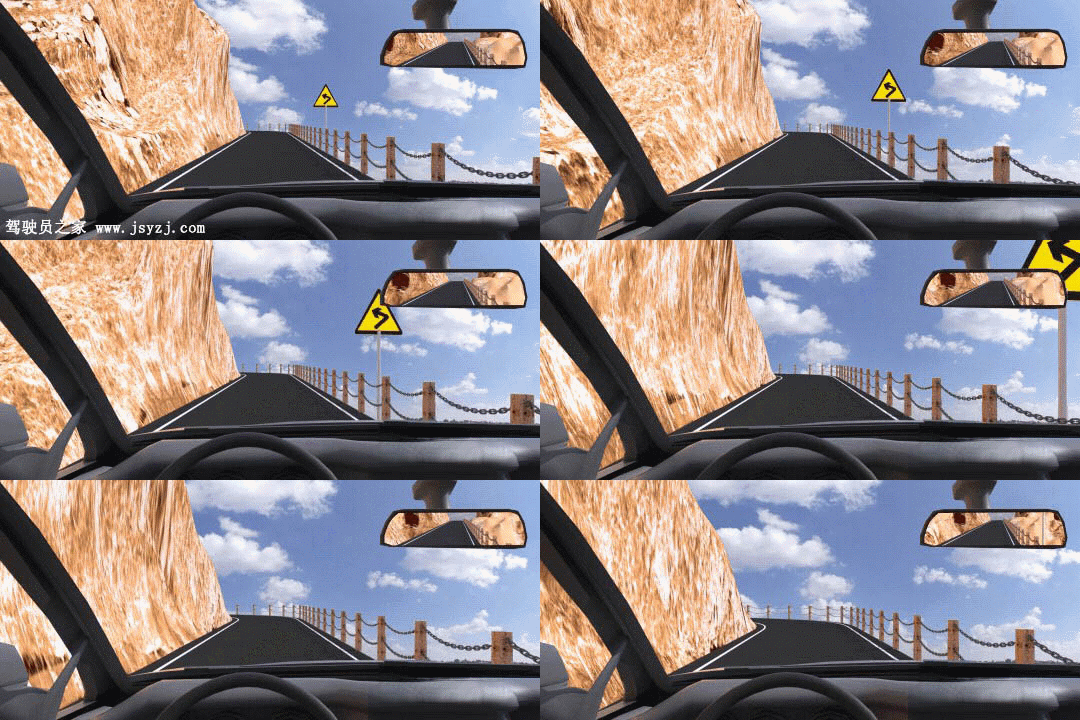
A. Drive by borrowing the opposite lane
B. Brake suddenly and pass through at a lower speed
C. Drive by the outer side of the curve
D. Reduce speed fully and drive by the right side
Answer: D
6. This sign warns to bypass from the left side to avoid the roadblock.
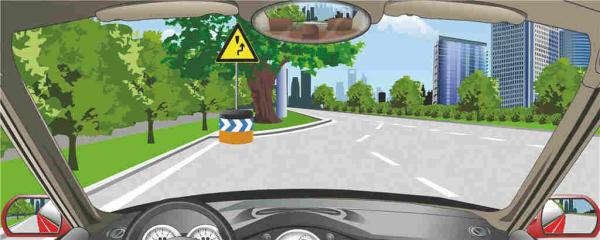
A. Right
B. Wrong
Answer: B
7. When entering an expressway ramp, which of the following statements is correct?
A. Drivers are allowed to overtake other vehicles
B. Drivers are prohibited from making U-turns
C. Drivers are allowed to stop
D. Drivers are allowed to reverse
Answer: B
8. When a motor vehicle stops in snow, which lamp should be turned on?
A. Front and rear fog lamps, clearance lamp and rear position lamp
B. Reverse lamp, clearance lamp and rear position lamp
C. Headlamp, clearance lamp and rear position lamp
D. Hazard lamps, clearance lamp and rear position lamp
Answer: D
9. The sign on the right is an advance announcement of the highway destination.
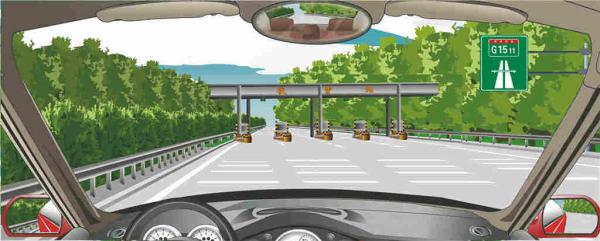
A. Right
B. Wrong
Answer: B
10. Mr. Wu drove a large bus with 33 passengers (capacity 22 people). At the spot of 7 kilometers mark by 300 meters on the No 163 County Road, the bus lost control and fell into a ravine. As a result of the accident, 10 people were killed and 21 injured. In accordance with the alcohol test after the accident the blood alcohol content of Mr. Wu was 26 milligram per milliliter. What is the main illegal act committed by Mr. Wu?
A. Speeding
B. Carrying more passengers than permitted
C. Fatigued driving
D. Driving after drinking
Answer: BD
11. When driving a motor vehicle into a traffic flow, drivers should not hold up other vehicles.
A. Right
B. Wrong
Answer: A
12. The solid yellow line on the curb indicates that temporary stopping or parking is allowed at the roadside.
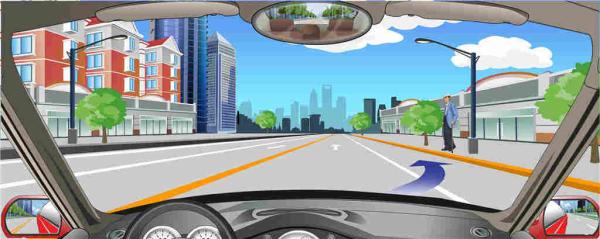
A. Right
B. Wrong
Answer: B
13. During normal driving, the driver should do his best to run close to or on the central line so as not to allow oncoming vehicles any opportunity to occupy his own route.
A. Right
B. Wrong
Answer: B
14. What should the driver do upon finding that one of the right tires is leaking while driving?
A. Brake swiftly to slow down
B. Brake slowly to slow down
C. Turn to the left side swiftly
D. Apply emergency braking
Answer: B
15. The sign on the right side warns of an abrupt downhill section ahead.
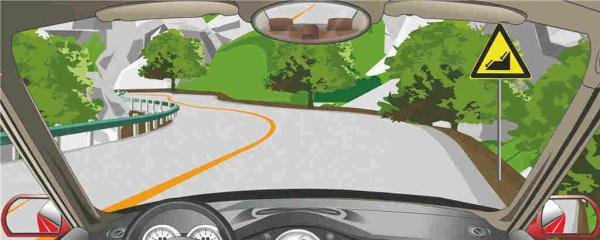
A. Right
B. Wrong
Answer: B
16. The marking on the road surface indicates that the speed limit of this road section is 50 km/hour.
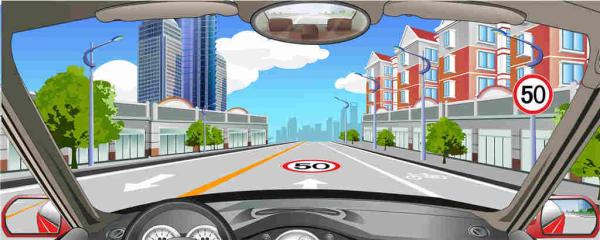
A. Right
B. Wrong
Answer: A
17. When approaching another vehicle at night, why should the driver alternate between high-and-low-beam at a distance more than 150 meters?
A. Warn each other before passing
B. Driving habit
C. Easy to observe the situation ahead from either side
D. Courtesy
Answer: C
18. Which of the following materials should not be used to stop bleeding?
A. Bandage
B. Sling
C. Tourniquet
D. Hemp rope
Answer: D
19. When a wounded person is beneath the wheel or cargo, we should help him out immediately by pulling the limbs of the wounded.
A. Right
B. Wrong
Answer: B
20. What should a driver do before entering a tunnel on an expressway
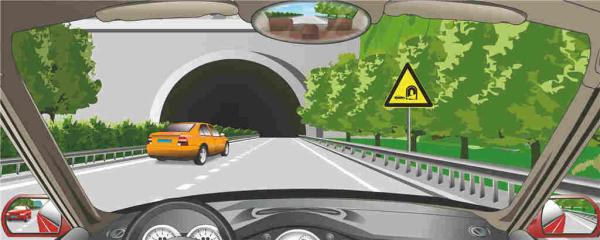
A. Turn on the high-beam
B. Turn on the width lamp and the tail lamp
C. Turn on the low-beam
D. Sound the horn before entering the tunnel
Answer: C