

1. When a motorized vehicle breaks down on the expressway, the driver should place a warning sign 50 meters ~ 100 meters in the coming direction.
A. Right
B. Wrong
Answer: B
2. What marking is the white broken line on the road?
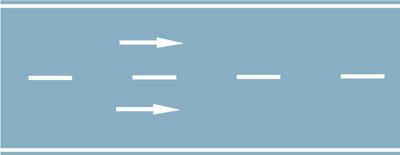
A. central line of opposite lanes which is prohibited from crossing
B. central line of opposite lanes which is restricted from crossing
C. central dividing line of the one-way road lanes
D. central line of same direction lanes which is allowed to cross
Answer: D
3. If a motorized vehicle has reached the states mandatory write-off standard, its registration will not be handled.
A. Right
B. Wrong
Answer: A
4. When a vehicle has to stop on an expressway due to a vehicle trouble, the driver should place a breakdown warning sign beyond ______ m behind the vehicle.
A. 25
B. 150
C. 100
D. 50
Answer: B
5. Whats the meaning of this sign?
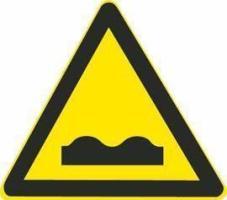
A. low-lying road
B. hump bridge
C. bump road
D. high outburst road
Answer: C
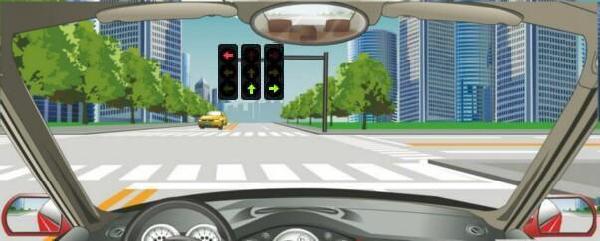
6. No turning left in this situation.
A. Right
B. Wrong
Answer: A
7. If the license plate of a motorized vehicle has been destroyed, the owner of the vehicle should apply for reissuing or changing to the vehicle management station at the registration place.
A. Right
B. Wrong
Answer: A
8. When driving slowly in a congested road, the driver should ________ if another vehicle forcefully cuts in.
A. Honk to warn it against cutting in
B. Speed up to closely follow the vehicle in front and refuse to allow it to cut in
C. Squeeze the cutting-in vehicle to force it to leave
D. Voluntarily yield to ensure safe driving
Answer: D
9. No turning right when encountering this traffic light at the intersection.

A. Right
B. Wrong
Answer: B
10. If the driver finds there is no vehicle following, he can change lanes without turning on the turn signal.
A. Right
B. Wrong
Answer: B
11. Whats the meaning of the marking in the red circle?
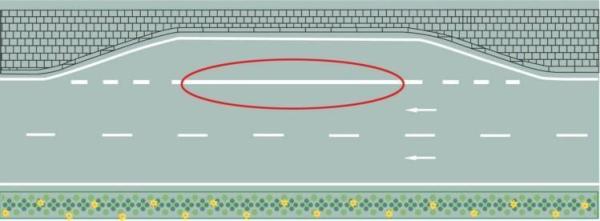
A. temporary stopping
B. bay-stopping
C. emergency stopping
D. public bus station
Answer: B
12. Causing a traffic accident due to violating the law and regulations on road traffic safety is the rule-breaking act.
A. Right
B. Wrong
Answer: B
13. No turning right at the intersection ahead.

A. Right
B. Wrong
Answer: B
14. When seeing a watch for children sign while driving, the driver should _______.
A. Speed up and pass
B. Bypass
C. Maintain the normal speed
D. Carefully select a speed
Answer: D
15. When a vehicle leaves an expressway, it should reduce speed in the deceleration lane before entering the ramp.
A. Right
B. Wrong
Answer: A
16. Do not start up a vehicle when the door or compartment is not properly closed.
A. Right
B. Wrong
Answer: A
17. Driving a small passenger vehicle at 100km/hr on the expressway, the minimum distance from the vehicle in front is _____ .
A. not less than 20 meters
B. not less than 10 meters
C. not less than 50 meters
D. not less than 30 meters
Answer: C
18. Whats the meaning of this sign?
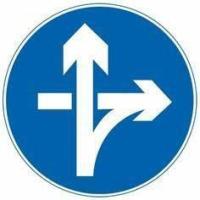
A. going straight and turning left
B. going straight and turning right
C. going straight and turning right at an interchange
D. going straight and turning left at an interchange
Answer: C
19. When crossing each other on a narrow road, the driver should slow down, yield and stop first.
A. Right
B. Wrong
Answer: A
20. If the vehicle has no license plate, label of inspection or label of insurance, preserve the scene and immediately report to the police.
A. Right
B. Wrong
Answer: A